
Written by Faith Pae R. Javier and Mr. Jereign Francis Mejia | Photo Credits: Faith Pae R. Javier and Justice through Science Regional
On October 20, 2026, the University of Baguio (UB), represented by Ms. Faith Pae Javier and Mr. Jereign Francis Mejia, participated in the Justice Through Science Regional Seminar at the University of the Cordilleras Auditorium in Baguio City. The gathering brought together perspectives from higher education, forensic science, and the justice sector to examine how scientific research and reliable forensic evidence can strengthen criminal investigations and judicial processes.
The seminar focused on advancing forensic science education and practice in the Philippines, highlighting the importance of rigorous scientific methods, professional collaboration, and the careful interpretation of evidence. Across the presentations, the speakers emphasized that science contributes to justice when findings are properly established, transparently explained, and evaluated within the limits of what the evidence can support.
Forensic Medicine in Action: Bridging Science, Law, and Justice
PCPT Sarah Mae C. Bazar, RPh, MD, Medico-Legal Officer of the Regional Forensic Unit of the Cordillera Administrative Region, presented “Forensic Medicine in Action: Bridging Science, Law, and Justice.” Her presentation highlighted the role of forensic medicine in connecting medical findings with legal investigations and proceedings. Accurate documentation, objective interpretation, and professional integrity are essential when medico-legal findings are used to inform investigative and judicial processes.

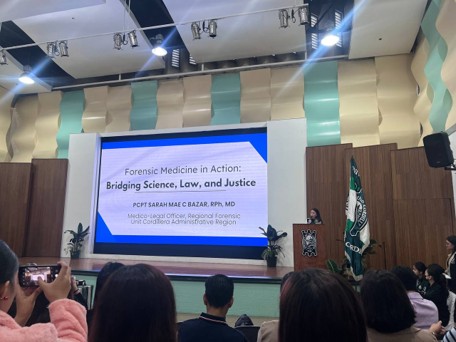
PCPT Sarah Mae C. Bazar, RPh, MD, presented “Forensic Medicine in Action: Bridging Science, Law, and Justice,” focusing on the contribution of forensic medicine to medico-legal practice.
The session further emphasized that an expert’s responsibility is not simply to make conclusions, but to explain the evidence accurately: what it establishes, what it suggests, and what remains uncertain. Acknowledging limitations is an essential part of scientific integrity and helps prevent findings from being overstated in legal proceedings.
Reconciling Truths: Forensic Evidence in Judicial Systems
Hon. Lady Ivy Vanity D. Velasco-Snow delivered “Reconciling Truths: An Examination of Forensics Integration in Select Judicial Systems.” Her presentation explored the integration of forensic findings into judicial processes and the importance of evaluating scientific evidence in its legal context. Forensic findings can help clarify disputed facts and inform judicial decision-making, but their value depends on appropriate interpretation, sound methodology, and a clear explanation of what the findings do and do not establish.

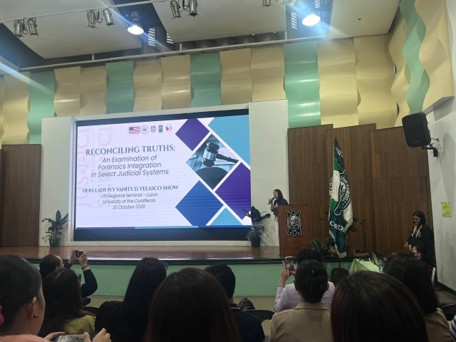
Hon. Lady Ivy Vanity D. Velasco-Snow’s session, “Reconciling Truths: An Examination of Forensics Integration in Select Judicial Systems,” examined the place of forensic evidence in judicial proceedings.
The session also prompted participants to consider how forensic science may contribute substantive impacts to adjudication and legislation. The question highlights that forensic science can inform court decisions and policy discussions when scientific findings are communicated accurately and evaluated alongside the other evidence available to decision-makers.
In her presentation she stated that “Judicial truth depends on evidence.” This principle reinforces the need for credible evidence, fair evaluation, and responsible use of expert findings. Scientific evidence should support, rather than replace, careful judicial reasoning and the application of relevant legal standards.
Forensic Science in Practice: Bridging Academe, Industry, and the Justice System Dr. Christian T. Pascual, Director of the Global Engagements Office and Project Manager of Justice Through Science, presented “Forensic Science in Practice: Bridging Academe, Industry, and the Justice System.” His session highlighted the importance of connecting academic preparation with the realities of forensic and justice-sector work. Collaboration among universities, practitioners, and justice institutions can help ensure that education remains responsive to professional needs and that scientific knowledge is translated into practical investigative approaches.

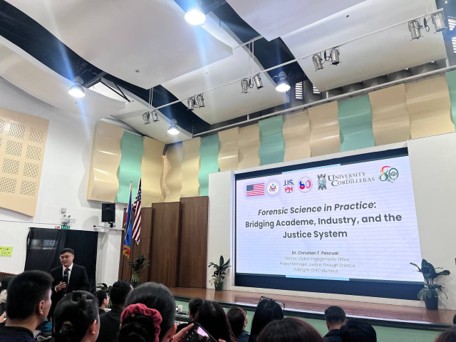
Dr. Christian T. Pascual’s presentation, “Forensic Science in Practice: Bridging Academe, Industry, and the Justice System,” focused on connecting academic preparation with practical justice-sector needs.
A memorable statement displayed during the seminar was, “There is no such thing as perfect crime, only imperfect investigation.” The message underscored the importance of systematic investigative work, careful evidence handling, and the appropriate use of forensic methods. It also served as a reminder that the reliability of investigative outcomes depends on the competence and diligence of the people examining the evidence.
Higher Education, Research, and Forensic Science in the Philippines
Dr. Richard Jonathan O. Taduran, a biological and forensic anthropologist and member of the Technical Panel for Forensic Science on Higher Education, delivered the presentation “Higher Education, Research, and Forensic Science in the Philippines: Building a Rigorous Scientific Foundation for the Justice System.” His discussion highlighted the need to strengthen forensic science education and research so that future practitioners develop the knowledge and discipline needed to examine evidence scientifically. The session also underscored the role of higher education institutions in building research capacity and preparing professionals to contribute to evidence-based investigations.

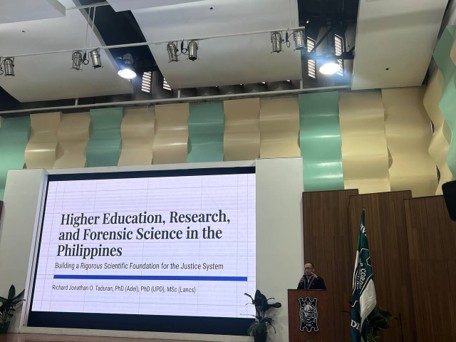
The opening presentation slide for Dr. Richard Jonathan O. Taduran’s session, “Higher Education, Research, and Forensic Science in the Philippines,” emphasized the need for a rigorous scientific foundation for the justice system.
Shared Learning and Institutional Collaboration
The seminar’s featured speakers represented complementary areas of expertise: forensic anthropology and higher education, the connection between academe and practice, the integration of forensic evidence in judicial systems, and medico-legal investigation. Together, their presentations highlighted that justice through science requires cooperation among educators, forensic practitioners, investigators, legal professionals, and judicial institutions.

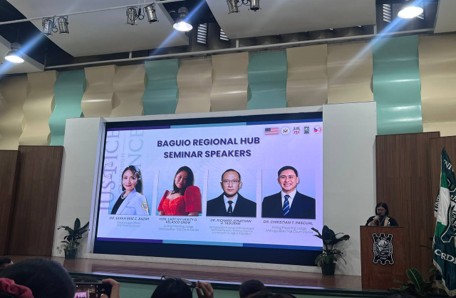
The Baguio Regional Hub seminar-speaker features PCPT Sarah Mae C. Bazar, Hon. Lady Ivy Vanity D. Velasco-Snow, Dr. Richard Jonathan O. Taduran, and Dr. Christian T. Pascual
For Ms. Faith Pae Javier and Mr. Jereign Francis Mejia, participation in the seminar provided an opportunity to engage with current discussions on forensic science education and its applications in criminal investigation and adjudication. The presentations were relevant to criminology education, where future professionals need not only knowledge of law and investigative procedures but also an appreciation of scientific reasoning, ethical practice, and the limitations of forensic conclusions.

Participants and representatives pose for a group photograph during the Justice Through Science activity at the University of the Cordilleras on October 20, 2026.
Alignment with the United Nations Sustainable Development Goals
The seminar aligned with several United Nations Sustainable Development Goals (SDGs). SDG 4: Quality Education was reflected in the emphasis on strengthening forensic science education, research competence, and continuing professional learning. The exchange of knowledge can help academic institutions prepare students and practitioners with the scientific understanding required for responsible forensic work.
The activity also related to SDG 9: Industry, Innovation and Infrastructure through its focus on scientific research and the practical application of forensic knowledge. Connecting academic institutions with professionals can support the development and use of more rigorous investigative approaches.
Its strongest alignment was with SDG 16: Peace, Justice and Strong Institutions, as the presentations emphasized evidence-based investigation, responsible interpretation of findings, and informed adjudication—principles that contribute to accountability and public confidence in justice institutions.
Furthermore, SDG 17: Partnerships for the Goals was reflected in the collaboration among academic, forensic, and justice-sector perspectives. Continued knowledge-sharing among these stakeholders can strengthen professional networks and encourage coordinated efforts to improve forensic science education and practice. These alignments describe the seminar’s contribution to learning and collaboration; they do not constitute measured outcomes for the SDG indicators.
Strengthening a Science-Informed Justice System
The Justice Through Science Regional Seminar reaffirmed that forensic science is more than a set of technical procedures. It is an important source of scientific information that can help investigators establish facts, assist courts in evaluating evidence, and support the fair administration of justice. Its contribution depends on rigorous methods, clear communication, ethical conduct, and recognition of scientific uncertainty.
UB’s participation, represented by Ms. Faith Pae Javier and Mr. Jereign Francis Mejia, reflected its commitment to professional learning and to applying forensic science rigorously, ethically, and responsibly in support of justice.