
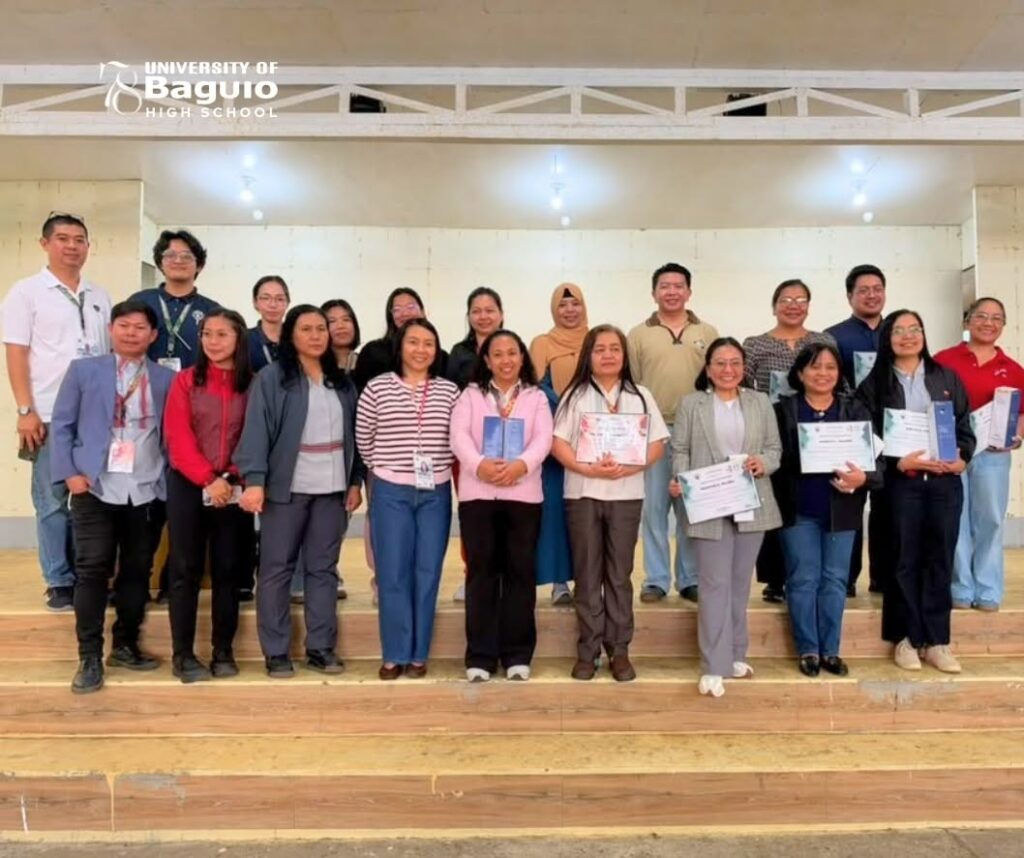
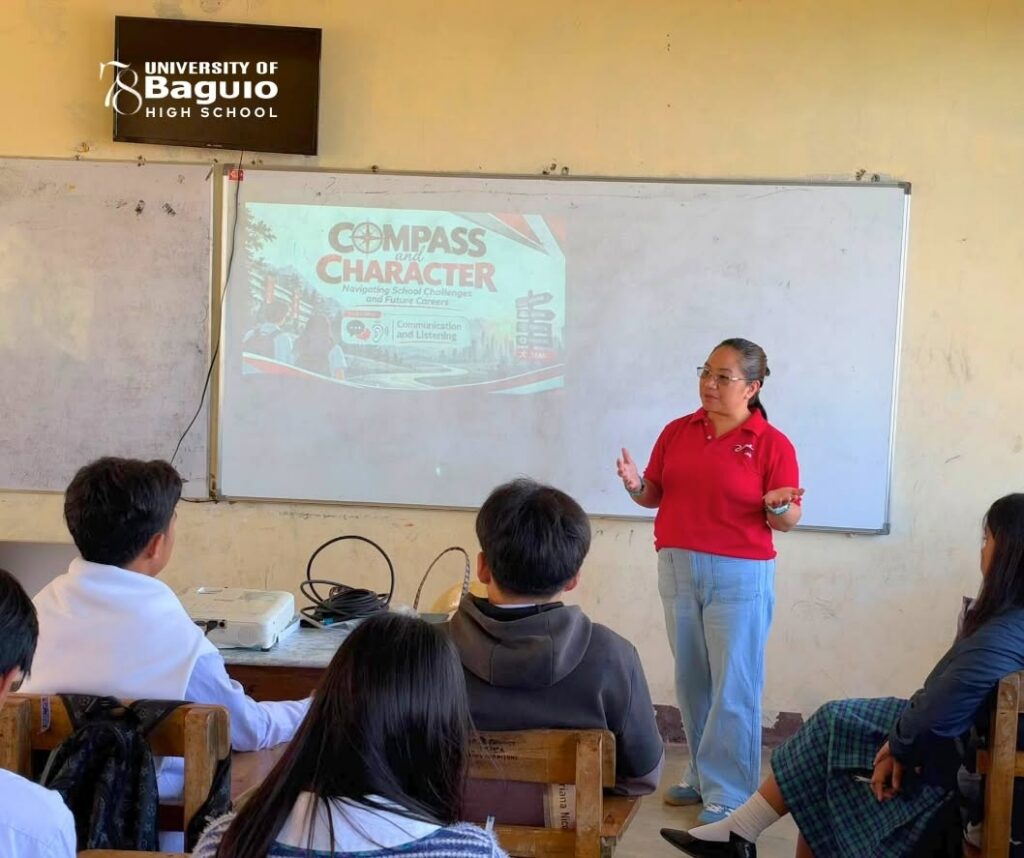
BAGUIO CITY | October 21, 2026 — The University of Baguio High School (UBHS), represented by Dr. Violeta F. Apiles and Ms. Jubilyn G. Kiing, strengthened its educational outreach beyond campus walls by serving as volunteer resource facilitators in the “Compass & Character: Navigating School Challenges and Future Careers” program organized by the Baguio Character Council (BCC) at Irisan National High School. Held from 8:00 AM to 5:00 PM, the full-day initiative engaged more than 200 Grade 10 learners in meaningful discussions on character formation, school challenges, communication, and future career readiness.
The engagement reflected UBHS’s commitment to shared responsibility in nurturing responsible, competent, and compassionate young people. Through this community-centered endeavor, the school demonstrated that quality education extends beyond classroom instruction and becomes more meaningful when educational institutions collaborate to support the holistic development of learners.

Character Education Through Communication and Listening
Central to the day’s activities was Module 2: Communication and Listening, facilitated by Dr. Apiles and Ms. Kiing. The session emphasized the importance of these life skills in building positive relationships, encouraging effective collaboration, promoting responsible decision-making, and preparing learners for future professional environments.
The facilitators highlighted that communication involves more than expressing thoughts and sharing information. It also requires listening attentively, understanding different perspectives, and responding with respect and empathy. These practices help learners communicate their ideas clearly while recognizing the feelings, experiences, and opinions of others.
Through interactive discussions and audience-centered activities, the Grade 10 learners were encouraged to examine how their everyday communication choices influence their relationships with classmates, teachers, family members, and the broader community. They reflected on the value of active listening, giving others their full attention, asking questions to clarify meaning, and responding thoughtfully instead of reacting immediately.
These lessons reinforced the connection between communication and character. How individuals listen, speak, and respond to others often reflects their respect, patience, responsibility, and willingness to understand different points of view. By developing these qualities, learners can build healthier relationships and contribute to a more respectful and supportive learning environment.
Building Character Through Respect, Empathy, and Understanding
Character formation plays an important role in helping young people navigate school challenges and interpersonal relationships. As learners encounter different opinions, expectations, and experiences, their ability to communicate respectfully and listen with understanding becomes essential.
The session encouraged learners to recognize that misunderstandings can arise when people fail to listen carefully or make assumptions about what others mean. Practicing active listening allows individuals to understand situations more clearly before responding. Similarly, expressing thoughts respectfully can help prevent unnecessary conflicts and encourage constructive conversations.
These skills are valuable in the classroom, where students work with peers who may have different perspectives, strengths, and learning needs. By listening to one another and acknowledging differences, learners can participate more effectively in group activities, address disagreements peacefully, and develop stronger relationships with their classmates.
Beyond academic settings, respect and empathy also guide learners in their interactions with family members and members of their communities. Developing these values helps young people become more mindful of how their words and actions affect others. In this way, character education supports not only individual growth but also the development of communities built on understanding, cooperation, and mutual respect.
Character Development for Future Careers and Life Challenges
With the theme “Compass & Character: Navigating School Challenges and Future Careers,” the program emphasized that academic knowledge and technical competence are not the only requirements for future success. Learners also need interpersonal skills and strong personal values to navigate changing circumstances, respond to challenges, and work effectively with others.
Clear communication and attentive listening are essential in many professional environments. Employees must be able to share information accurately, understand instructions, collaborate with colleagues, and respond appropriately to feedback. These competencies also help individuals manage disagreements, solve problems, and contribute to shared goals.
For Grade 10 learners preparing for the next stages of their education, developing these skills provides a foundation for making informed decisions about their academic pathways and future careers. Practicing respectful communication and responsible decision-making can help them approach opportunities with greater confidence while remaining mindful of their responsibilities to others.
The session further reinforced that character is demonstrated through everyday choices. Showing integrity, accepting responsibility, respecting differences, and remaining open to learning are important qualities that can guide learners as they encounter new experiences. By combining knowledge with empathy, resilience, and accountability, young people can become more prepared to face challenges and contribute positively to society.

Character Education Advances SDG 4: Quality Education
The initiative contributes to Sustainable Development Goal 4 (SDG 4): Quality Education, particularly Target 4.7, which promotes the knowledge and skills needed to advance sustainable development, human rights, a culture of peace, global citizenship, and appreciation of cultural diversity.
By integrating communication, listening, and character formation into a structured school program, the activity supports a broader understanding of quality education. Learning is not limited to acquiring academic knowledge; it also involves developing the attitudes, values, and practical skills necessary for responsible participation in society.
Providing learners with opportunities to reflect on their behavior, understand others, and practice constructive communication helps prepare them for meaningful engagement in their schools and communities. These competencies are particularly important in creating inclusive learning environments where learners feel respected, valued, and encouraged to participate.
Through initiatives such as this, UBHS supports educational efforts that recognize the importance of both intellectual development and personal growth. The engagement demonstrates how collaboration among educational institutions and community organizations can extend learning opportunities and contribute to the development of responsible, compassionate, and socially aware individuals.
Strengthening Character Through Community Partnerships
The collaboration between UBHS and the Baguio Character Council underscored the value of partnerships in advancing education and youth development. By sharing their knowledge and expertise with learners from another school, the UBHS representatives helped extend the reach of educational initiatives beyond their immediate campus community.
Such partnerships create opportunities for educators and institutions to work toward shared goals, exchange experiences, and respond to the developmental needs of young people. They also demonstrate how community engagement can complement classroom learning by providing learners with additional perspectives and opportunities to develop essential life skills.
The participation of Dr. Apiles and Ms. Kiing as volunteer resource facilitators reflected the role of educators in shaping not only academic achievement but also the values and competencies that learners carry into their daily lives. Their involvement affirmed that education becomes more impactful when knowledge is shared and professional expertise is placed in the service of the wider community.
As the University of Baguio upholds its educational philosophy, “Educating for Competence. Building with Integrity. Serving with a Heart,” this volunteer engagement stands as a meaningful expression of education in action. It reflects the institution’s continuing commitment to helping young people develop the knowledge, character, and interpersonal skills needed to navigate life’s challenges and pursue their aspirations.
Through initiatives of this nature, UBHS continues to work alongside fellow educators and community partners in helping learners find direction, strengthen their character, and move forward with confidence. The compass that guides young people is shaped not only by knowledge but also by the values they uphold, the quality of their listening, and the meaningful connections they build with others.
University of Baguio High School — Building minds for the future.
Written by: Ms. Jubilyn G. Kiing