
Written by: DR. JOHANN BEN A. BAUTISTA
Driven by its mission to provide accessible and inclusive education, the University of Baguio advances Sustainable Development Goal 1 (SDG 1): No Poverty by reducing financial barriers to education and strengthening socio-economic resilience within its community.
The University recognizes that poverty remains one of the primary obstacles to academic completion and career advancement opportunities . As a direct response, the institution prioritizes its scholarship program as an intervention against financial exclusion.
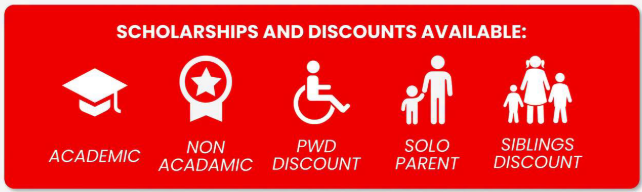
For School Year 2025–2026, the University of Baguio granted a total of ₱111,756,783.54 worth of scholarships and tuition discounts to 5,419 students. This substantial allocation demonstrates the University’s commitment to ensuring that deserving and financially challenged learners can continue their education without interruption.
Beyond scholarships, the University also supports poverty reduction through community outreach, financial literacy programs, entrepreneurial empowerment initiatives, and youth engagement in development-focused activities. These efforts extend the impact of SDG 1 beyond the campus and into the broader community.
Improvement of Access to Higher Education
The scholarship program eases financial barriers, reduces student dropout, and enables access to education for learners who comes from financially challenged families.
Promotion of Social Mobility and Economic Stability
By allowing students to complete professional degrees, the University increases employability and long-term earning potential, contributing to household poverty reduction.
Strengthening Community Economic Resilience
Through financial literacy seminars, entrepreneurial support (including assistance to visually impaired entrepreneurs), and community health missions, the University promotes sustainable livelihood and economic independence.
The high financial commitment required strong fiscal planning. To address this, the University continuously strengthens its resource management and prioritizes student financial assistance as a core institutional commitment, ensuring that scholarship support remains available to deserving and financially challenged learners.
Ensuring Fair and Transparent Scholarship Distribution. Balancing merit and financial need required structured screening. The University established clear eligibility guidelines and documentation requirements to maintain accountability and fairness.
Monitoring Long-Term Impact on Poverty Reduction. Measuring how scholarships translate into socio-economic mobility can be complex. The University strengthens alumni engagement and graduate tracking to assess employment outcomes and long-term impact.
The University of Baguio operationalizes SDG 1 through deliberate financial intervention and community-based empowerment programs. Its ₱111.76 million scholarship allocation for SY 2025–2026 reflects a strong institutional stance that education is the most sustainable tool for poverty reduction.
By combining tuition assistance, financial literacy initiatives, entrepreneurial empowerment, and outreach programs, the University addresses poverty at both the individual and community levels.
It is strongly recommended that the University sustain and, where possible, expand its scholarship programs and economic empowerment initiatives. Strengthening partnerships with external stakeholders will further enhance resource mobilization and broaden opportunities for economically disadvantaged learners and communities.