Written by Hannah G. Monang
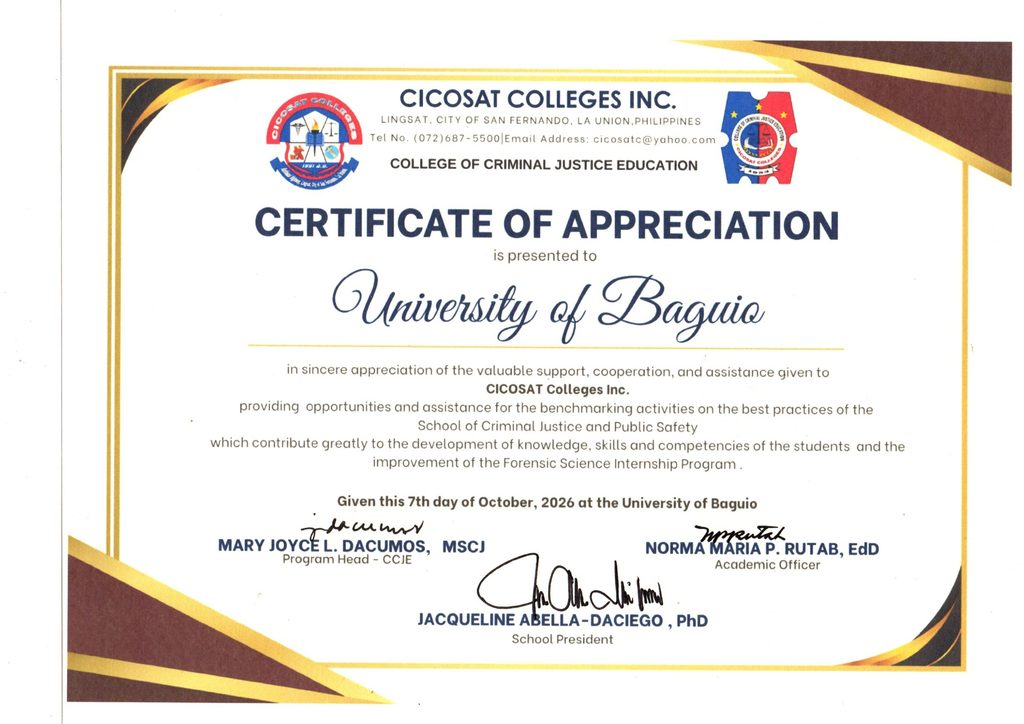
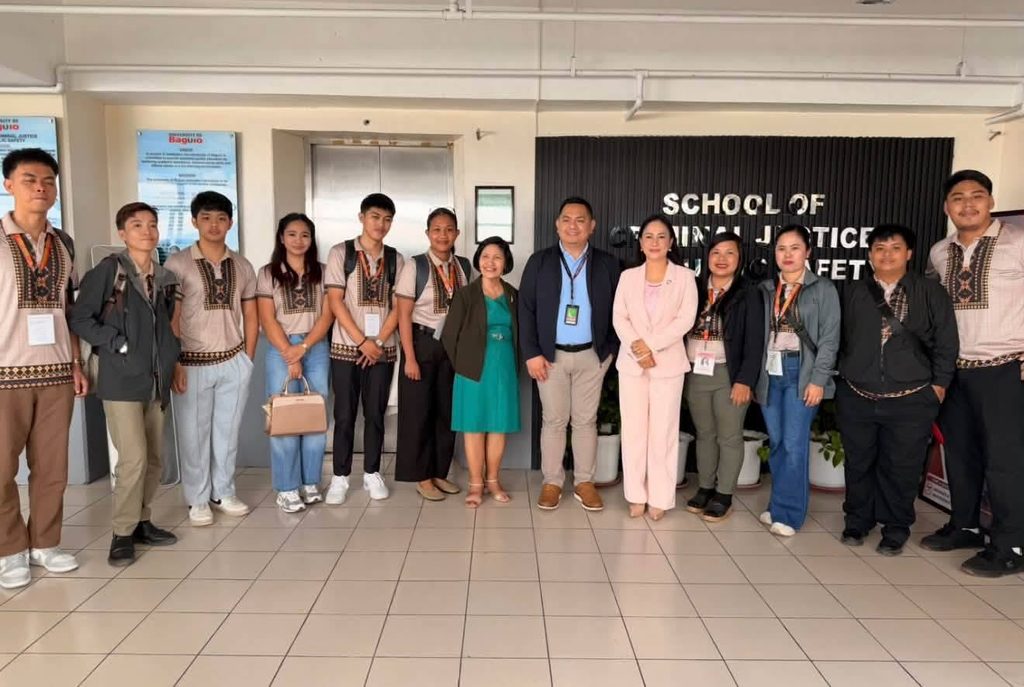
The College of Criminal Justice Education of Cicosat Colleges recently conducted a benchmarking activity at the University of Baguio on October 7, 2026, to learn from the institution’s exemplary programs and initiatives. This visit aimed at enhancing CICOSAT own academic and administrative processes by studying the best practices shared by the University of Baguio, particularly in the areas of internship programs, accreditation, and research development.
The University of Baguio generously opened its doors to showcase its well-structured internship programs, which provide students with vital real-world experience and exposure to the criminal justice system. The university’s approach emphasizes strategic partnerships with government agencies, law enforcement units, and community organizations to ensure comprehensive and meaningful internships that prepare students for professional success.
In addition to internships, the University of Baguio highlighted its rigorous accreditation processes, which guarantee high academic standards and continuous quality improvement. This commitment ensures that students receive education that meets both national and international benchmarks, thus raising the college’s competitive edge and credibility in the field of criminal justice.
Research development was another critical area of focus during the benchmarking. The University of Baguio demonstrated its strong culture of research, fostering studies that address contemporary issues in criminal justice, public safety, and social development. These research initiatives not only contribute to academic growth but also serve as valuable inputs for policy-making and practical interventions.
This collaborative exchange aligns closely with the United Nations Sustainable Development Goals, reinforcing the shared commitment to:
- SDG 4: Quality Education by striving to ensure inclusive, equitable, and quality education through improved programs and accreditation.
- SDG 16: Peace, Justice, and Strong Institutions by supporting education that cultivates justice, lawfulness, and social inclusion.
- SDG 17: Partnerships for the Goals through fostering partnerships between educational institutions to share knowledge, resources, and best practices.
The benchmarking visit symbolizes the proactive efforts of educational institutions like CICOSAT Colleges and the University of Baguio to elevate the standards of criminal justice education in the Philippines. By learning from one another, these institutions help strengthen the entire sector, promoting a more effective and just society grounded in academic excellence and collaboration.
This activity reinforces the role of universities as engines of sustainable development, innovation, and transformative education, preparing future professionals to contribute meaningfully to nation-building and social progress. The University of Baguio’s openness and leadership in sharing their expertise offer a model for others aspiring to raise their educational quality and social impact.