
Written by Aissa Pater (SN, Faculty)
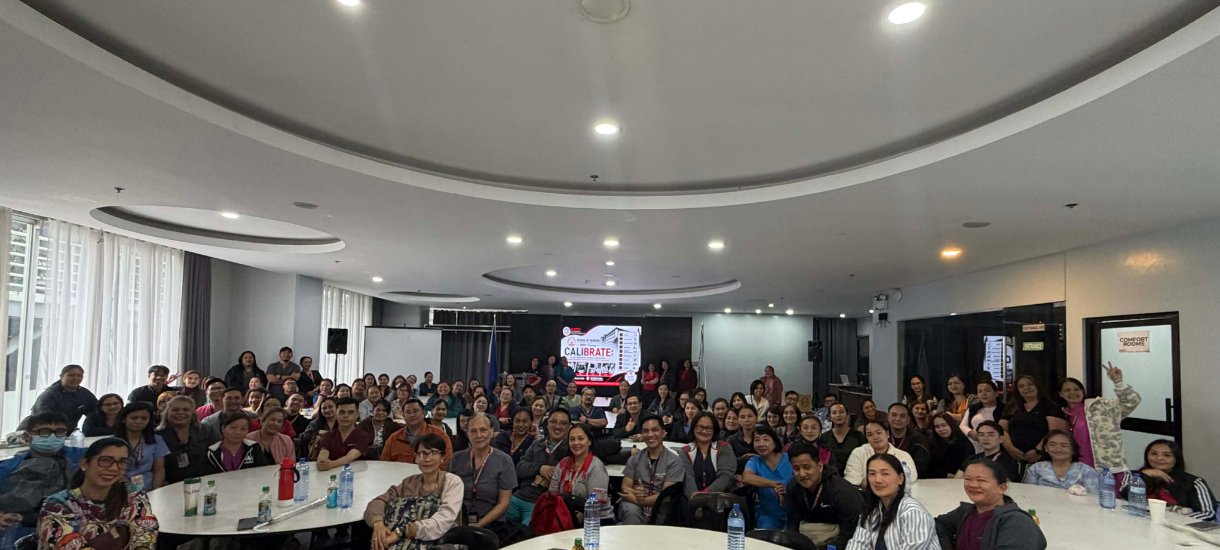
The University of Baguio School of Nursing, under its faculty development program IGNITE (Inspiring Growth and Nurturing for Teaching Excellence), conducted its In-Service Training (INSET) themed “CALIBRATE: Faculty Development Initiative on Standardized Nursing Procedures and Competency-Based Assessment.” The three-day activity was held on July 20, 30, and 31, 2026 at the University of Baguio gymnasium, centennial hall, and laboratory rooms, gathering nursing faculty members to align clinical teaching standards across the Maternal and Child Nursing, Operating Room (OR), Basic Life Support (BLS), Advancee Cardiac Life Support (ACLS), Disaster Nursing, and Community Health Nursing (CHN) tracks.
Anchored on the guiding principle “One Standard. One Faculty. One Measure of Excellence,” CALIBRATE aimed to standardize how nursing procedures are taught, demonstrated, and assessed — ensuring that every student, regardless of who their clinical instructor is, receives the same quality of instruction and is evaluated against the same benchmarks of competence.
A Three-Day Journey Toward Standardization
Day 1 (Monday, July 20, 2026) opened with remarks from Dr. Helen D. Alalag, RN, followed by a presentation on the UB BSN Outcomes-Based Education (OBE) Curriculum by Dr. Jefferson Galanza together with Dr. Elizabeth H. Bautista. Dr. Helen D. Alalag and Ms. Ivy May V. Marbella, RN, MAN presented the UB Curriculum Map, Alignment Matrix, and course syllabus components followed by critiquing and feedback session.
Day 2 (Thursday, July 30, 2026) centered on the heart of the calibration process. Dr. Elizabeth Hull Bautista discussed enhancing the quality of nursing education through standardized clinical procedures, faculty calibration, and competency-based assessment while Ms. Cherilyn Danglipen, RN, MAN guided faculty through the review and validation of clinical procedure checklists and assessment rubrics. On the other hand, Level Coordinators, Ms. Zorenne B. Diwag, RN, MAN, Ms. Aissa D. Pater, RN,MAN and Ms. Diana Marie Amwao presented the calibration mechanism and facilitated the checklist review.
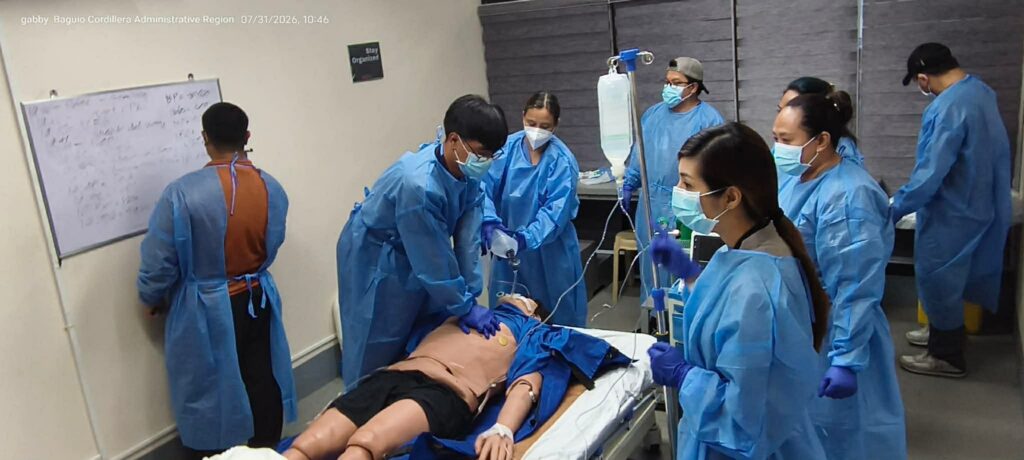
Day 3 (Friday, July 31, 2026) put theory into practice with a Faculty Skills Presentation and Return Demonstration led by the Level Coordinators and Program Chair in the different laboratory rooms. Further, Ms. Sharon Hogat, RN, MAN, discussed faculty demonstration on their calibrated clinical skills as well as the concept of strengthening standardized clinical practice in the community. This was followed by a sharing of faculty take-aways of faculty members and sharing of their experiences during the skills calibration. Finally, a closing message from Dr. Janice Kaylyn K. Lonogan, Vice President for Academic Affairs, where she reiterated the importance of the INSET CALIBRATE at the same time gave appreciation to the efforts and activities conducted by the School.
Throughout the three days, the CALIBRATE acronym served as a guidepost — representing Clinical, Assessment and Learning through Instructional Bridging of Theory and Practice, Reliability, and Accuracy in Teaching and Evaluation.
Aligning with the Sustainable Development Goals. CALIBRATE is more than an internal training exercise, it is a concrete institutional contribution to several United Nations Sustainable Development Goals (SDGs):
SDG 3 – Good Health and Well-Being: By standardizing clinical procedures across nursing skills and specializations. The initiative directly strengthens the quality and consistency of future health workers. Nursing graduates trained under calibrated, competency-validated standards are better prepared to deliver safe, accurate, and reliable patient care — a foundational step toward improved health outcomes in the communities they will serve.
SDG 4 – Quality Education: At its core, CALIBRATE is a faculty development and instructional alignment program. By reviewing curriculum maps, syllabi, procedure checklists, and assessment rubrics, and by validating these tools among faculty, the University ensures equitable, high-quality, and outcomes-based nursing education for every student, regardless of section or instructor.
SDG 5 – Gender Equality: Nursing education and the broader healthcare workforce remain fields predominantly led and shaped by women. Initiatives like CALIBRATE — largely organized, facilitated, and delivered by women nurse-educators — reflect and reinforce women’s leadership in shaping professional standards, capacity-building, and institutional excellence in healthcare education.
SDG 17 – Partnerships for the Goals: CALIBRATE exemplifies collaborative capacity-building within an institution — bringing together academic leaders, clinical instructors, committee members, administrators and different guest speakers from Saint Louis University, around a shared goal. This spirit of partnership, coordination, and collective ownership of educational standards mirrors the broader SDG call for strong, collaborative institutions working toward common development goals.
Toward One Standard of Excellence. Through CALIBRATE, the University of Baguio School of Nursing reaffirms its commitment to producing globally competent and compassionate Nurses.