

Written by Ayesha Pebbles Alilis
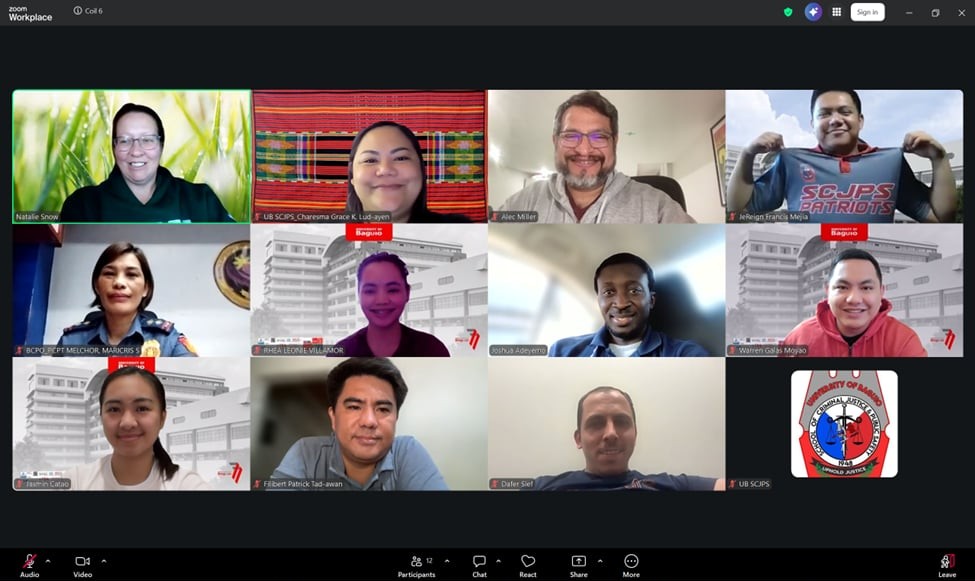
Students from the University of Baguio (UB) and Niagara University participated in a virtual presentation session under the Collaborative Online International Learning (COIL) program, showcasing multimedia advocacy projects focused on correctional systems, rehabilitation, and community-based justice reform. The activity provided a platform for international academic engagement, enabling students to exchange perspectives, examine comparative justice practices, and critically evaluate contemporary challenges affecting correctional institutions and community justice systems.
The session primarily contributed to Sustainable Development Goal (SDG) 4 – Quality Education, particularly Target 4.7, which promotes education for sustainable development, human rights, a culture of peace and non-violence, global citizenship, and appreciation of cultural diversity. Through comparative research, collaborative presentations, and intercultural dialogue, participants strengthened their analytical, communication, and advocacy competencies while developing a broader understanding of justice and correctional practices across different national contexts.
Jasmin Catao and Joshua Adeyemo opened the presentations with their multimedia advocacy project entitled “Inmate Poor Mental Health Support and Its Impact on Recidivism.” Conducted in the presence of Dr. Natalie Snow, Dr. Charesma Grace K. Lud-ayen, Dr. Warren Moyao, and Dr. Filibert Patrick F. Tad-awan, the presentation examined mental healthcare challenges within Canadian and Philippine correctional institutions. The students identified structural gaps in the delivery of mental health services and explored the importance of accessible psychological support, humane treatment, and rehabilitation-oriented correctional practices in addressing factors associated with recidivism.
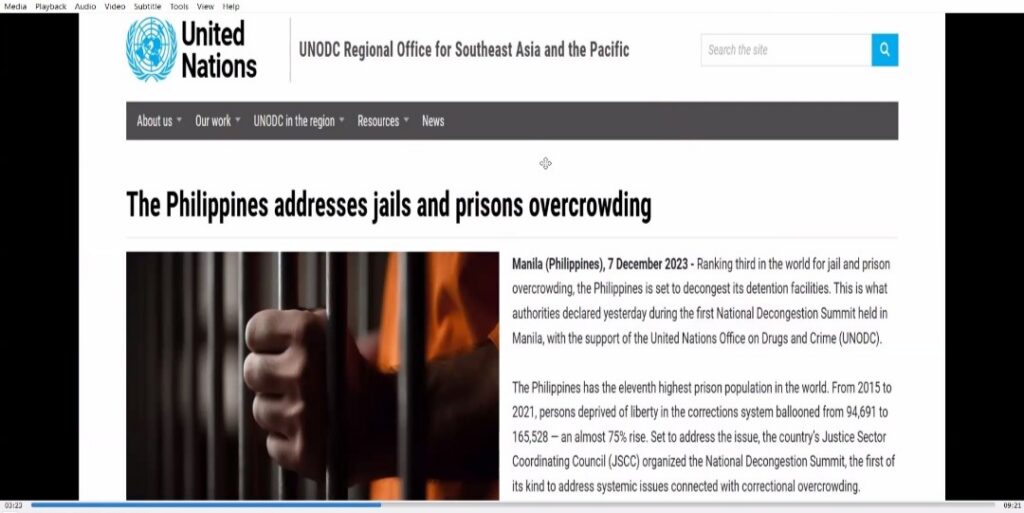


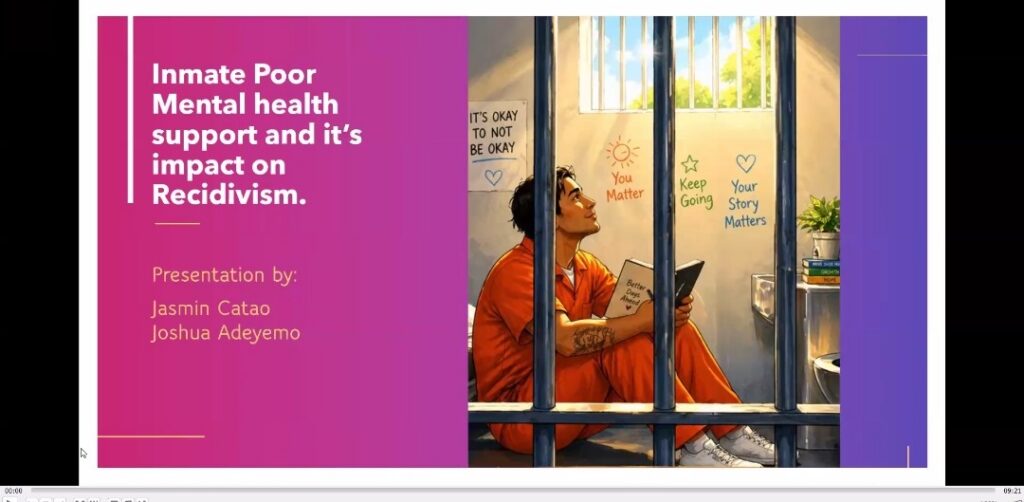
The presentation aligned with SDG 16 – Peace, Justice and Strong Institutions, particularly Target 16.6, which emphasizes the development of effective, accountable, and transparent institutions. By examining institutional responsibilities concerning the welfare and rehabilitation of incarcerated individuals, the project encouraged critical reflection on the role of correctional systems in promoting humane treatment, responsible governance, and successful reintegration into society. The discussion also demonstrated thematic relevance to SDG 3 – Good Health and Well-Being, particularly Target 3.4 on promoting mental health and well-being.
Building on the discussion of correctional reform, Jereign Francis Mejia and PCPT. Maricris Melchor presented a comparative analysis of community-based justice mechanisms in the Philippines and Canada. Their project examined the Philippines’ Barangay Justice System, or Katarungang Pambarangay, alongside Canada’s Community Justice Centres, highlighting the significance of accessible, community-responsive, and non-punitive approaches to appropriate disputes and justice-related concerns.


This comparative presentation supported SDG 16, particularly Target 16.3, which promotes the rule of law and equal access to justice. By examining mechanisms that may facilitate dispute resolution, community participation, and alternatives to conventional court proceedings, the students demonstrated how justice systems can incorporate locally responsive approaches while maintaining respect for legal processes and individual rights.
Beyond the individual presentations, the COIL session also reflected SDG 17 – Partnerships for the Goals, particularly the knowledge-sharing and collaborative principles emphasized under Target 17.16. The continuing academic engagement between Niagara University and the University of Baguio provided opportunities for international cooperation, shared learning experiences, and the exchange of institutional and professional perspectives on criminal justice and corrections.
The activity further illustrated the value of integrating internationalization into higher education. Through technology-enabled collaboration, students were able to move beyond traditional classroom discussions and engage in comparative analysis of justice systems, institutional challenges, and culturally informed approaches to rehabilitation and community justice.
Overall, COIL 6 reinforced the role of international academic partnerships in promoting quality education, critical inquiry, responsible citizenship, and a deeper understanding of justice and correctional reform. By connecting academic learning with contemporary societal concerns, the initiative strengthened opportunities for students to develop the knowledge, professional competencies, and global perspectives necessary to contribute to more humane, inclusive, accountable, and effective justice systems.


