
Written by: Dr. Charesma Grace K. Lud-ayen
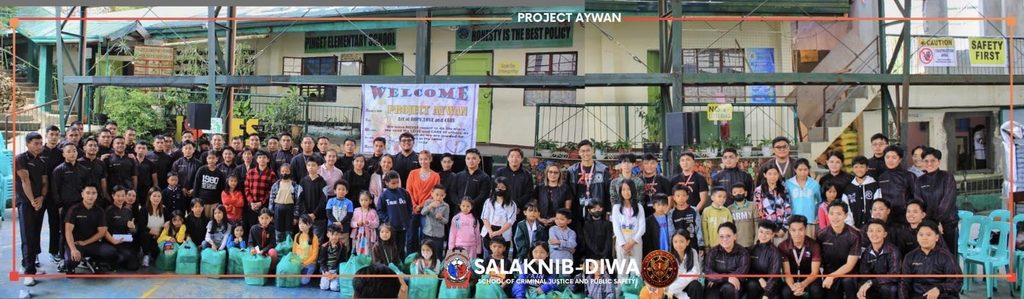
The University of Baguio advances Sustainable Development Goal 16: Peace, Justice, and Strong Institutions through a comprehensive framework integrating academic instruction, community engagement, research collaboration, and justice-sector partnerships. The University prepares ethical and competent professionals committed to strengthening justice institutions and promoting community safety.
Since its pioneering establishment of BS Criminology in Northern Luzon and as the nation’s pioneer institution offering the Bachelor in Forensic Science, UB-SCJPS has progressively expanded its impact beyond the classroom—reaching communities in Baguio City and engaging in international forensic science networks in India, Thailand, and the Philippines. Its initiatives span Project AYWAN, a sustained community adoption program at Pinget Elementary School active since 2016; the BJMP-CAR rehabilitation partnership supporting literacy and life-skills development for Persons Deprived of Liberty; participation in a national CHR–UN human rights workshop; TraceNet, a nationally recognized digital justice innovation developed by students; the Free Criminologist Licensure Examination (CLE) Review Program; anti-hazing and public safety advocacy campaigns; participation in IASR international forensic science conferences; and a robust network of more than 30 local, regional, national, and international institutional partners.
Across five academic years (2021–2026), the University has sustained strong academic and professional outcomes while advancing SDG 16 in practice. The school consistently achieved criminologist licensure examination performance above the national average, including an 86.26% first-taker passing rate compared with the 60.50% national average in February 2025, while also producing national top-notchers. At the same time, its programs extend justice education to marginalized sectors, including indigent students and Persons Deprived of Liberty, through literacy initiatives, career-pathing workshops, and professional mentorship programs that support future public safety professionals. As emphasized in all the University projects driving principle in SDG 16, Education is a powerful tool for empowerment. By supporting communities and developing ethical professionals, the University help build institutions that uphold justice, accountability, and peace.
Through these sustained initiatives, the University of Baguio demonstrates how higher education institutions can actively contribute to building peaceful communities and strengthening justice systems.
Student Excellence and Career Readiness. Integrating SDG 16 into academic programs has strengthened the professional readiness and ethical formation of students. The University of Baguio achieved an 86.26% first-taker passing rate in the Criminologist Licensure Examination (February 2025), significantly exceeding the 60.50% national average, and produced a Top 6 national topnotcher, Mr. Theodore Domoguen (91.65%). The PATRIOT Free Criminologist Licensure Review Program (Season 6, 2025) helps remove financial barriers to professional certification by providing free board review support to graduates. Student innovation has also flourished: UB-SCJPS interns placed 3rd nationally in the 1st National Peace and Justice Ideation and Pitch Competition with TraceNet, a digital platform designed to improve citizen–police communication in missing-person cases. Alumni success further demonstrates the program’s impact, with graduates entering elite institutions such as the Philippine National Police Academy (PNPA) LAYAG-DIWA Class of 2024, while PO1 Randall Bantasan Tupac (Batch 2018) represented the Philippines at the UAE SWAT Challenge 2026.
Community Empowerment and Social Justice. SDG 16 initiatives have enabled UB-SCJPS to expand justice education and services to underserved communities. Project AYWAN, implemented since 2016, provides sustained support to indigent learners at Pinget Elementary School through school supplies, hygiene kits, educational assistance, and seminars on Violence Against Women and Children (VAWC). In partnership with the Bureau of Jail Management and Penology – Cordillera Administrative Region (BJMP-CAR), the Reading and Tutorial for Reformation Program (formalized through an MOA in February 2026) offers ALS-aligned literacy education, livelihood skills training such as hydroponics, ICT, and baking, as well as counseling and wellness programs for Persons Deprived of Liberty at the Baguio City Jail. Complementing these initiatives, the University of Baguio School of Law Legal Clinic (established in March 2023) provides free legal consultations to marginalized community members, while SCJPS and the Baguio City Police Office jointly delivered legal awareness seminars to over 500 UB students in May 2025.
Institutional Recognition and Global Academic Engagement. The integration of SDG 16 has strengthened the university’s institutional credibility and international academic engagement. UB-SCJPS received the Kabaddang Award from the Philippine Association of Medical Technologists (PAMET) Baguio–Benguet–Mountain Province Chapter in October 2025, recognizing the school’s sustained contributions to professional integrity and institutional service. Leadership engagement has also expanded nationally and internationally: the SCJPS Dean was appointed to the Advisory Council of the National Police Training Institute – Police Regional Training Center 1 (2023), delivered a keynote address at the 16th IASR International Conference on Forensic Science in India (September 2025), and represented the university among more than 60 criminology deans at the CHR–OHCHR national workshop on human rights in criminology education (May 2025). Partnerships with institutions such as Huachiew Chalermprakiet University (Thailand) and the Sherlock Institute of Forensic Science (India) continue to strengthen the school’s international research and training network.
Sustaining Long-Term Community Engagement. Maintaining a community adoption program for nearly a decade required institutional commitment beyond individual volunteerism. To ensure sustainability, UB-SCJPS formally designated Pinget Elementary School as an official partner community, integrated student internship cohorts as regular participants in Project AYWAN, and mobilized resources through partner organizations including BJMP-CAR and local civic groups. Institutionalizing the program ensured continuity even with changes in leadership or student cohorts.
Bridging Academic Knowledge with Real-World Justice Systems. One of the key challenges in advancing SDG 16: Peace, Justice, and Strong Institutions was ensuring that academic instruction remained responsive to the rapidly evolving demands of real-world justice and public safety institutions. Criminal justice education must continuously adapt to developments in policing practices, forensic science technologies, corrections management, and human-rights-based governance. Without sustained collaboration with justice-sector agencies, there is a risk that academic training becomes disconnected from the realities of professional practice.
To address this challenge, the University of Baguio – School of Criminal Justice and Public Safety (UB-SCJPS) strengthened a broad network of institutional partnerships linking the classroom to the operational environment of the criminal justice system. Central to these collaborations are the Philippine criminal justice “Tri-Bureau” agencies—the Philippine National Police (PNP), the Bureau of Jail Management and Penology (BJMP), and the Bureau of Fire Protection (BFP)—which support field exposure, internships, professional training activities, and community safety initiatives. At the local level, partnerships with the Baguio City Police Office (BCPO), BJMP–Cordillera Administrative Region, and the Bureau of Fire Protection – Baguio City provide students with experiential learning opportunities through seminars, immersion activities, and collaborative outreach programs focused on public safety and community awareness. Beyond national engagements, the school actively participates in international academic networks through collaborations with Huachiew Chalermprakiet University (Thailand) and the Sherlock Institute of Forensic Science (India), as well as participation in global forensic science conferences organized by the International Association of Scientists and Researchers (IASR).
Through these multi-sector partnerships, UB-SCJPS integrates practitioner knowledge, internships, community engagement, and research collaboration into its academic programs. This approach ensures that graduates develop the competencies, ethical orientation, and professional readiness required to contribute effectively to accountable and resilient justice institutions.
Sustaining Multi-Sector Partnerships. Implementing SDG 16 initiatives requires collaboration among multiple stakeholders, including government agencies, educational institutions, and community organizations. Coordinating activities among these partners can be complex due to differences in operational priorities, administrative procedures, and resource availability. UB-SCJPS addressed this challenge by formalizing partnerships through memoranda of agreement and establishing regular communication mechanisms with partner institutions. These arrangements help align shared objectives, ensure accountability, and sustain long-term collaborative programs that support community engagement, rehabilitation initiatives, and professional development activities.
The experience of the University of Baguio demonstrates that higher education institutions can play a decisive role in advancing SDG 16: Peace, Justice, and Strong Institutions. By integrating academic excellence, experiential learning, and multi-sector partnerships, the school has shown that justice education can simultaneously empower students, strengthen institutions, and serve marginalized communities. Initiatives such as Project AYWAN, the BJMP-CAR Reading and Tutorial for Reformation Program, TraceNet, and the Free Criminologist Licensure Review Program illustrate how sustained engagement, ethical formation, and innovation contribute to inclusive, accountable, and resilient justice systems.
Several lessons emerge from UB-SCJPS’s experience. Long-term institutionalization of community programs ensures continuity beyond individual volunteer efforts. Formal agreements with justice-sector agencies secure access, legitimacy, and sustainability for rehabilitation and field-based initiatives. Encouraging student innovation fosters practical solutions that strengthen transparency, accountability, and public trust. Finally, global academic collaboration and participation in professional forums enhance institutional credibility and knowledge exchange.
Other institutions seeking to advance SDG 16 are encouraged to:
- Establish multi-sector partnerships linking classroom learning with professional practice.
- Institutionalize community engagement programs to sustain impact.
- Integrate human rights, restorative justice, and ethical leadership within curricula.
- Encourage student innovation to address real-world justice challenges.
- Leverage international networks for benchmarking, research, and knowledge sharing.
Through these strategies, universities can actively contribute to building peaceful, just, and strong institutions locally and globally.