
Written by Kennu Poyaoan, Zhekianah Ordonio, and Edria Sevilla
BAGUIO CITY — Preparing future criminologists for the demands of public service requires more than academic instruction. It calls for opportunities to develop practical competencies, sound professional judgment, and a strong commitment to ethical service. These priorities shaped the University of Baguio’s (UB) School of Criminal Justice and Public Safety (SCJPS) observance of the 3rd Criminology Profession Week on November 6, 2026, at the University of Baguio FGB Hall.
Organized in partnership with the Professional Criminologists Association of the Philippines (PCAP), the event carried the theme “Vanguard of Justice: Shaping Future Leaders in Law Enforcement.” It brought together criminology students, alumni, and law enforcement practitioners for professional discussions and practical activities intended to connect academic learning with the responsibilities of the criminology profession.
The morning session opened with a Tuntungan, which featured BS Criminology alumna Caroline C. Chelnag, alongside PMAJ Marcy Grace U. Marron and PCpl Jade M. Agustin. The session provided an opportunity to emphasize the values and responsibilities expected of aspiring criminologists.
Chelnag reminded students that professional authority must be exercised with competence and a commitment to public service. “Never lose your passion. Remember that authority is a privilege, public life is a responsibility, and service must always be guided by competency,” she said.
She further emphasized that criminology extends beyond the protection of communities. It also involves contributing to a society where justice is upheld, human dignity is respected, and individuals are given opportunities for positive change. Her message underscored the importance of combining professional capability with compassion, accountability, and respect for the people whom future criminologists will serve.
The afternoon activities shifted from professional reflection to practical application under the theme “Beyond the Classroom: Engaging Future Criminologists.” Through a series of technical training sessions, students were introduced to skills relevant to emergency response and criminal investigation.
Mr. Jereign Mejia led the Basic Life Support (BLS) session, covering cardiopulmonary resuscitation (CPR), casualty-carrying techniques, and tactical bandaging. These competencies are relevant to situations in which first responders must provide immediate assistance and help protect the safety and well-being of individuals in need.
The training continued with a Crime Scene Investigation (CSI) session led by Mr. Davy Limmong. Students received guidance on crime-scene processing, the preservation of physical evidence, and the maintenance of the chain of custody. These procedures are essential to the integrity of criminal investigations, as the proper handling and documentation of evidence help protect its reliability and support the administration of justice.
The technical sessions culminated in an “Application and Games” segment, where participants tested their knowledge and demonstrated their skills through a debate, quiz bee, and poster-making contest. The activities encouraged students to apply what they had learned while exercising communication, critical thinking, teamwork, and creative problem-solving.
In the debate, Team A, composed of Venshane Caloy, Kennel Diza, Giovanni Ballog, and Clarrise Ulep, emerged as the winner. Team A, consisting of Liza Marie Cariño, Ashanti Marty, Angel Saysay, and Krianne Dacpano, secured the top spot in the quiz bee. In the poster-making contest, Axel Imus was named the winner.
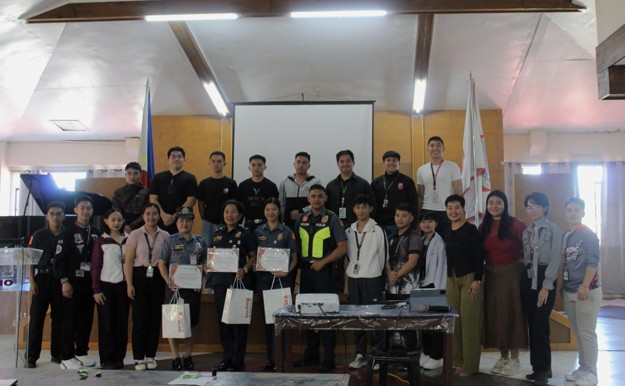
The 3rd Criminology Profession Week reflects SCJPS’s commitment to complementing academic instruction with opportunities for professional exposure and applied learning. By bringing together alumni, practitioners, and students, the activity created a setting where professional values could be discussed alongside the technical competencies expected in criminology practice.
Its contribution to Sustainable Development Goal 4 (Quality Education) is particularly evident in the integration of practical exercises, technical instruction, and opportunities for students to apply their knowledge. The event also supports Sustainable Development Goal 16 (Peace, Justice and Strong Institutions) by emphasizing ethical public service and proper investigative procedures, including evidence preservation and chain-of-custody practices.
Ultimately, preparing future criminologists means equipping them not only to respond to operational demands but also to recognize the responsibility that comes with serving the public. Through professional engagement and skills-based learning, UB-SCJPS continues to provide students with opportunities to develop the knowledge, competence, and ethical grounding expected of future practitioners in criminology, law enforcement, and public safety.