
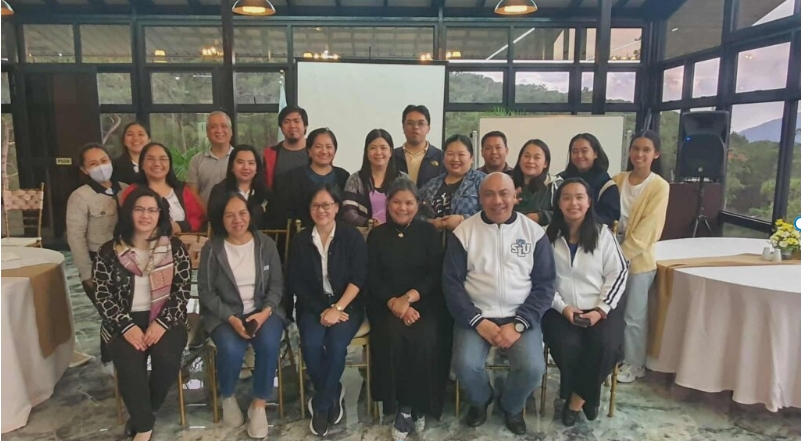
On November 14, 2025, University of Baguio High School represented by the Principal, Dr. Violeta F. Apiles and other private and public schools and universities, along with representatives from the Local Government Unit (LGU) of Baguio City and the Department of Education Division of Baguio, recently joined forces for a Write Shop dedicated to developing the Circular Economy Resource Book of Baguio City. This collaborative initiative is a new program of Baguio City called Pansa-nopen Tayo, aims to achieve the Baguio 2040 vision through strengthening environmental education and promote circular economy practices across the city.
Organized in partnership with the United Nations Development Programme (UNDP) and the EU-PH Green Economy Partnership Specific Objective (SO)2: Green LGU, the Writeshop highlights Baguio City’s commitment to sustainability, climate awareness, and community engagement.
Program Highlights
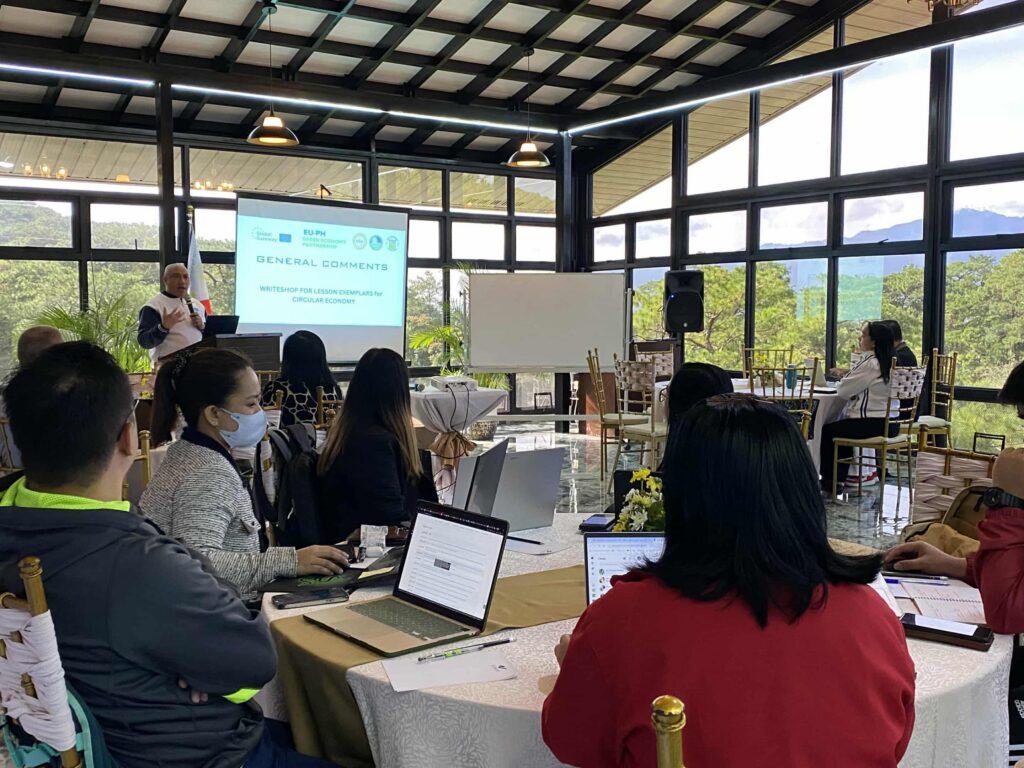
The day-long Writeshop commenced with registration and opening rites, highlighted by a short prayer led by Annie Marie Caguioa, setting a reflective and collaborative tone for the event. Participants then took part in the interactive “Kumustahan Session,” where experts Joselito C. Gutierrez, Stephenie O. Busbus, and Marilyn L. Balmeo guided discussions that offered constructive feedback on each module, fostering a culture of critical evaluation and continuous improvement.
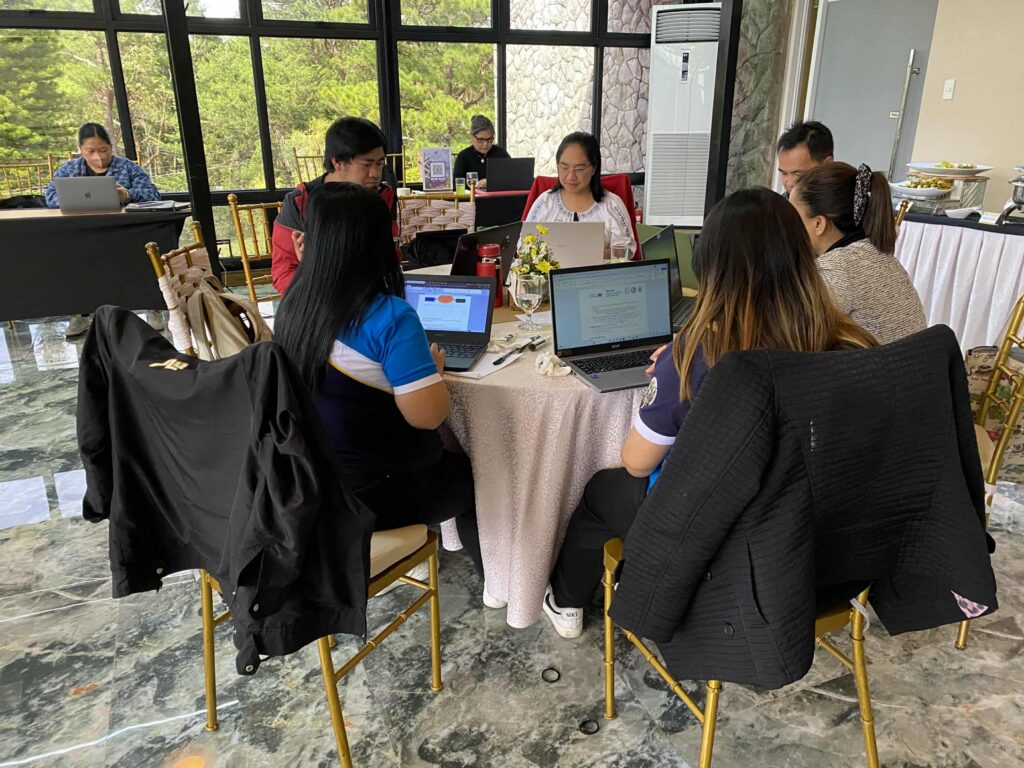
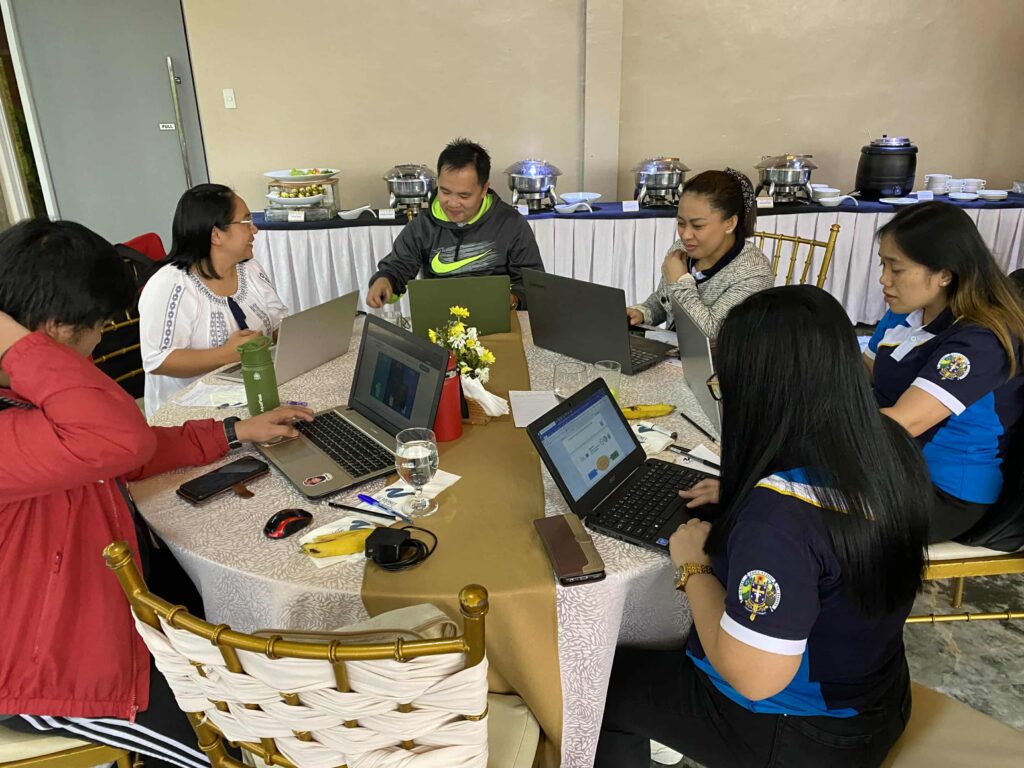
Following a brief health break, writers engaged in group refinement tasks, peer reviews, and task exchanges, carefully assessing each other’s contributions to enhance clarity, accuracy, and alignment with circular economy principles. After lunch, participants presented their modules in detailed task presentations and critiques, with support from the technical working group (TWG), LGU Circular Economy Action Team (LCEAT), and UNDP representatives.
The event concluded with final adjustments to the resource book’s table of contents, uploading revised modules to a shared Google Drive, and inspiring closing remarks delivered by Marjorie Balay-as, marking a successful and collaborative day of learning and contribution.
Collaborative Significance
This Writeshop stands as a powerful example of effective collaboration between educators, local government, and international organizations in advancing environmental sustainability. By integrating the expertise and knowledge of schools, universities, and the Baguio City LGU, the Circular Economy Resource Book is being developed as a comprehensive and practical guide for promoting environmental education, climate awareness, and sustainable practices throughout the city.
The active participation of University of Baguio High School Principal Ms. Violeta Apiles, alongside the dedicated team of resource book writers, highlights the strong local leadership and educational commitment essential for cultivating a culture of sustainability among students, educators, and the wider community. With the support of the United Nations Development Programme (UNDP), the initiative ensures that all contributions meet high standards of quality and relevance, addressing pressing environmental challenges such as pollution, biodiversity loss, and climate change.
Through this collaborative effort, Baguio City is setting a model for how educational institutions, government, and international partners can work together to inspire lasting environmental impact and community engagement.
Looking Ahead
As the Circular Economy Resource Book approaches completion, Baguio City stands out as an inspiring model of how public and private sectors, along with local and international partners, can come together to advance sustainable development. This collaborative initiative demonstrates that when diverse stakeholders unite with a shared purpose, significant and lasting environmental impact is achievable.
Designed as a practical and comprehensive guide, the resource book provides schools, community organizations, and LGU programs with actionable strategies to adopt circular economy practices, transforming sustainability from a concept into a shared responsibility and tangible goal. By offering clear guidance, practical examples, and innovative approaches, the book empowers educators and community leaders to implement meaningful change within their institutions and neighborhoods.
This initiative illustrates the power of collaboration, expert guidance, and active community engagement in advancing the Sustainable Development Goals (SDGs). By leveraging the knowledge, creativity, and dedication of educators, local leaders, and stakeholders, Baguio City is fostering a culture of sustainability that aligns with SDG 4 – Quality Education, promoting environmental learning and inclusive education. The project also supports SDG 11 – Sustainable Cities and Communities by guiding local programs toward environmentally responsible practices, SDG 12 – Responsible Consumption and Production through circular economy strategies, and SDG 13 – Climate Action by raising awareness of climate and environmental issues.
Furthermore, the initiative exemplifies SDG 17 – Partnerships for the Goals, demonstrating how schools, the LGU, UNDP, and community organizations can unite to drive meaningful environmental action. Together, these efforts pave the way for a resilient, eco-conscious, and sustainable future for the entire Baguio community.