
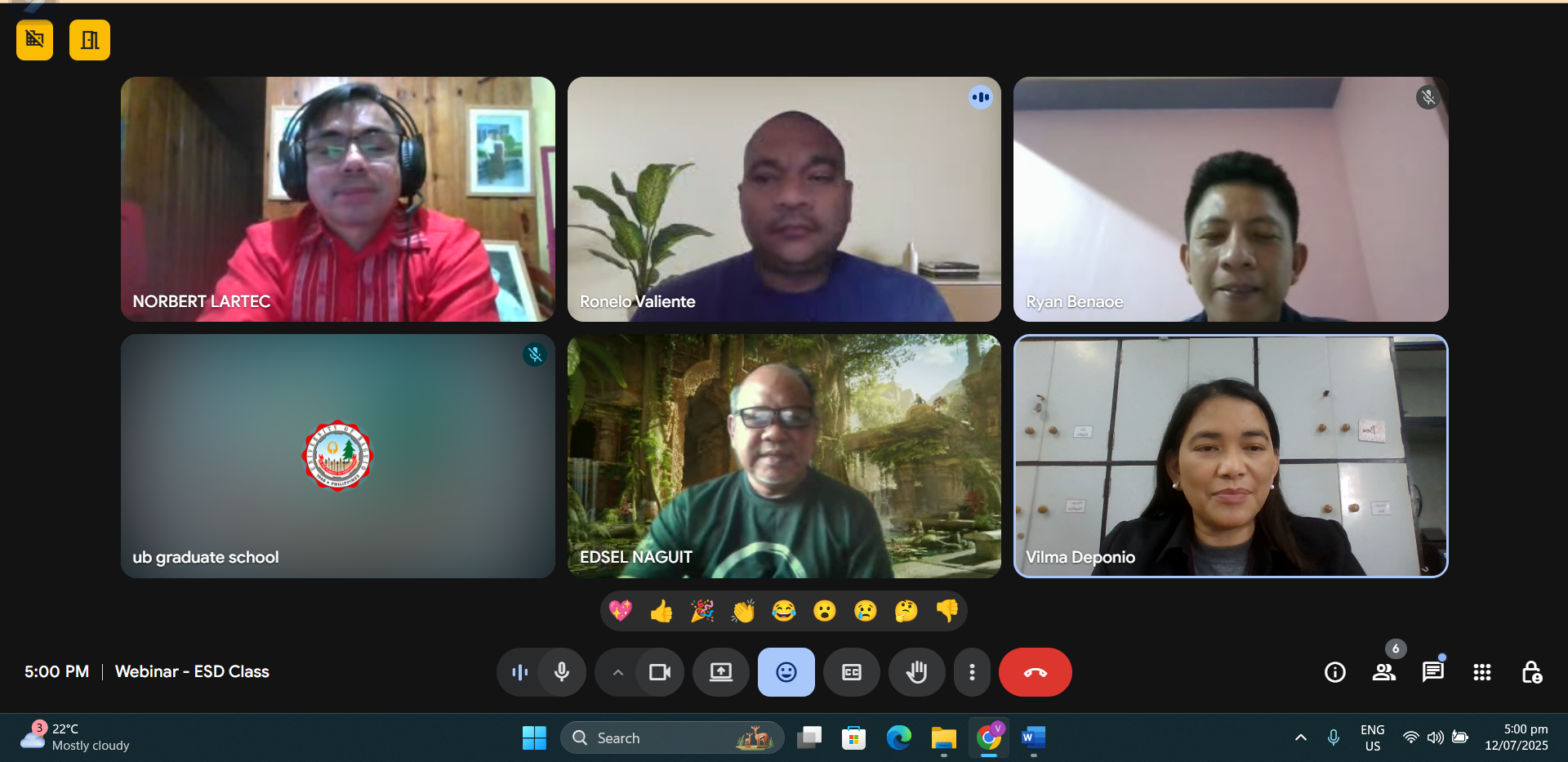
Written by Dr. Vilma Deponio
The University of Baguio (UB) plays a vital role in advancing Baguio City’s mission to become a livable, inclusive, and sustainable urban center by placing education at the forefront of long-term development. In harmony with the city’s vision and its commitment to the Sustainable Development Goals (SDGs), UB’s Doctor of Philosophy (PhD) program is purposefully designed to reflect and support Baguio’s initiatives in climate resilience, social equity, and ecological integrity. By embedding Education for Sustainable Development (ESD) principles as outlined in SDG 4: Quality Education, the university ensures that its curriculum nurtures scholars who are not only globally competent but also deeply responsive to the region’s unique socio-environmental challenges. This alignment fosters research and innovation that directly contribute to the city’s aspirations while reinforcing sustainability efforts across the broader Cordillera region.
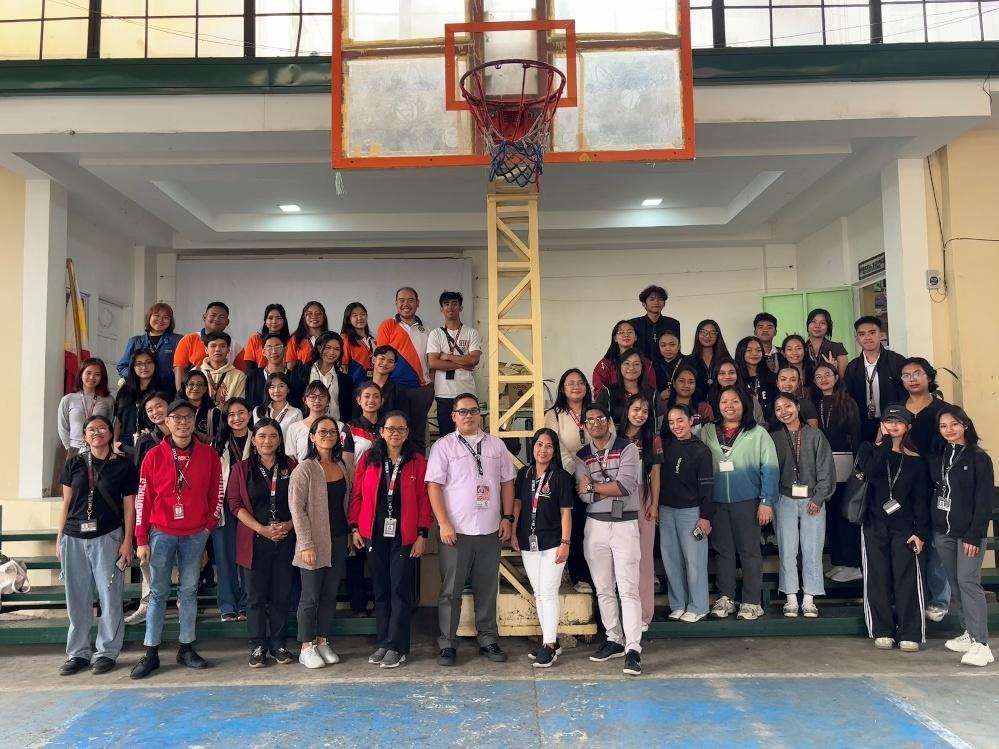
This vision found vibrant expression in the ESD subject of the graduate school at the University of Baguio, where graduate and undergraduate students delved into the intersections of education, equity, and sustainability. Within this academic space, a webinar was organized and realized last July 12, 2025, bringing together community stakeholders and learners to accelerate actions for sustainable development and reflect on the evolving role of education in the 21st century. The initiative aligned with the university’s mission of delivering balanced, quality education that equips students with relevant social skills for a rapidly changing global landscape.
What made this academic endeavor truly dynamic were the voices of students whose professional experiences gave ESD a living, local context. Edsel Callos Naguit, a Project Development Consultant, pushed for a justice-oriented framework in rural development, arguing that charity-based approaches fall short of dismantling structural inequities. He emphasized the need for land reforms, inclusive climate funding, and community-led policymaking—reminding the audience that rural regions are not zones of deficit but reservoirs of innovation and resilience.
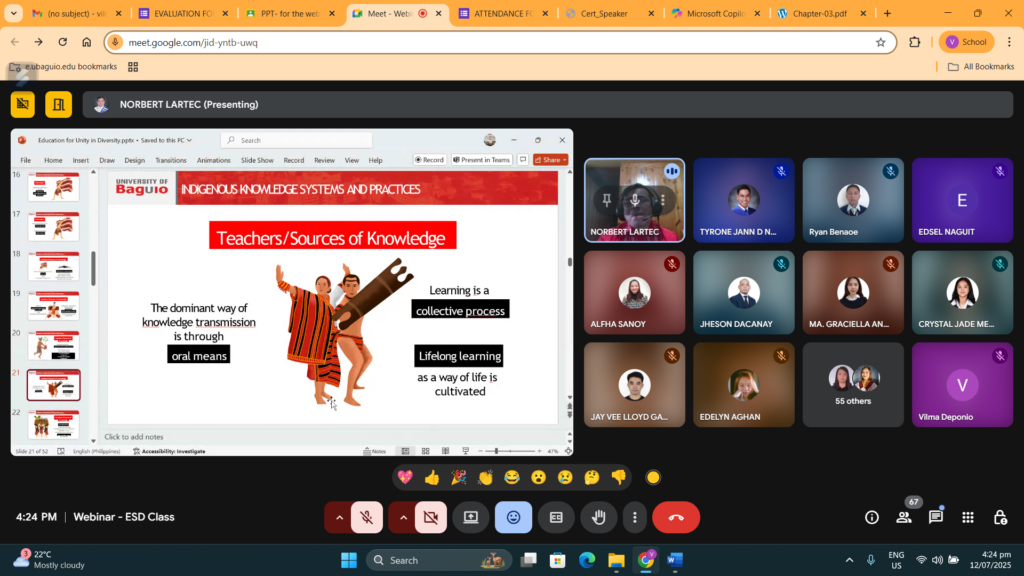
Adding to this call for inclusive change, Norbert Lartec, Filipino Education Program Supervisor for Benguet, advocated for learner-centered, culturally responsive education. In his perspective, education for sustainable development must be integrative and contextualized, especially in regions rich in cultural diversity and indigenous knowledge.
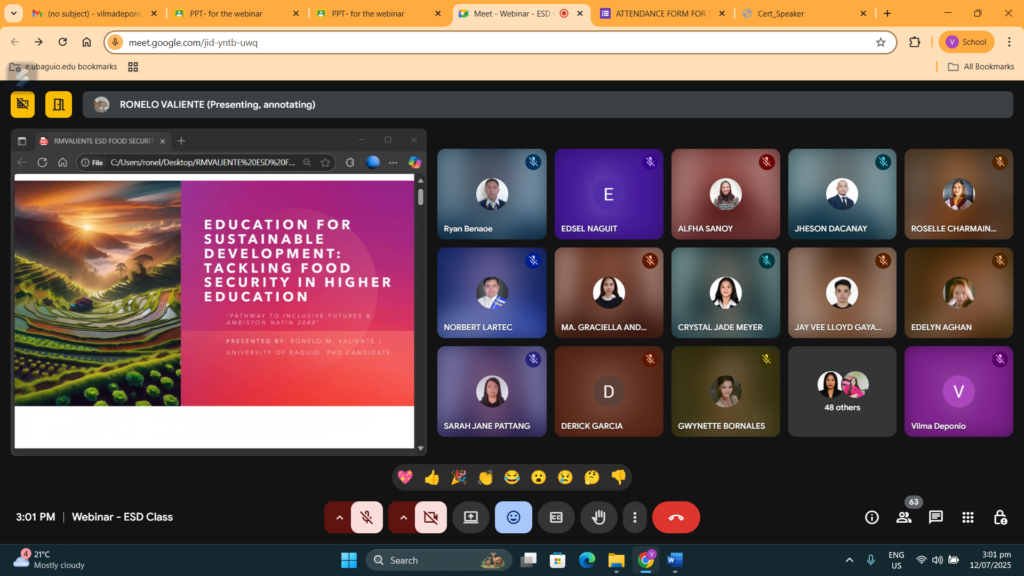
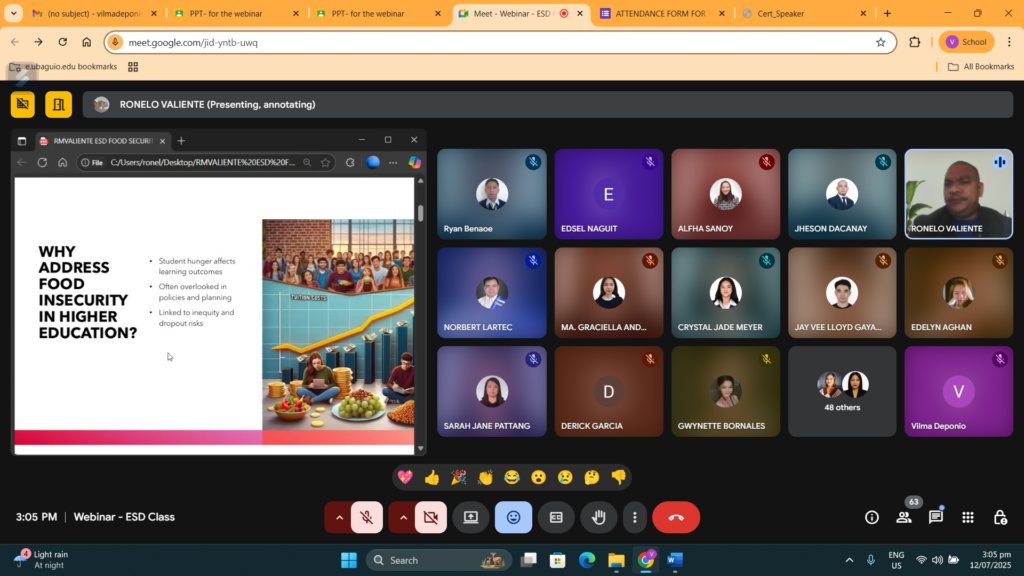
From a global standpoint, retired Chief Petty Officer Ronelo Valiente of the U.S. Navy underscored the importance of food security in higher education. “Food security isn’t charity—it’s civic design,” he declared, inviting educators to see nourishment as foundational to academic achievement and sustainable nation building.
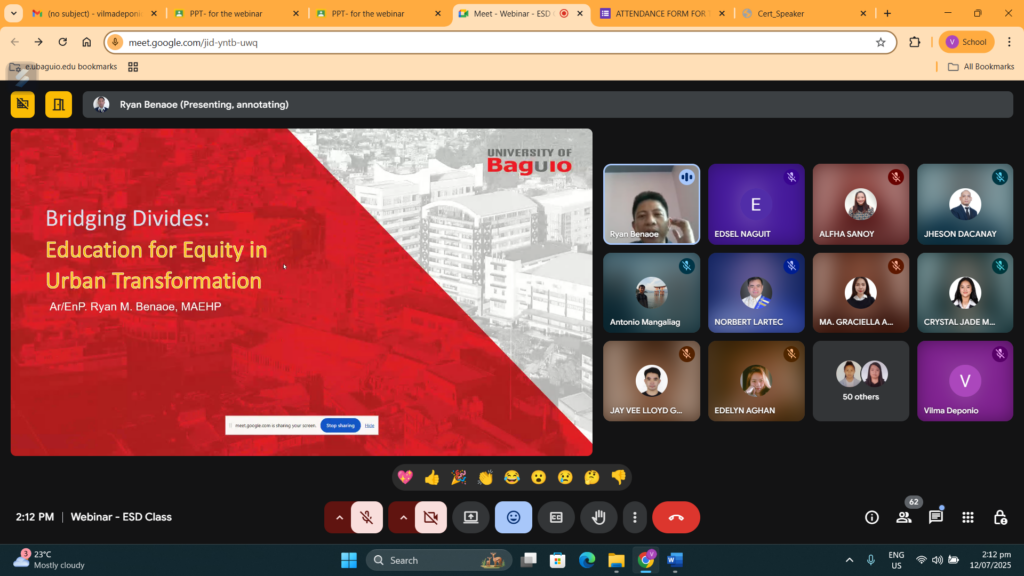
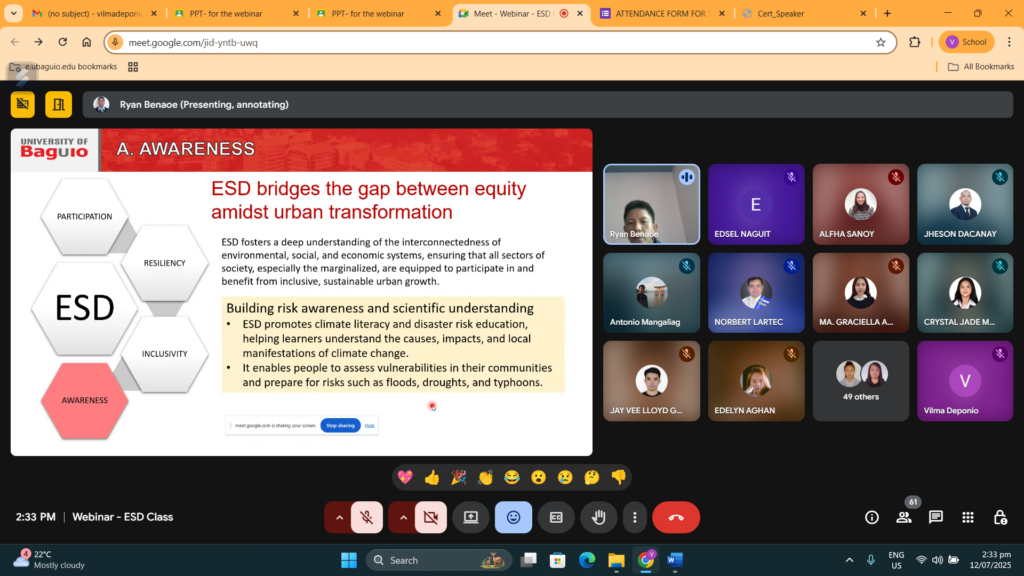
On the urban front, Ar/EnP Ryan M. Benaoe painted a compelling picture of how ESD can shape equitable cities. By weaving disaster risk reduction, climate adaptation, and resilience-building into curricula, Benaoe showed how marginalized communities can actively participate in creating inclusive and disaster-resilient urban spaces.
The success of this initiative stemmed not only from the students’ compelling insights but also from the supportive leadership of the dean of School of Teacher Education and Liberal Arts (STELA) Dr. Antonio D. Mangaliag , and PhD- Dev Ed Program Chair Dr. Dahlia D. Soriano whose subject design fostered dialogue and critical thinking around sustainability. With essential support from the lead organizer, Dr. Vilma W. Deponio and co-organizers Jessa Bustillo and Jamby Baldago, the class demonstrated that ESD is not just a theoretical construct—it’s a lived experience in the classroom.
Ultimately, this webinar served as a testament to what education can accomplish when it becomes a tool for empowerment. Through shared stories, actionable insights, and meaningful collaboration, the class turned academic exploration into social advocacy. And as the conversation continues, so does the work—to embed sustainability not only in lesson plans, but in everyday life choices and public policies.