
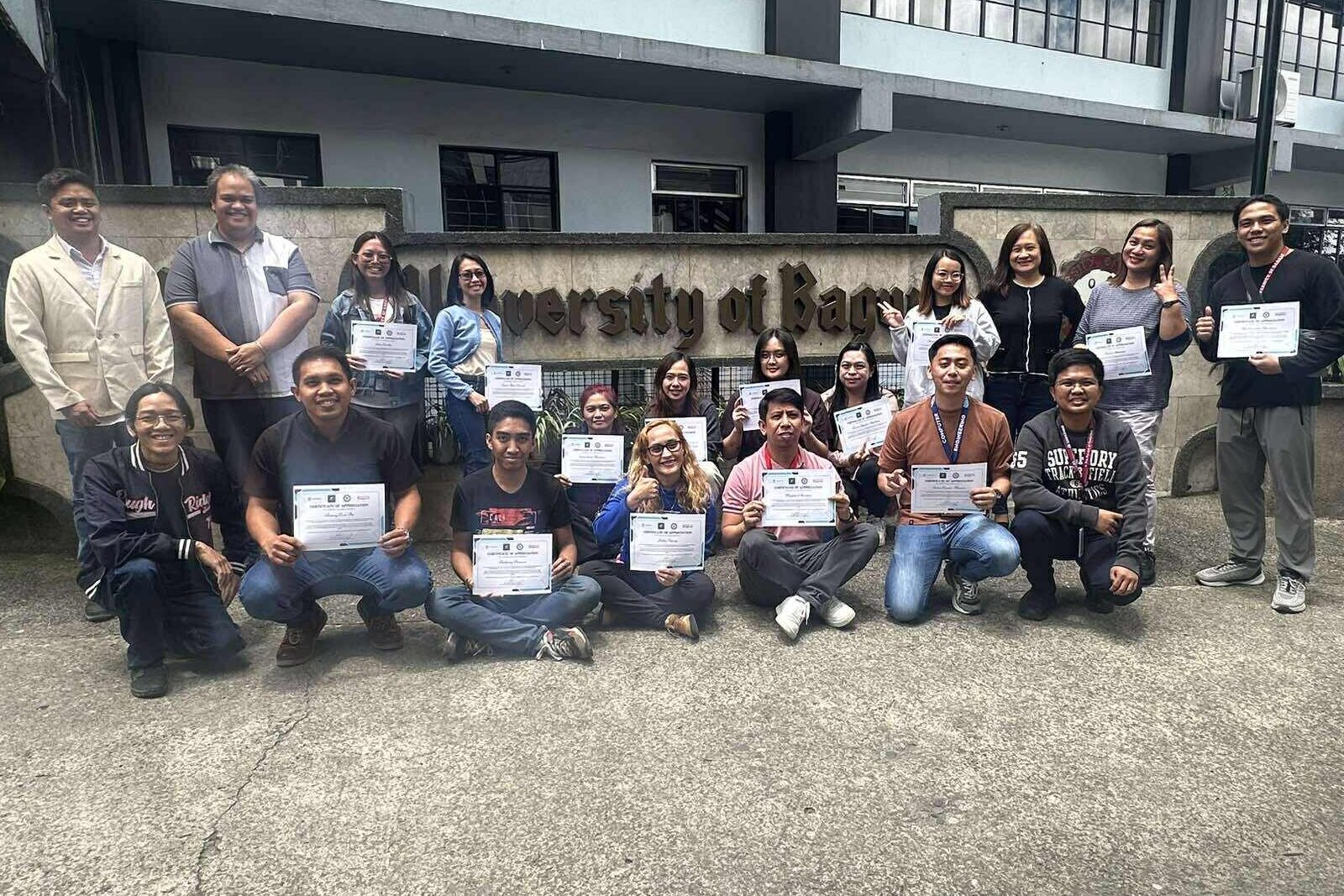
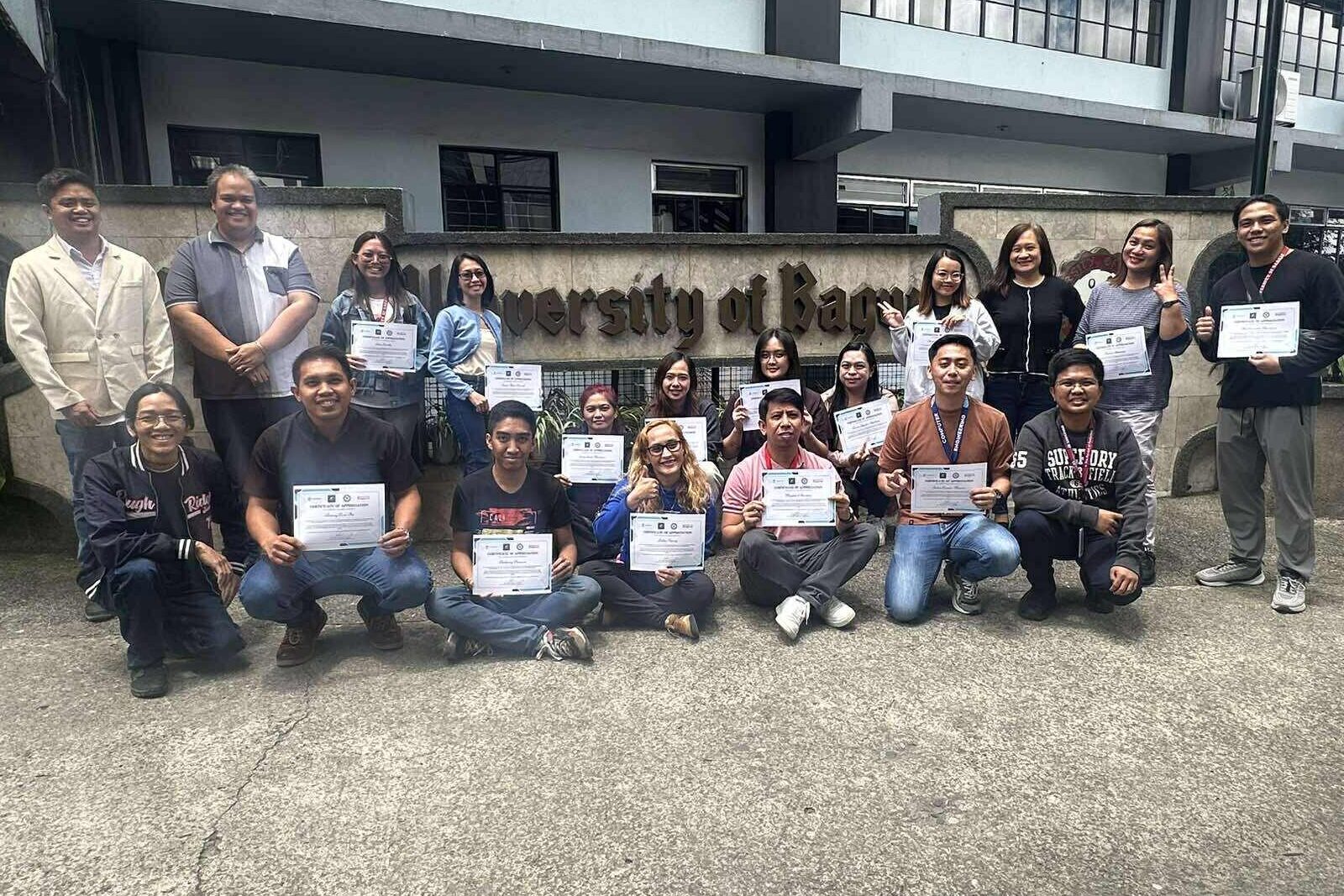
Baguio City, Philippines – In a significant step toward fostering collaboration between academia and industry, the University of Baguio (UB) organized a comprehensive 10-day training on Artificial Intelligence (AI) for the School of Information Technology (SIT). The training, which took place on July 21-25 and August 4-8, 2025, was led by industry practitioners Mr. Tzar Umang, Mr. Arjay Francisco, and Mr. Jayrald Malong from Markerspace Innovhub OPC, aiming to enhance the AI literacy and skills of faculty, students, and professionals alike.
The program’s curriculum was meticulously designed to cover a broad range of AI topics, from fundamental principles to advanced applications. Participants delved into the fundamentals of AI development, including an introduction to popular frameworks like TensorFlow and Keras, as well as the core concepts of neural networks and deep learning. They also learned the crucial link between Data Science and AI, alongside the basics of model training and data preparation.
Hands-On Learning and Practical Application
The training placed a strong emphasis on practical, hands-on learning. The Model Training Fundamentals section taught participants advanced techniques such as transfer learning and model ensembling, enabling them to build and train AI models for real-world scenarios. A key part of this practical experience involved using cutting-edge tools. Participants utilized Vertex AI, a powerful machine learning platform by Google Cloud, for training, deploying, and managing AI models. They also learned how to use Docker for containerization, which ensures that their AI applications can run consistently across different environments. For local model deployment, participants were introduced to Ollama, an open-source tool that simplifies running large language models (LLMs) on personal computers. This was complemented by an in-depth understanding of model evaluation metrics, ensuring participants could assess the performance of their AI solutions effectively.
Furthering their skills, the participants explored prompt engineering concepts, learning intermediate to advanced techniques for optimizing prompts to achieve better performance and contextual understanding from AI models. The training culminated in RAG Fundamentals, which integrated model training and prompt engineering to introduce participants to Retrieval-Augmented Generation, a concept for optimizing knowledge training in AI systems. The final module focused on fine-tuning the AI, giving participants the skills to refine and perfect their models.
Collaboration Beyond the Classroom
The training was a diverse gathering, with attendees including faculty and interested students from SIT, as well as programmers from two different UB offices. The combined expertise and varied backgrounds of the participants created a rich learning environment.
This initiative was more than just a training program; it was a testament to the power of industry-academia collaboration. The trainers and the school engaged in discussions on how to improve the BS Computer Science (BSCS) curriculum to better align with industry needs. This open dialogue also explored potential partnership opportunities between SIT and Markerspace Innovhub OPC, paving the way for future collaborative projects and knowledge exchange.
Aligning with Global Goals
This collaborative training program directly contributes to several United Nations Sustainable Development Goals (SDGs). It supports SDG 4: Quality Education by providing specialized, high-quality instruction in a cutting-edge field, equipping participants with skills relevant to the modern workforce and fostering lifelong learning. The initiative also aligns with SDG 9: Industry, Innovation, and Infrastructure by fostering innovation and building capacity for technological advancement through the partnership between academia and industry. Finally, it exemplifies SDG 17: Partnerships for the Goals, showcasing how different sectors like education and industry can work together to achieve common goals, specifically in advancing technological literacy and building a skilled workforce.