
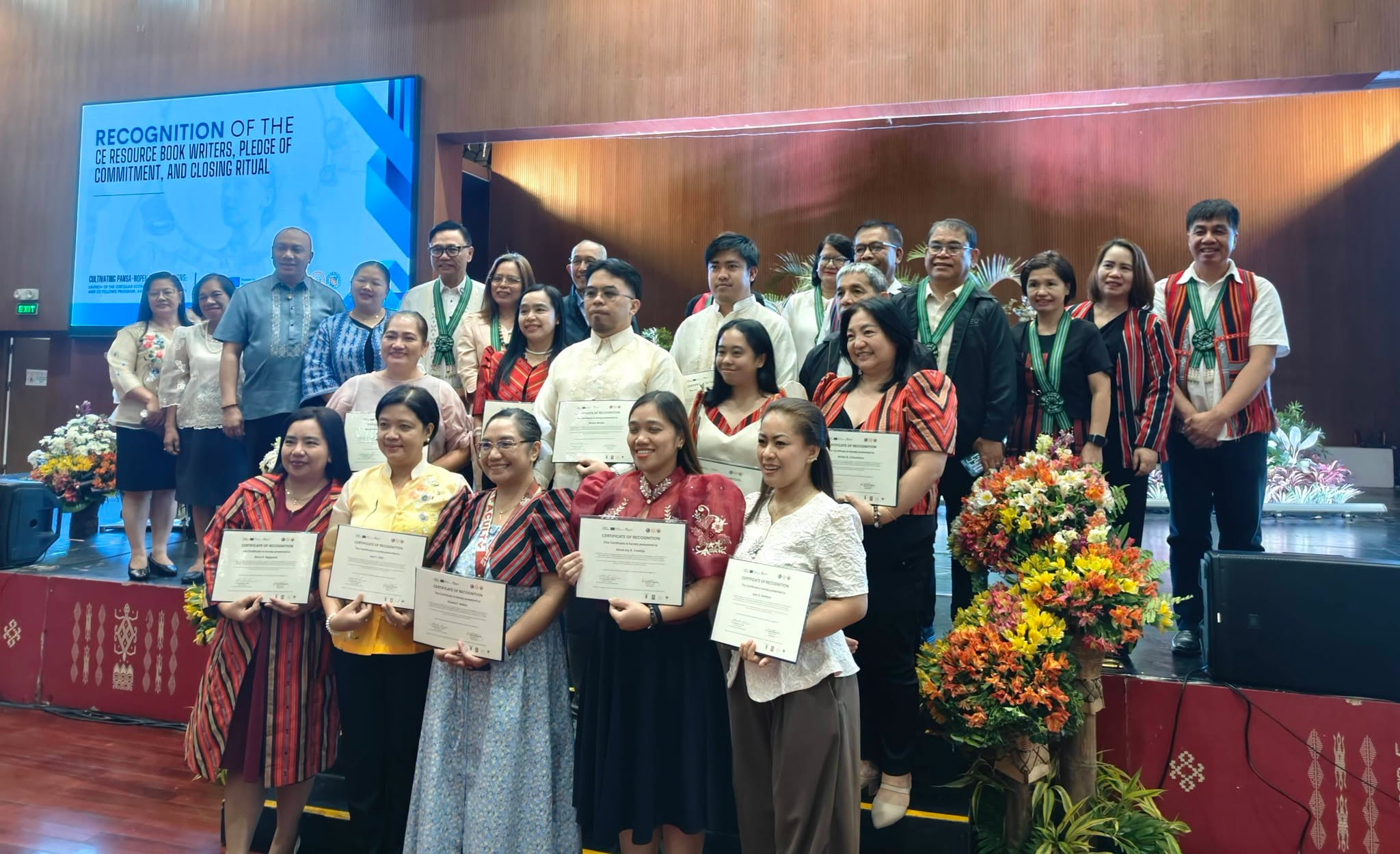
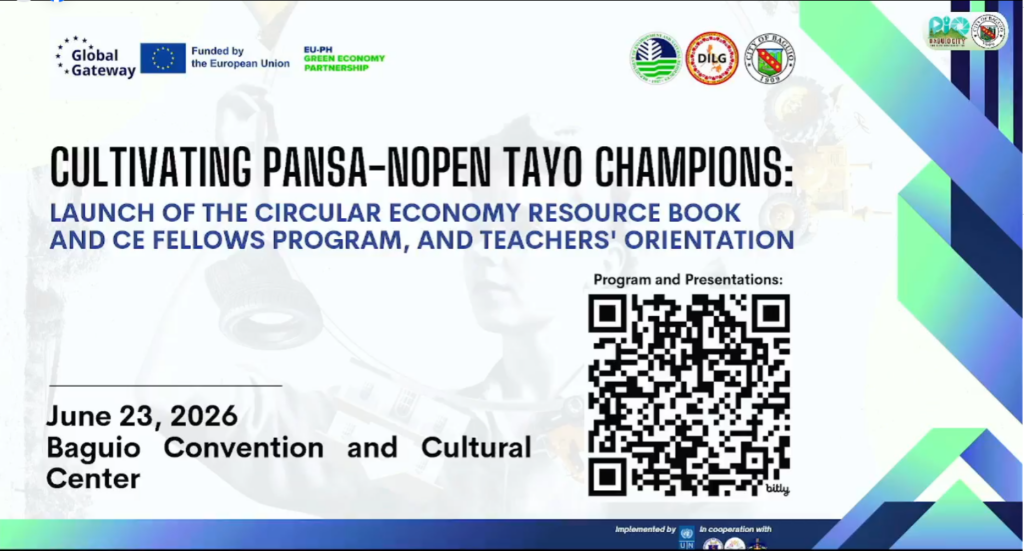
BAGUIO CITY, June 23, 2026 — As schools are called upon to become catalysts of sustainability and environmental action, the University of Baguio High School (UBHS) strengthened its commitment to this vision through its participation in the “Cultivating Pansa-nopen Tayo Champions: Launch of the Circular Economy Resource Book and CE Fellows Program and Teachers’ Orientation for Private and Public Schools” held at the Baguio Convention Center. Highlighting the event was the recognition of Dr. Violeta F. Apiles, UBHS Principal, as one of the educator-writers of Pansa-nopen Tayo: A Circular Economy Resource Book, a resource designed to advance circular economy education among learners and educators.
The event brought together educators, school leaders, local government officials, youth representatives, and international development partners committed to advancing sustainability and circular economy education. Among the distinguished guests were Dr. Moeko Saito-Jensen, Project Manager of the European Union–Philippines Green Economy Partnership under the United Nations Development Programme (UNDP), and Ms. Floradema Eleazar, Team Leader of the UNDP Climate Action Team. Dr. Samuel Soliven also delivered the message of DepEd Secretary Juan Edgardo “Sonny” Angara, reaffirming the department’s commitment to sustainability education and environmental stewardship among Filipino learners.
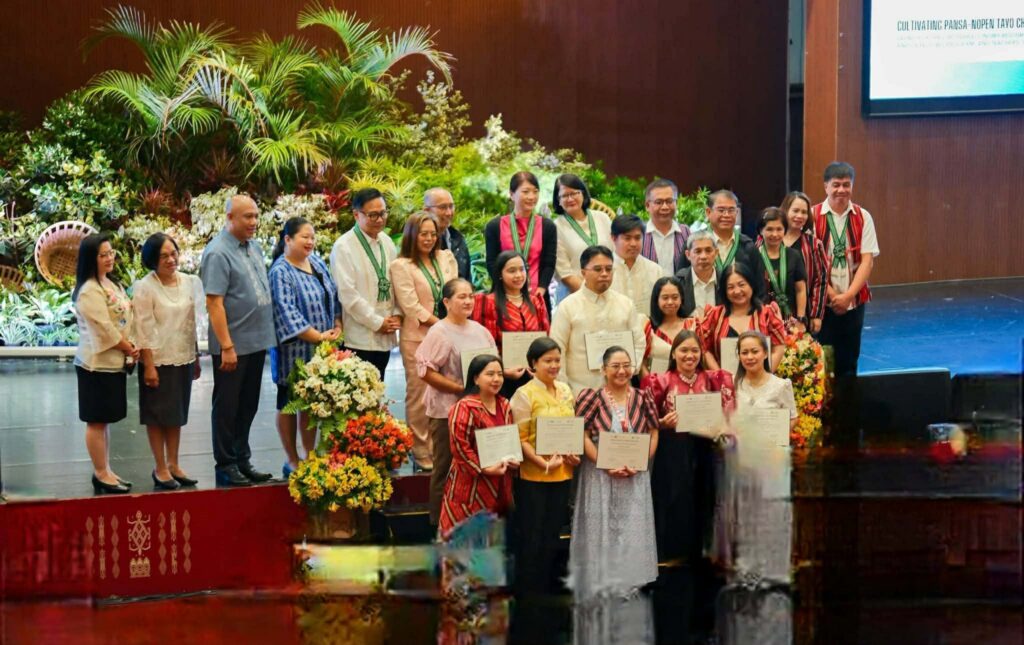
The program aimed to strengthen circular economy education, encourage sustainable practices among learners, and develop future environmental champions. Participants were encouraged to move beyond the traditional linear model of “take-make-use-dispose” and embrace a circular approach that promotes reuse, repurposing, regeneration, and responsible consumption.
UBHS Circular Economy Initiatives
A highlight of the morning program was the recognition of schools implementing circular economy initiatives. As one of the recognized schools, University of Baguio High School presented its sustainability efforts through a sharing session led by Dr. Apiles. The presentation highlighted several school initiatives, including:
- Urban Gardening Program, launched during the pandemic and sustained to promote food security, environmental awareness, and community participation;
- School Pantry Initiative, which fostered compassion, resource sharing, and collective responsibility;
- Upcycling Projects that support partner communities through the creative reuse of materials;
- SPARK (Student Participation and Advancement through Knowledge-Driven Activities), which promotes responsible citizenship and sustainable practices among learners; and
- The integration of circular economy concepts and the Sustainable Development Goals (SDGs) into the UBHS curriculum to strengthen sustainability education across learning areas.
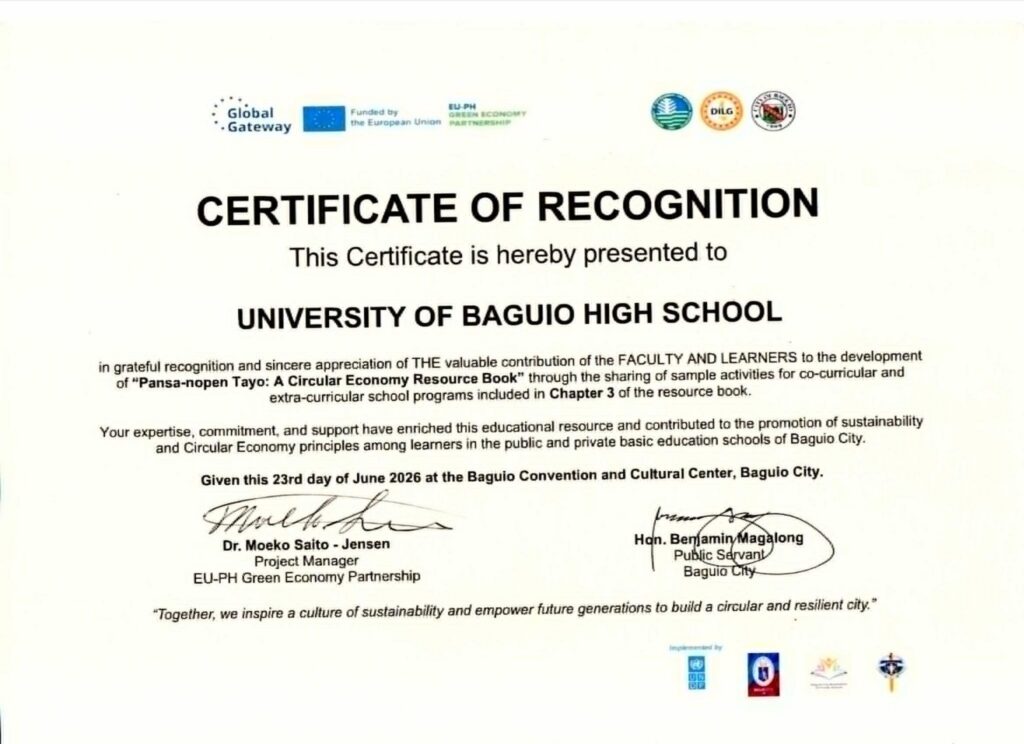
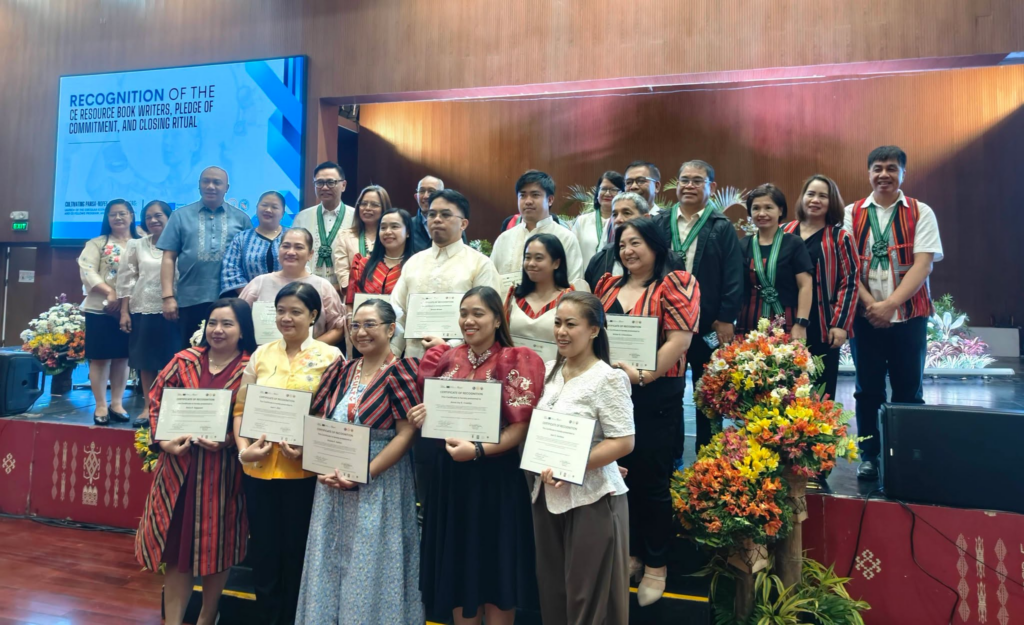
The recognition ceremony was graced by Baguio City Mayor Benjamin Magalong, who personally awarded certificates of recognition to the educator-writers of the resource book and to participating schools, acknowledged for their contributions to circular economy education and sustainable development initiatives.
The event underscored the important role of schools in advancing sustainable practices and community engagement. In her message, Schools Division Superintendent Dr. Soraya T. Faculo encouraged educators to become “school leaders of change,” moving from knowledge to action and from words to practice. Other speakers likewise emphasized that schools serve as living laboratories of sustainability where learners develop the values, skills, and habits needed to address environmental challenges.
The concept of circularity, an unbroken line of connection, accountability, and life, was a central theme of the program. Fr. Gilbert B. Sales, President of Saint Louis University and CEAP-CAR Regional Trustee, highlighted the vital role of educational institutions in transitioning from wasteful, linear systems to sustainable ecosystems that prioritize responsible resource use and environmental stewardship. Through the Pansa-nopen Tayo Resource Book and Fellows Program, educators are empowered to cultivate learners who are informed, responsible, and committed to sustainable practices.
The participation and recognition of UBHS in this initiative affirm the school’s continuing commitment to educational excellence, environmental stewardship, and community engagement. Through programs that integrate sustainability into both learning and practice, UBHS continues to contribute to the development of environmentally responsible learners and communities.
As part of the University of Baguio‘s steadfast commitment to the attainment of the United Nations Sustainable Development Goals (SDGs), these initiatives advance SDG 4 (Quality Education) through sustainability-focused learning, SDG 11 (Sustainable Cities and Communities) by promoting community-based environmental practices, SDG 12 (Responsible Consumption and Production) through circular economy and upcycling initiatives, SDG 13 (Climate Action) by encouraging sustainable lifestyles and environmental responsibility, SDG 15 (Life on Land) through urban gardening and environmental conservation efforts, and SDG 17 (Partnerships for the Goals) by strengthening collaboration with government agencies, educational institutions, and international development partners.
Congratulations to Dr. Apiles and the entire UBHS community for this meaningful recognition and contribution toward building a greener, more sustainable future for all.