
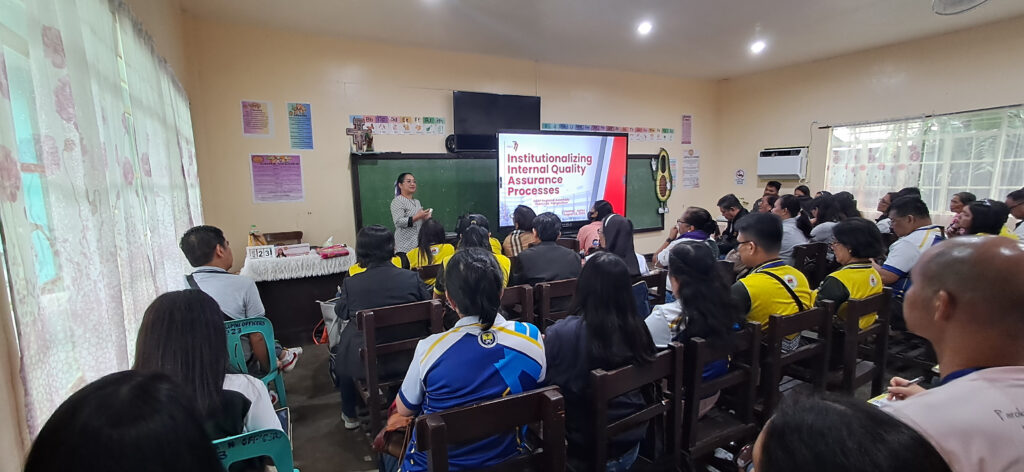
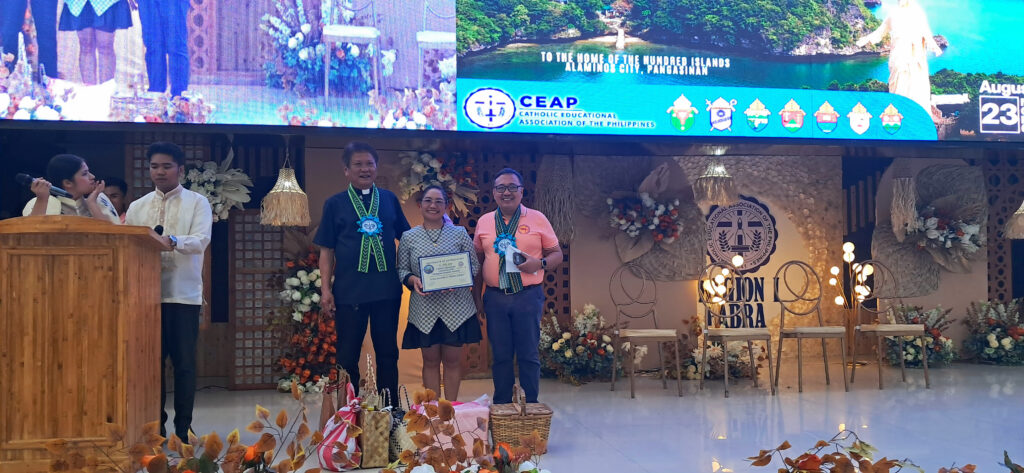
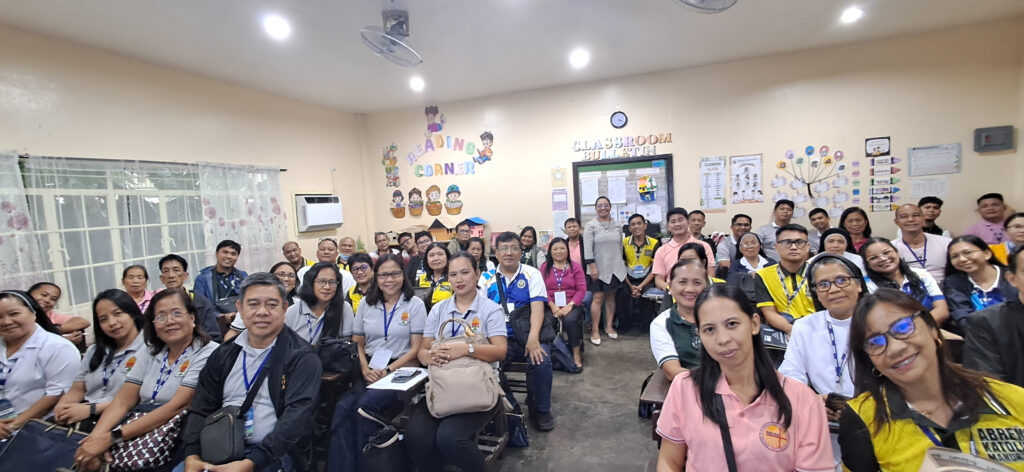
ALAMINOS, Pangasinan, August 23, 2025. — Dr. Violeta F. Apiles, principal of the University of Baguio High School, delivered a compelling call to action during the Catholic Educational Association of the Philippines (CEAP) Regional Assembly in Alaminos City. Speaking before around 60 principals and administrators from Region 1 and Abra, Apiles urged school heads to institutionalize internal quality assurance (IQA) systems to ensure sustainable and transformative education across all levels.
In her lecture titled “Institutionalizing Internal Quality Assurance Processes,” Apiles stressed that quality education must go beyond compliance with accrediting bodies. She asserted that quality should be embedded into the very culture of schools, shaping policies, teaching, and governance. Quoting the maxim, “Quality is never an accident; it is always the result of intelligent effort,” she emphasized that real improvement is a deliberate and continuous process.
Redefining Quality Assurance Beyond Accreditation
Apiles explained that internal quality assurance is not merely about meeting the standards during periodic accreditation visits but about building an enduring culture of excellence. IQA, she noted, involves continuous improvement in teaching, learning, governance, student services, and community engagement.
Acknowledging the struggles of educators, she noted that accreditation processes often demand extensive paperwork that can overwhelm teachers and reduce their time for instruction. Studies, she added, reveal that faculty members experience stress and sleepless nights during accreditation periods. Still, Apiles highlighted the benefits of accreditation: it pushes teachers to update syllabi, adopt outcome-based education (OBE), and innovate in pedagogy and assessment methods.
Legal and Global Mandates for Quality
To reinforce her message, Apiles cited Article XIV of the 1987 Philippine Constitution, the Higher Education Act of 1994, and CHED Memorandum Order 46, which collectively affirm that quality education is a constitutional right and a legal obligation. She also referred to the Department of Education’s Quality Policy Statement and UNESCO guidelines, which advocate for systematic, inclusive, and globally aligned quality assurance practices.
She introduced frameworks that schools can adopt, including the Plan-Do-Check-Act cycle, ISO 21001 standards, and the Eight-Element Institutional Framework. These eight elements cover leadership, policies, systems, resources, monitoring, staff development, stakeholder engagement, and the cultivation of a culture of continuous improvement.
Linking Quality Education to Sustainability and the Environment
Beyond academic and administrative systems, Apiles highlighted how internal quality assurance can strengthen schools’ contributions to sustainable development. By integrating environmental education, schools can align their programs with the United Nations’ Sustainable Development Goal 15: Life on Land, which calls for the protection, restoration, and sustainable use of terrestrial ecosystems.
She explained that institutionalizing IQA provides a structure for schools to:
- Embed climate change education and biodiversity awareness into the curriculum.
- Support research addressing issues such as deforestation, soil erosion, and sustainable farming.
- Implement campus-based programs like tree planting, zero-waste initiatives, and biodiversity gardens.
- Extend outreach services that empower local communities to care for their natural environment.
Apiles noted that many schools already engage in environmental programs, but without a strong quality assurance framework, these initiatives often lack consistency, monitoring, or long-term sustainability. IQA ensures that these efforts are documented, evaluated, and improved over time, creating a more lasting impact on both students and communities.
Addressing Gaps in School Practices
Through real-world scenarios, Apiles illustrated the pressing need for IQA. She described schools where OBE existed only on paper, student attrition rose due to poor support services, and faculty participation in research and community extension was minimal. She urged administrators to see these gaps not just as compliance issues but as lost opportunities to advance both education and community well-being—including environmental stewardship.
Apiles outlined practical strategies to strengthen QA systems, such as establishing clear policies, developing QA manuals, implementing robust monitoring and evaluation tools, and investing in faculty training and mentorship. She encouraged schools to recognize and reward quality-driven initiatives, ensure active stakeholder participation, and prioritize evidence-based planning with phased implementation for long-term success.
Her closing remarks highlighted the importance of collaboration: “Together, we can embed quality into everyday routines and strengthen our mission of providing accessible and transformative education,” she said.
Advancing the Sustainable Development Goals
Apiles’ advocacy directly aligns with Sustainable Development Goal 4: Quality Education, which seeks to ensure inclusive and equitable quality education and promote lifelong learning opportunities for all. At the same time, she demonstrated that when schools integrate environmental responsibility into their IQA systems, they contribute to SDG 15: Life on Land—ensuring that education is not only transformative for students but also beneficial for the planet.
By connecting educational excellence with ecological responsibility, Apiles emphasized that schools can nurture learners who are not only academically competent but also socially and environmentally conscious citizens.
The CEAP Regional Assembly served as more than just a conference. It became a platform for sharing insights, forging partnerships, and reinforcing the shared commitment of Catholic schools in Region 1 and Abra to the continuous pursuit of educational excellence. Through discussions led by Apiles and other leaders, the assembly reaffirmed the role of schools as agents of transformation—guided by both national mandates and global goals.
As the education sector continues to face challenges brought about by changing policies, global competitiveness, and environmental concerns, Apiles’ call to institutionalize quality assurance offers a timely reminder: education must remain dynamic, inclusive, and committed to excellence—not just for compliance but for the betterment of every Filipino learner and the protection of our land.