
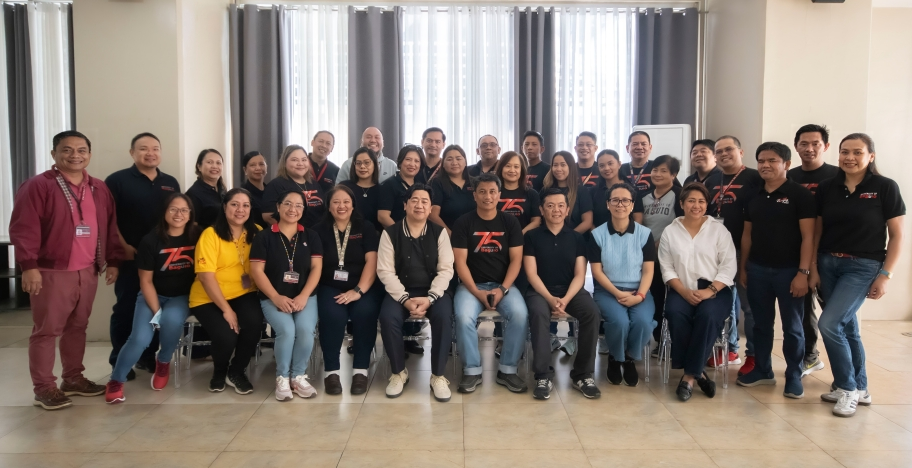
University leaders gather at the UB Centennial Hall to review progress, celebrate achievements, and set strategic directions that advance decent work, productive employment, and sustainable economic growth.
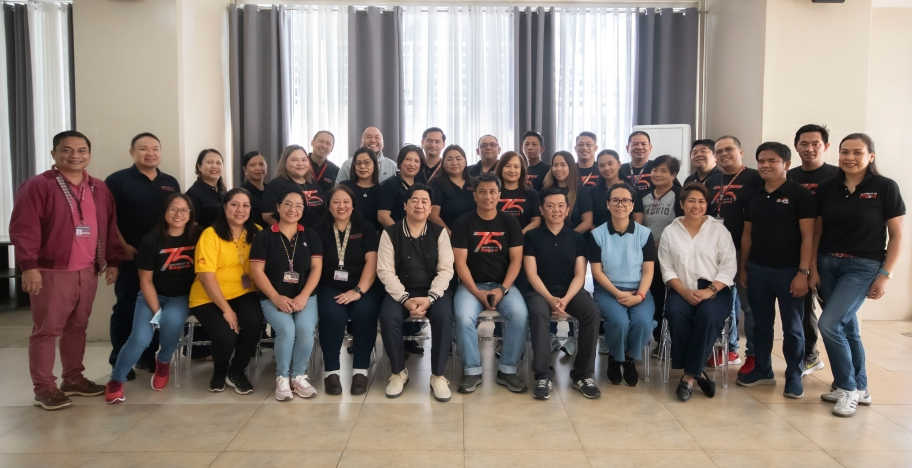
The University of Baguio held its Annual Assessment and Planning Session for the Institutional Development Plan (IDP) on June 20, 2025, at the UB Centennial Hall. Organized by the Quality Assurance Office, the event brought together the 35 deans, principals, and directors of the university’s management team to review accomplishments, address challenges, and set strategic directions for Academic Year 2025–2026.
The session served as a platform to measure institutional performance across five Key Result Areas (KRAs) and ensure that UB’s programs and operations remain aligned with its mission and the United Nations Sustainable Development Goals (SDGs), particularly SDG 8: Decent Work and Economic Growth. This goal emphasizes inclusive and sustainable economic growth, productive employment, and decent work for all principles that UB integrates into its governance, academic programs, and community engagement.
Dr. Kareen B. Leon, Director of the Quality Assurance Office, presented the University of Baguio’s overall accomplishments for the Institutional Development Plan (IDP) covering 2021–2025. The report detailed significant achievements across five key result areas: Governance and Management (28.30%), Quality of Teaching and Learning (29.49%), Quality of Professional Exposure, Research, and Creative Work (30.89%), Support for Students (36.45%), and Relations with the Community (50.40%). With an overall average of 35.11%, the results reflect the university’s steady progress while identifying opportunities for further improvement. These accomplishments strongly support the goals of SDG 8: Decent Work and Economic Growth by promoting quality education, strengthening governance, developing professional competencies, and fostering community engagement. Together, these initiatives create an enabling environment for innovation, productivity, and sustainable growth, equipping both the institution and its stakeholders to thrive in an increasingly competitive and interconnected world.
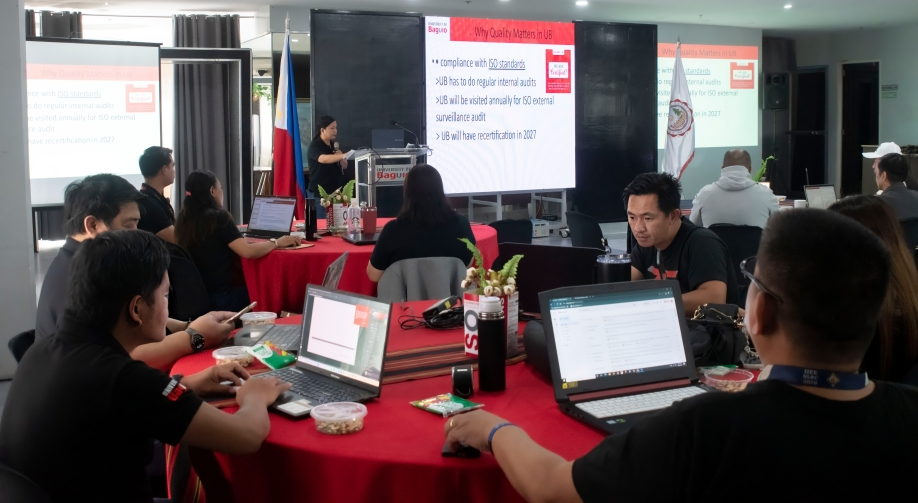
The morning session also recognized outstanding units that achieved at least 90% of their IDP targets: the School of Criminal Justice and Public Safety and the Center for Counseling and Student Development. These offices were commended for their strong performance, dedication to continuous improvement, and contributions to institutional goals.
The afternoon session featured updates on the UB-ACCESS platform by Mr. Justin Marcus Andrada, showcasing innovations in planning, monitoring, and assessment. This was followed by the President’s Hour with Dr. Javier Herminio D. Bautista, who shared insights and guidance for the coming academic year. The day concluded with collaborative discussions on other planning matters, allowing leaders to align priorities and strengthen strategies.
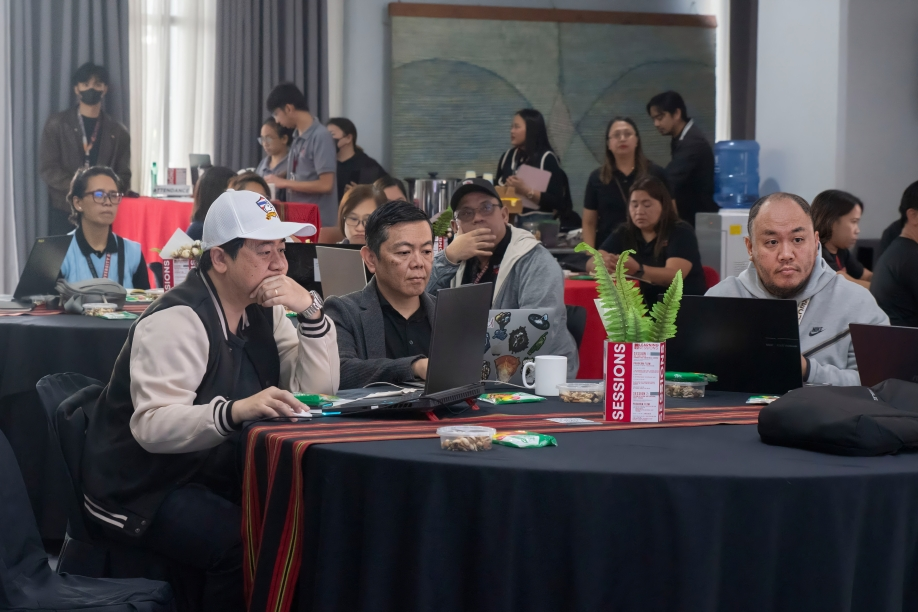
Through this annual exercise, UB reinforces its commitment to producing job-ready graduates, fostering innovation, and ensuring that its workforce and students contribute meaningfully to sustainable economic growth. The event underscored the university’s belief that progress is not only measured in numbers but also in the lives transformed, opportunities created, and communities uplifted.
The assessment transcended a mere performance review; it reaffirmed the University of Baguio’s overarching mission as a socially responsible institution dedicated to capacity building, enhancing access to economic opportunities, and preparing students for meaningful, dignified work. The session effectively illustrated UB’s ongoing commitment to contributing to SDG 8 through the establishment of inclusive learning-to-employment pipelines, the promotion of innovation through research, and ensuring that the internal work environment promotes fair practices and continuous improvement. These actions exemplify how higher education can spur not only academic success but also economic transformation at local and regional levels.

As UB endeavors to advance its mission, it does so with a renewed commitment to embedding sustainable development values throughout its operations. The insights drawn from the IDP assessment provide a strategic framework for informed decision-making and future initiatives that will propel UB toward further achievements in advancing SDG 8 and its related goals. In this ever-evolving educational landscape, UB’s proactive approach and commitment to excellence are poised to drive continued progress in creating a thriving, inclusive academic community and contributing to broader societal advancements.