
Written by Krystianne Labay
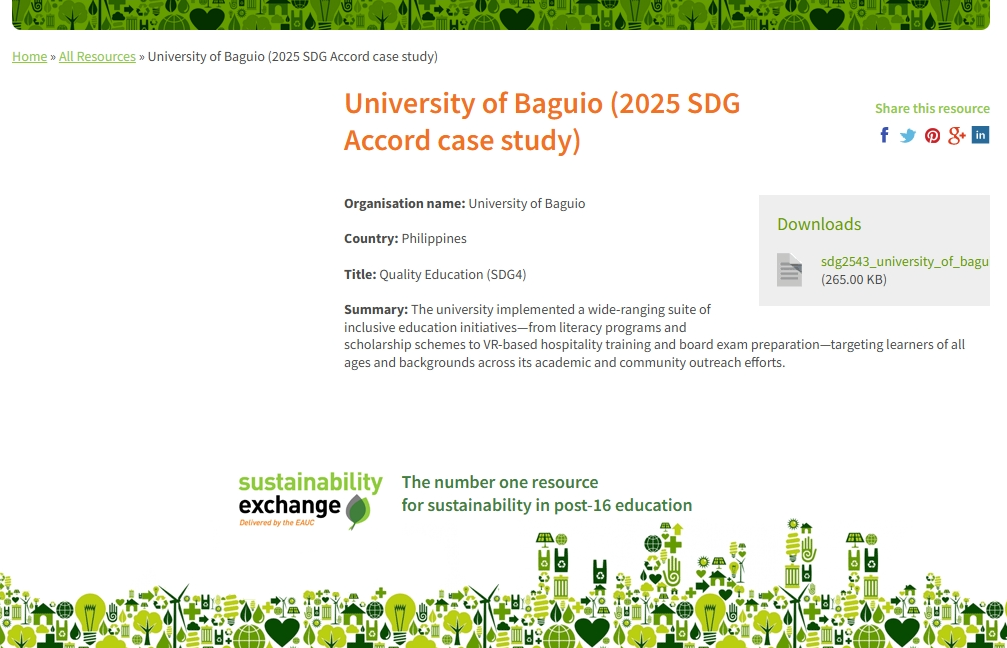
The University of Baguio (UB) proudly announces its inclusion in the 2025 SDG Accord Case Study, a global initiative recognizing higher education institutions that actively advance the United Nations Sustainable Development Goals (SDGs). This milestone highlights UB’s unwavering commitment to quality, inclusive education, and its role in shaping globally competitive learners while driving sustainable development in the local community.
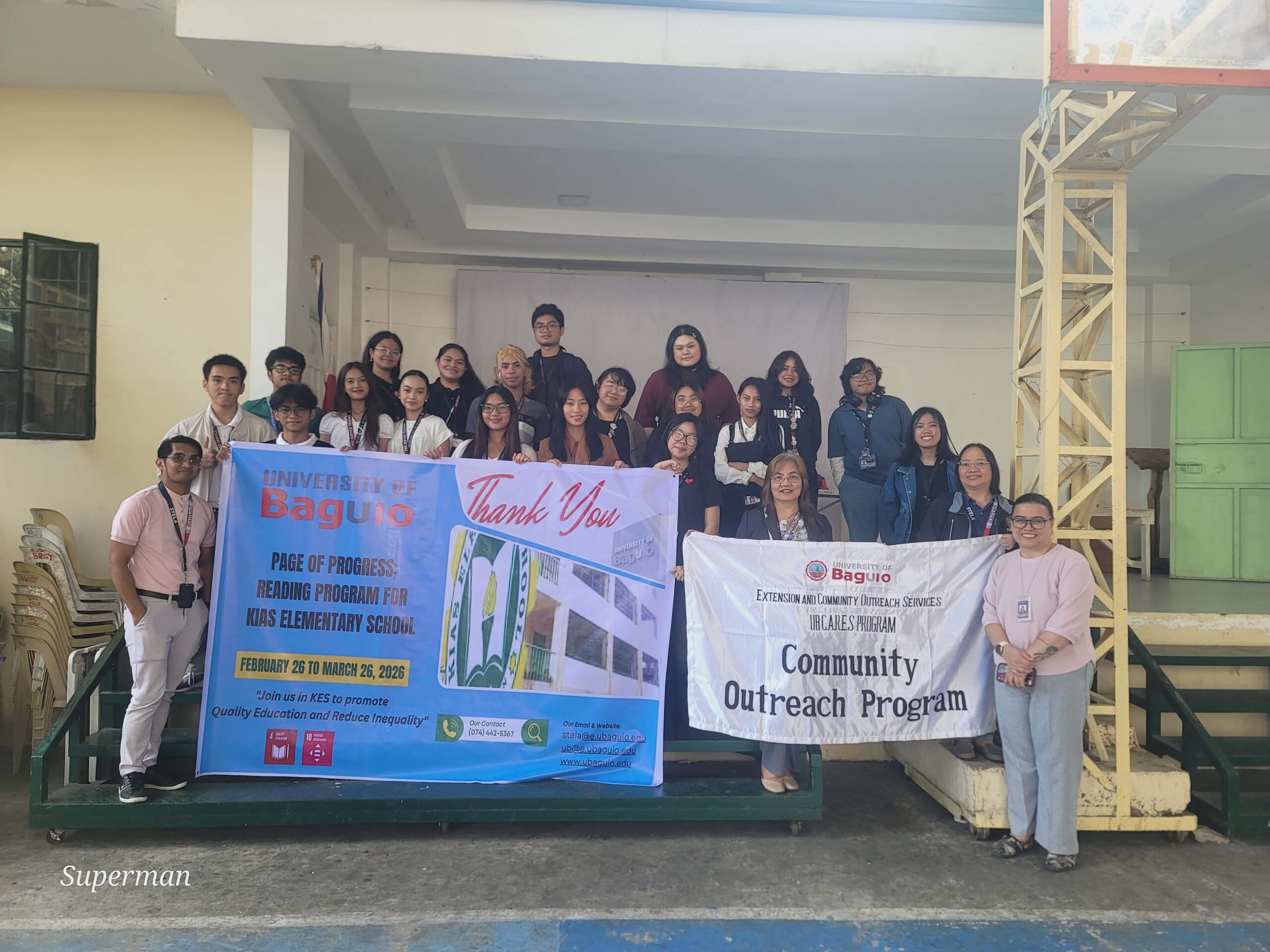
Driven by its mission and vision, UB continues to uphold SDG 4: Quality Education as its guiding principle, ensuring access to education for learners from all walks of life. From basic to tertiary education, UB implements programs that nurture both intellectual and social development. Its initiatives include scholarships, literacy programs, and training opportunities designed to equip learners with relevant skills for work, employment, and entrepreneurship. These efforts have consistently produced students and professionals who excel not only in their fields but also in national competitions and international conferences.
UB’s excellence is further reflected in its consistent record of producing board passers and top-notchers in nursing, dentistry, medical technology, physical therapy, engineering, accountancy, education, and criminology. This commitment to academic and professional excellence was recognized when UB earned first rank in the Student Support and Engagement Category of WURI 2024.
Moreover, UB remains future-ready through its ISO 21001:2018 accreditation, the first of its kind in Baguio City, guaranteeing that its educational system is inclusive, responsive, and globally aligned. By being featured in the 2025 SDG Accord Case Study, UB continues to bridge global goals with local action, inspiring students, faculty, and the wider community to work toward a more sustainable and equitable future.
UB Champions Gender Equality and Inclusive Education through Sustainable Development Goals
UB continues to set a strong example of how inclusive education can go beyond policy statements to become a lived reality for students and staff alike. Guided by its mission to foster equality, empowerment, and holistic growth, UB integrates gender-responsive principles into its programs, projects, and policies. These include seminars, awareness campaigns, and advocacy initiatives conducted in close collaboration with the Committee for Gender and Development (GAD). Among the notable initiatives are gender-sensitivity training sessions, the celebration of Women’s Month, and support systems aimed at strengthening and protecting women both within the university and in the wider community.
UB’s initiatives go beyond compliance, embedding gender sensitivity into the very culture of the campus. The inclusion of lady marshals in campus safety operations serves as a powerful symbol of women’s visibility and leadership in traditionally male-dominated roles. These actions foster a learning environment where everyone feels safe, heard, and valued.
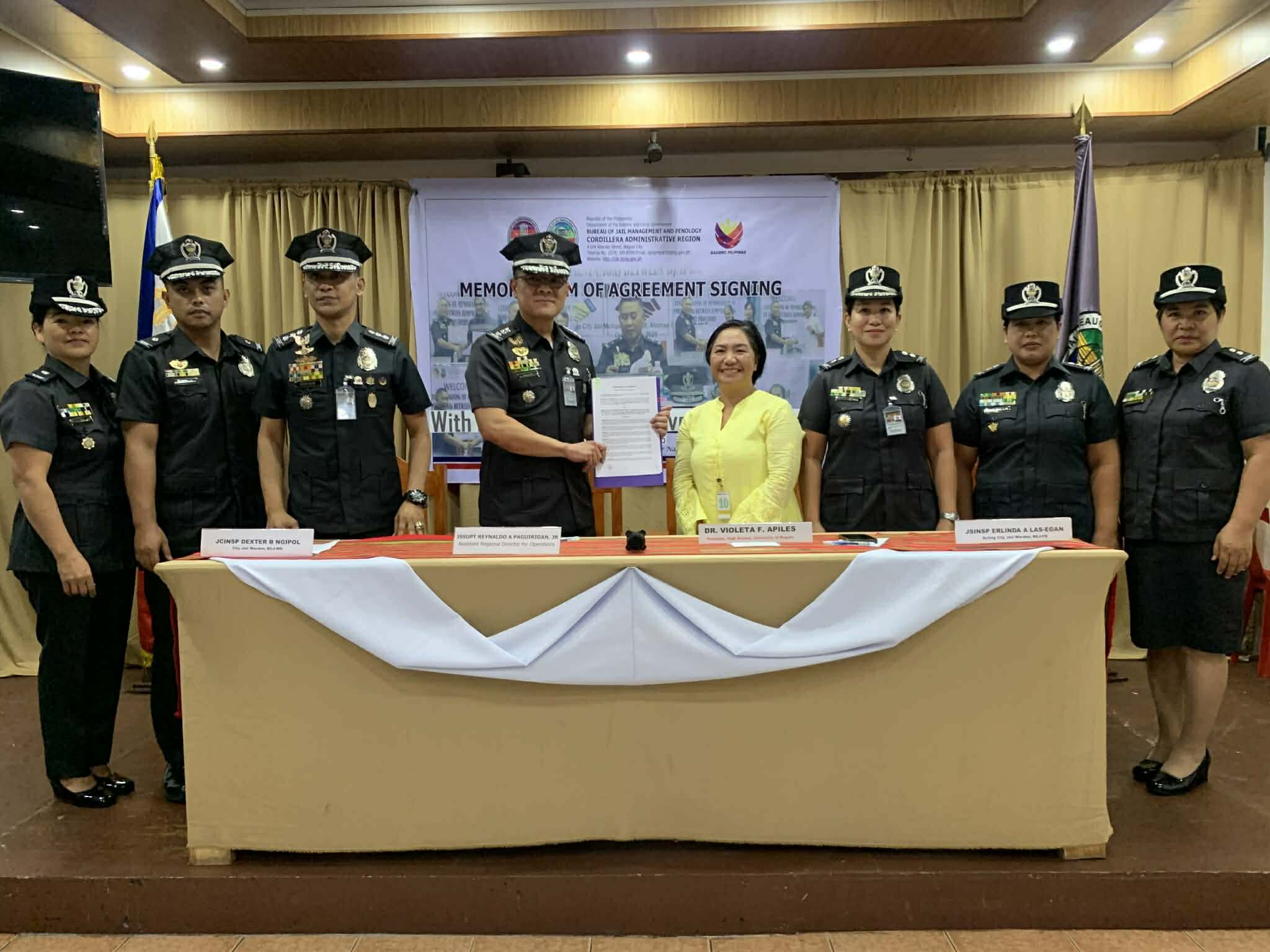
These sustained efforts strongly align with SDG 5: Gender Equality, which calls for eliminating discrimination, empowering women and girls, and promoting equal participation in leadership. By encouraging women’s active involvement in outreach programs, research, training, and workshops, UB ensures that female voices are represented in shaping the institution’s future.
As a result, the university has become a top choice for students who value diversity and equality. The presence of inclusive policies has inspired students to pursue their education free from bias and discrimination. Moreover, female students are now more motivated to explore leadership roles, breaking stereotypes and contributing to a more equitable academic environment.
The University of Baguio’s approach highlights that gender inclusivity is an ongoing commitment, not a one-time initiative. Its success demonstrates that when institutions prioritize empathy, equity, and empowerment, they create not only a safer campus but also a stronger, more sustainable community prepared to face the challenges of the future.