
Written by Dr. Dahlia Soriano (STELA)
The University of Baguio (UB) continues to play a vital role in shaping a research-driven, inclusive, and sustainable community through its enduring commitment to collaborative development. Strengthening this vision, UB actively partners with the Baguio City Government and other key stakeholders to drive initiatives rooted in academic excellence, innovation, and civic engagement.
This collaborative spirit aligns seamlessly with Ordinance No. 63, series of 2023, passed by the City Council, which institutionalizes Incubator Baguio—a public-private alliance that fosters synergy among the local government, academic institutions, industries, and non-government organizations. By placing research, sustainability, and innovation at the forefront of policy-making, the city is nurturing a dynamic landscape for community advancement.
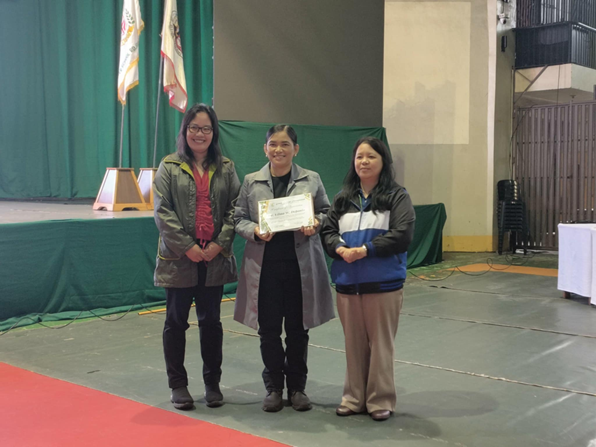
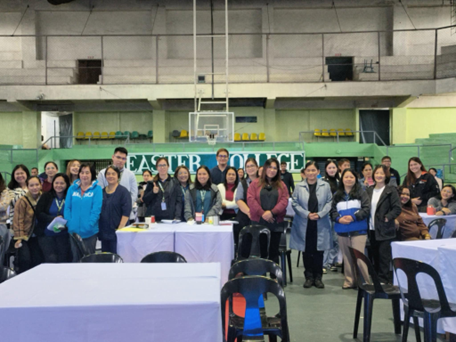
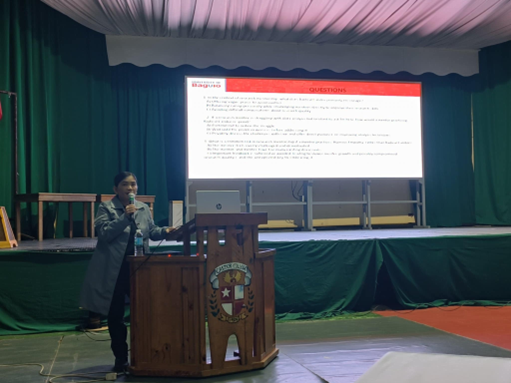
True to its institutional mission on research and extension endeavors, the University of Baguio (UB), through RIECO’s partnership with Easter College Incorporated (ECI), responded to an invitation for academic collaboration from ECI—an institution equally committed to educational excellence. As part of this initiative, Dr. Vilma W. Deponio, research anchorperson of UB’s School of Teacher Education and Liberal Arts, served as a resource speaker during ECI’s Institutional Educational Training (INSET) program held on July 30, 2025.
Her presentation on Research Mentoring and Research Methods inspired both faculty and administrators to strengthen their research competencies, fostering a deeper culture of inquiry and innovation within the academic community.
The lecture discussed the powerful impact of research mentoring and ethical methodology, highlighting how both contribute to shaping the identity and integrity of researchers. Drawing on the five pillars of research mentorship, the talk also emphasized the tenets of human-centered design theory. Additionally, the Radical Candor model was highlighted, in which mentors are encouraged to provide honest and caring feedback as a means of building trust and fostering resilience. Turning to methodology, the lecture addressed the reliability of qualitative research—reframing it not as replication, but as rigor achieved through meticulous documentation, transparency, and reflective practice. The final section covered the fundamentals of mixed methods research design, outlining key elements such as timing, weighting, mixing, and notation to help students select appropriate approaches for complex research questions.
United Nations Sustainable Development Goals (SDGs). In particular, the university actively contributes to SDG 4 – Quality Education by enhancing educational research and capacity-building among institutions. It supports SDG 9 – Industry, Innovation, and Infrastructure through its participation in collaborative platforms like Incubator Baguio, which advance innovation. Through its community-focused research initiatives, the university aligns with SDG 11 – Sustainable Cities and Communities, promoting research-based, locally relevant solutions. Finally, by engaging in cross-sectoral partnerships, UB strengthens SDG 17 – Partnerships for the Goals, emphasizing the value of collaboration in achieving sustainable development outcomes.
As Baguio City moves forward in building a resilient, research-powered community, the University of Baguio remains a steadfast partner—bridging knowledge and practice for the public good.