
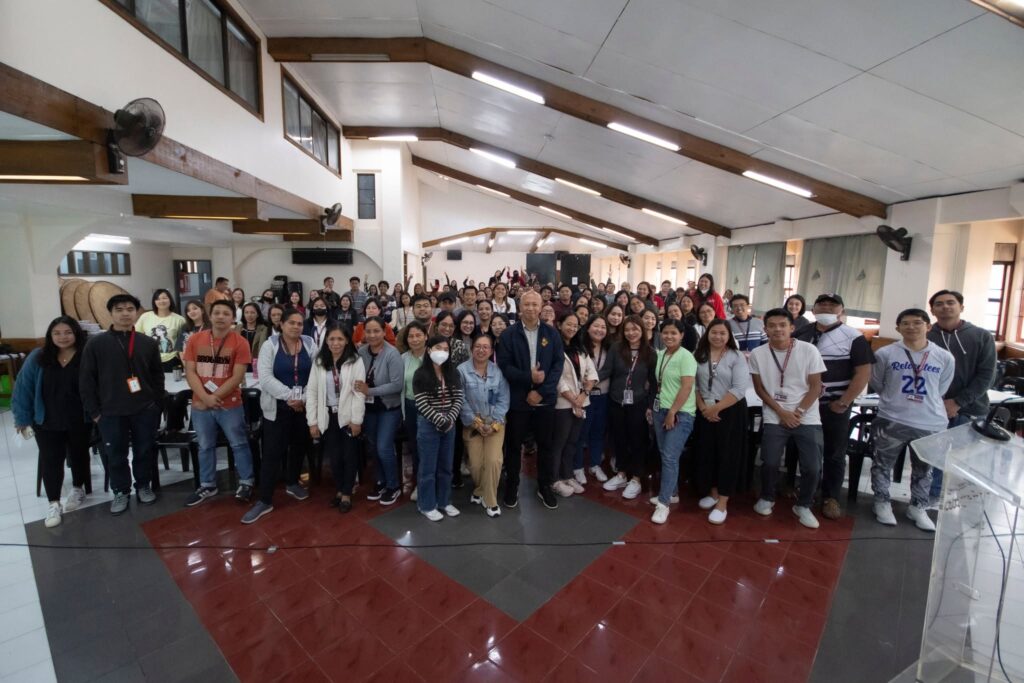
Written by: May-an C.Tinangag | Photographed by: Aydel Joseph L. Malaluan
The training speaker was Engr. Richard C. Pascua, former President of the Philippine Institute of Civil Engineers (PICE).
The 5S and Housekeeping Training was conducted on February 28, 2025 at FGB Hall by Engr. Richard C. Pascua, former President of the Philippine Institute of Civil Engineers.
The training centered on the 5S quality workplace methodology, emphasizing the importance of cleanliness, organization, and standardization to foster a productive and safe working and learning environment. Also, this aims to enhance operational efficiency and safety standards while instilling a culture of discipline and accountability among the employees of the university to ensure optimal workplace performance.
Furthermore, the training was aligned with the Philippine Laws and regulations to ensure compliance and promote workplace safety. These include RA No. 11058 (Occupational Safety and Health Standards), which emphasizes hazard reduction and employee well-being; RA No. 9165 (Dangerous Drug Act of 2002) , highlighting a safe working environment; and RA No. 10173 (Data Privacy Act of 2012), advocating for proper data management within the university. It also referenced RA No. 9485 (Anti-Red Tape Act of 2007) to improve organizational efficiency, and the Labor Code of the Philippines to promote better employee welfare and rights.
The training supports the following SDGs:
SDG 3: Good Health and Well-Being – By emphasizing cleanliness, order, and safety in the workplace, the training directly contributes to protecting the health and well-being of employees. A well-organized and hazard-free environment minimizes risks of accidents, illnesses, and stress, ensuring that workers and students alike can thrive in a supportive and secure atmosphere.
SDG 8: Decent Work and Economic Growth – The 5S methodology fosters efficiency, productivity, and discipline, which are essential components of sustainable economic growth. By streamlining processes and cultivating responsible workplace practices, the training empowers employees to perform better while upholding labor rights and fostering a culture of respect, innovation, and accountability.
SDG 9: Industry, Innovation, and Infrastructure – Implementing structured housekeeping systems builds stronger institutional infrastructure by optimizing operations and encouraging continuous improvement. The training promotes a mindset of innovation and adaptability, ensuring that the university’s systems remain efficient, resilient, and capable of meeting the demands of a rapidly changing academic and professional environment.
SDG 12: Responsible Consumption and Production – The principles of 5S highlight the value of resource optimization and waste reduction. By encouraging careful use of materials, effective organization, and the minimization of unnecessary consumption, the training cultivates sustainable practices that lessen the university’s environmental footprint while improving operational sustainability.