
Written by Francis Ernie A. Bauzon
Violence inside the home often remains unseen, yet the harm it causes can stretch far beyond the people directly involved. It affects families, strains communities, and can leave lasting impacts that carry into the next generation. Understanding how and why domestic violence happens is not only a matter of forensic interest — it is a responsibility shared by all sectors of society.
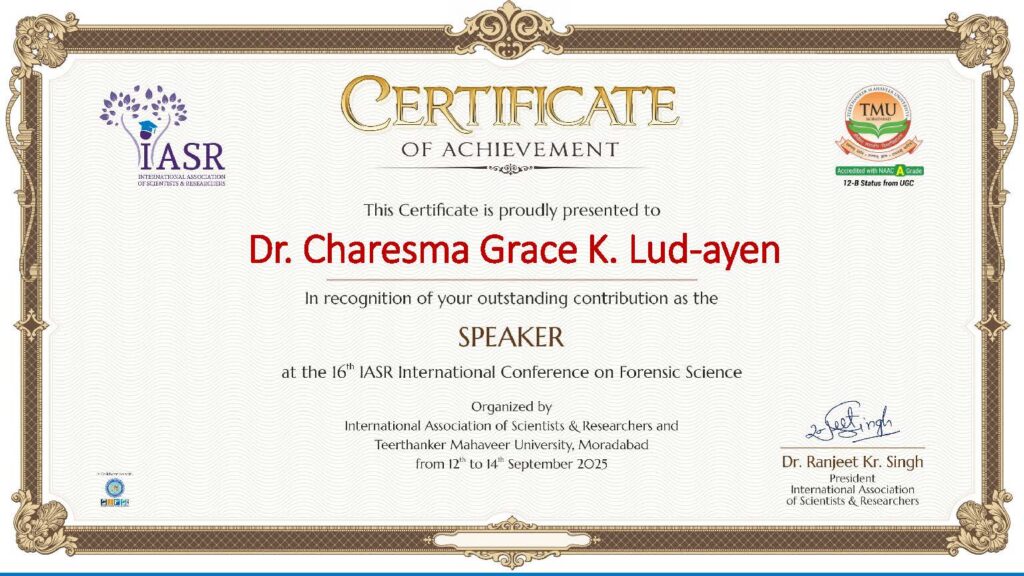
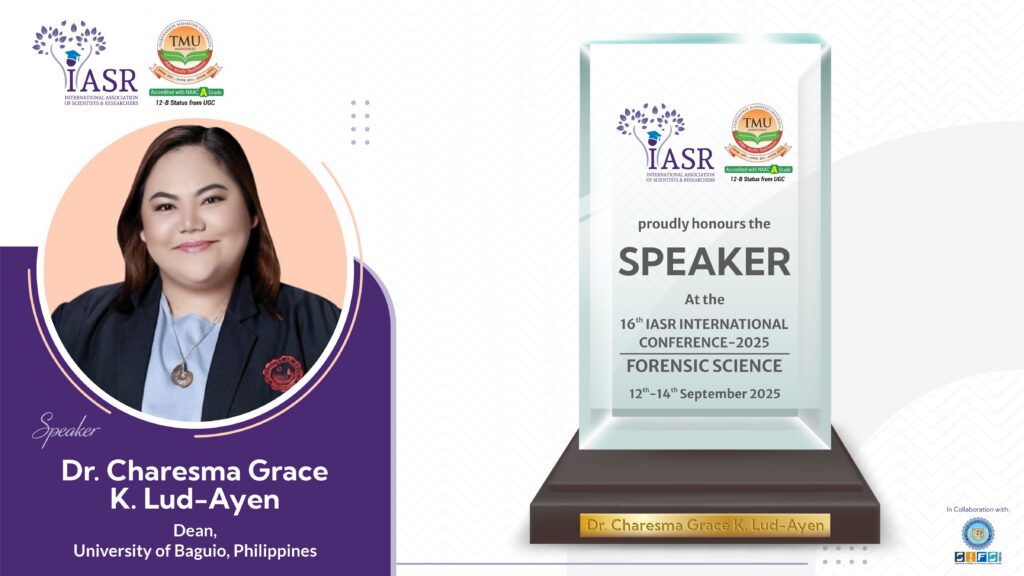
This was the heart of Dr. Charesma Grace K. Lud-ayen’s presentation at the 16th International Conference on Forensic Science held from September 12-14, 2025. The conference, organized by the International Association of Scientists and Researchers (IASR) in partnership with Teerthanker Mahaveer University (TMU) in Moradabad, Uttar Pradesh, India, and the Sherlock Institute of Forensic Science (SIFS) India, brought together professionals, academics, and learners from various fields of forensics to exchange new knowledge and research.
In her talk, Dr. Lud-ayen presented the findings of her key informant analysis involving individuals who had been involved in domestic violence incidents. While the ages of those interviewed varied from 23-65 years, many of their life circumstances overlapped: limited educational backgrounds, low-income jobs, difficult family environments, and long-standing emotional struggles. The predominance of male key informants highlighted the need for gender-specific strategies that address the unique challenges men face regarding domestic violence, such as societal pressures around masculinity and aggression. Educational attainment among the key informants was predominantly low, with most having minimal, formal education and only one possessing a college degree. Many held minimum wage jobs, emphasizing the role of financial stress as a contributing factor to domestic violence. These conditions, she explained, do not justify violent behavior, but they help reveal how domestic violence takes shape and what factors contribute to it. Substance use—especially alcohol and drugs—appeared repeatedly in the narratives as a major trigger, with many describing how impaired judgment and heightened emotions escalated into violence. Emotional pressures such as frustration, depression, and helplessness were also commonly mentioned. Dr. Lud-ayen noted that social media increasingly plays a role, with online interactions fueling jealousy, misunderstanding, and conflict in already fragile relationships.
Throughout her presentation, she stressed that domestic violence does not occur in isolation. It grows out of a mix of personal, emotional, and social pressures. Economic instability, lack of education, and unresolved emotional issues create environments where conflict can easily turn destructive. Because of this, she emphasized the importance of accessible mental health support, strong community systems, and interventions that work on both prevention and rehabilitation. Addressing emotional factors such as depression, frustration, and the influence of social media was highlighted as crucial, suggesting that comprehensive mental health services, including counseling for depression and anger management, are vital. Public awareness campaigns focused on responsible social media use and monitoring harmful content could play a key role in reducing triggers for domestic violence.
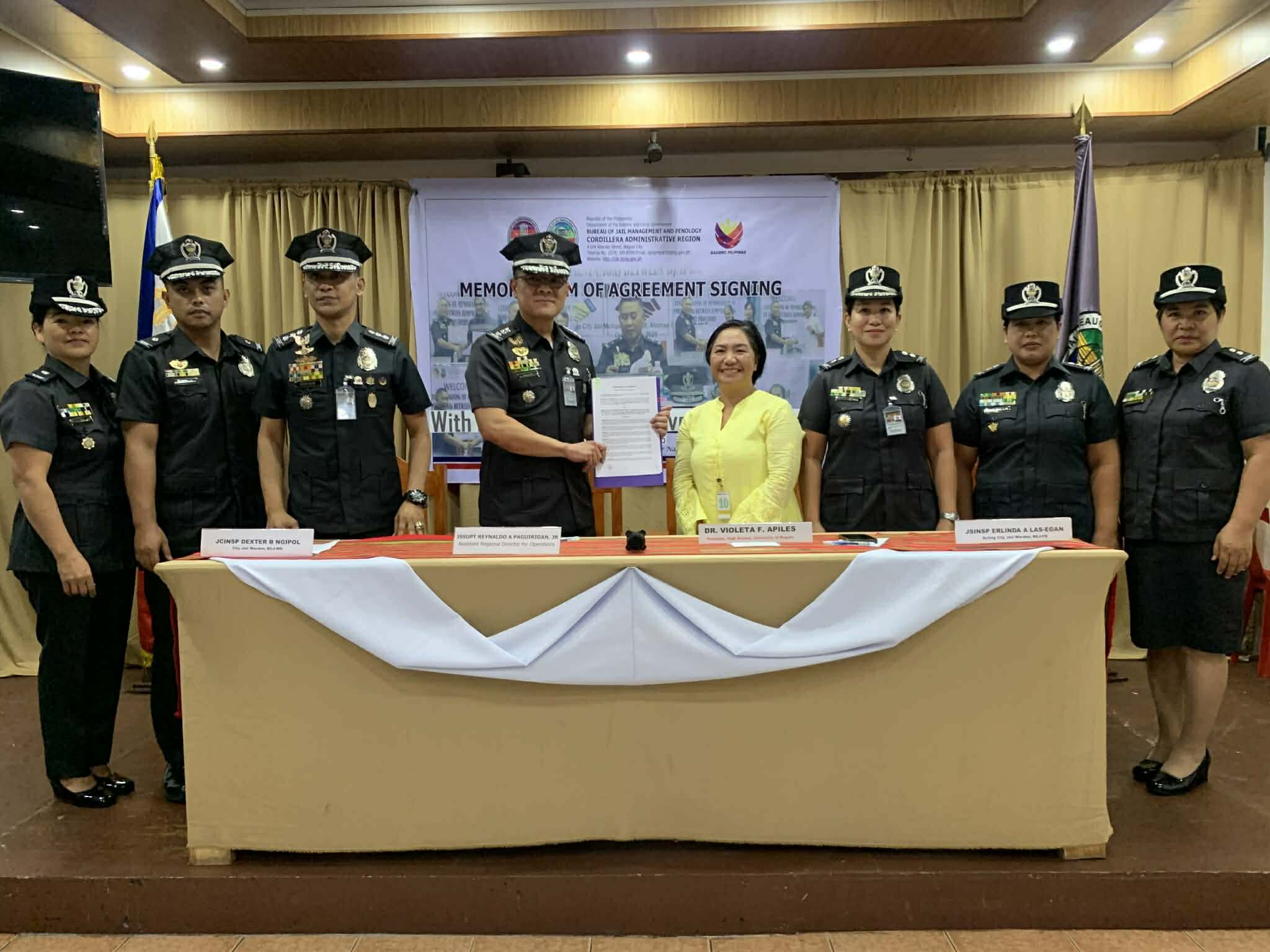
A central part of her discussion focused on the rehabilitation programs offered by the Bureau of Jail Management and Penology (BJMP) for Persons Deprived of Liberty (PDL), including those involved in domestic violence. She explained that these programs are designed to support different aspects of an individual’s development—psychological, behavioral, educational, vocational, and spiritual. One of the major initiatives she highlighted was the Therapeutic Community Modality Program (TCMP), which uses a structured, group-based approach to encourage positive thinking, responsible decision-making, and healthier ways of dealing with stress. TCMP helps participants develop self-discipline and pro-social behavior, contributing to a more stable and supportive environment inside the facility.

Dr. Lud-ayen also described the role of Interfaith Programs, which allow PDLs to practice and strengthen their spiritual beliefs. These activities provide a sense of grounding and hope, and many find that spiritual guidance helps them reflect on their actions and move toward positive change. Research indicates that Interfaith Programs can reduce recidivism by 13%, demonstrating that spiritual support can be a practical component of rehabilitation. Alongside this, the Psychological and Behavioral Management Programs offer counseling and therapy aimed at addressing emotional concerns and helping individuals learn healthier ways to manage anger, frustration, and stress.
Education and livelihood preparation form another important part of rehabilitation. Through the Alternative Learning System (ALS), PDLs can continue their education and earn certifications they may not have had the chance to pursue before. Many also receive skills training accredited by Technical Education and Skills Development Authority (TESDA), equipping them with practical abilities they can use when they return to society. Livelihood programs provide opportunities for income-generating activities inside the facility, helping individuals develop work habits, responsibility, and financial skills. Dr. Lud-ayen emphasized that these programs play a significant role in reducing recidivism because they give former PDLs meaningful pathways toward stability.
Despite the wide range of rehabilitation efforts, she acknowledged that challenges remain—particularly the difficulty many individuals face when reintegrating into the community. Some people are still hesitant to accept former PDLs, which can limit their opportunities and put them at risk of slipping back into old patterns. Because of this, Dr. Lud-ayen stressed the need for stronger community involvement, ongoing program evaluation, and continued support after release, including mental health services and job placement assistance.
In her closing points, Dr. Lud-ayen emphasized that addressing domestic violence requires approaches that are compassionate, practical, and grounded in real-life conditions. Strengthening mental health services, improving support for victims, building family counseling programs, and creating community initiatives aimed at healthier communication are all important steps in reducing violence. She also pointed to the need for continued research to ensure that interventions evolve alongside the needs of the people they serve.
Her participation in the international conference reflects the University of Baguio’s ongoing commitment to the United Nations Sustainable Development Goals, especially those related to peace and justice, gender equality, quality education, and reducing inequalities. By sharing her research with an international audience, Dr. Lud-ayen helped expand the global conversation on domestic violence and offered insights that can support programs both in the Philippines and abroad.
Ultimately, her presentation serves as a reminder that while domestic violence is a complex and deeply rooted issue, change is possible. When communities understand the contexts behind violent behavior and work together to provide support, intervention, and rehabilitation, safer and more compassionate communities can be built. Dr. Lud-ayen’s work contributes meaningfully to these efforts, offering guidance for improving family relationships, strengthening rehabilitation programs, and creating environments where understanding and safety are priorities.