
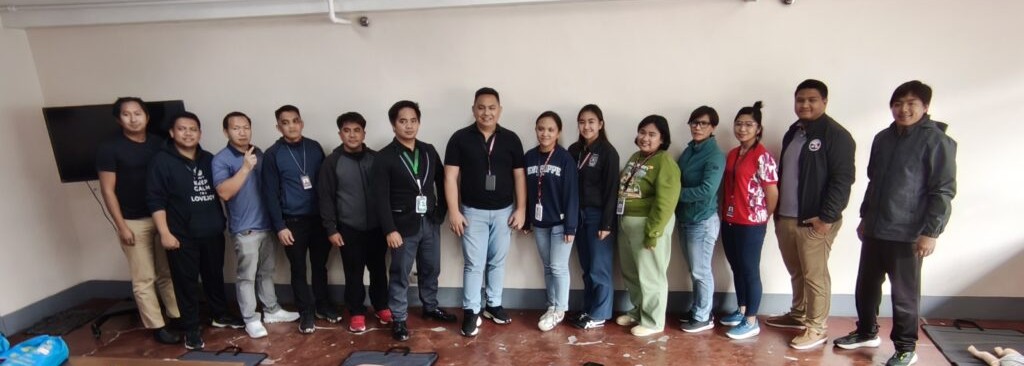
Written by Dannieca B. Buyayo, Denmark Rey C. Velasco, , Celina Lorinne D. Granita, Voughn Liam D. Laruan | Photographed by Denmark Rey C. Velasco
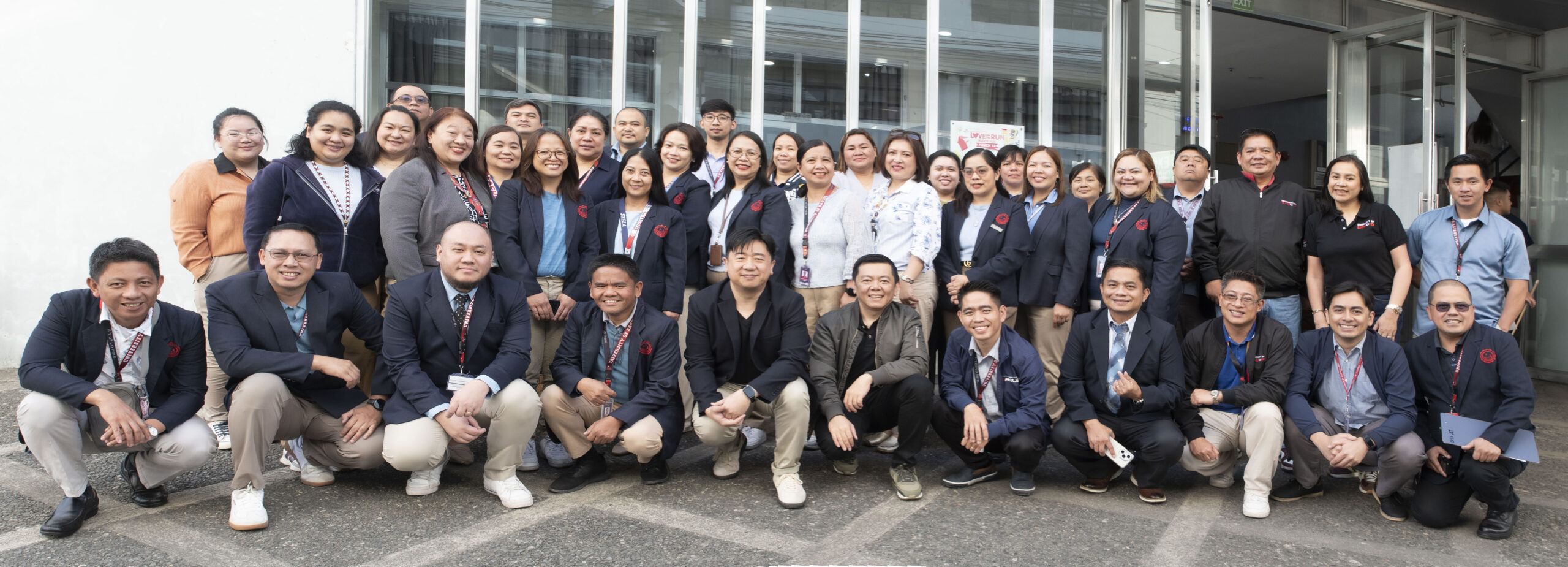
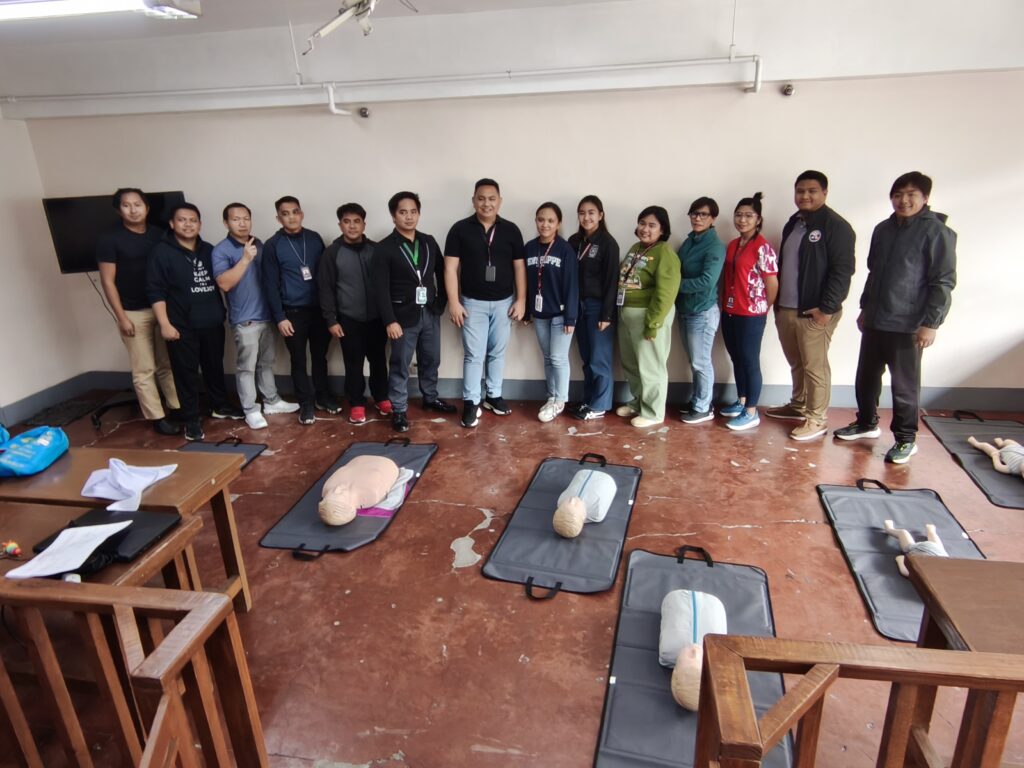
BAGUIO CITY — On February 20, 2026, the University of Baguio (UB) School of Criminal Justice and Public Safety (SCJPS) successfully hosted its 3rd G.U.I.D.E.S. (Guided University Integration and Development for Educators’ Success) professional seminar, entitled “Empowering Educators Through Basic Life Support Training.” The event, a Faculty Development Program (FDP) aligned with the Teaching Equivalence and Academic Certification for Higher Education Roadmap (T.E.A.C.H.E.R. Roadmap), carried the theme: “Basic Life Support Training: Empowering Educators to Save Lives.”
The seminar brought together faculty members of SCJPS for a structured, three-part training program facilitated by the school’s own instructors—each a recognized expert in safety, physical training, and emergency response. The program was designed not only to build competency in life-saving procedures but also to reinforce the school’s institutional culture of preparedness, resilience, and service.
Session 1: Lecture on First Aid and Safety
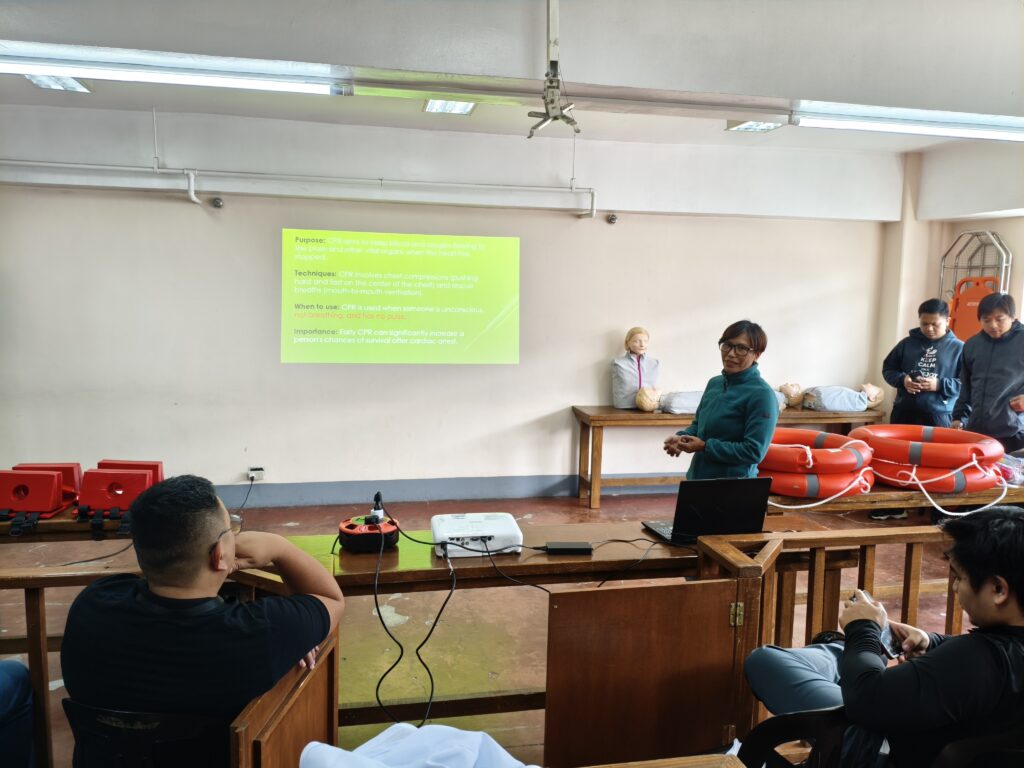
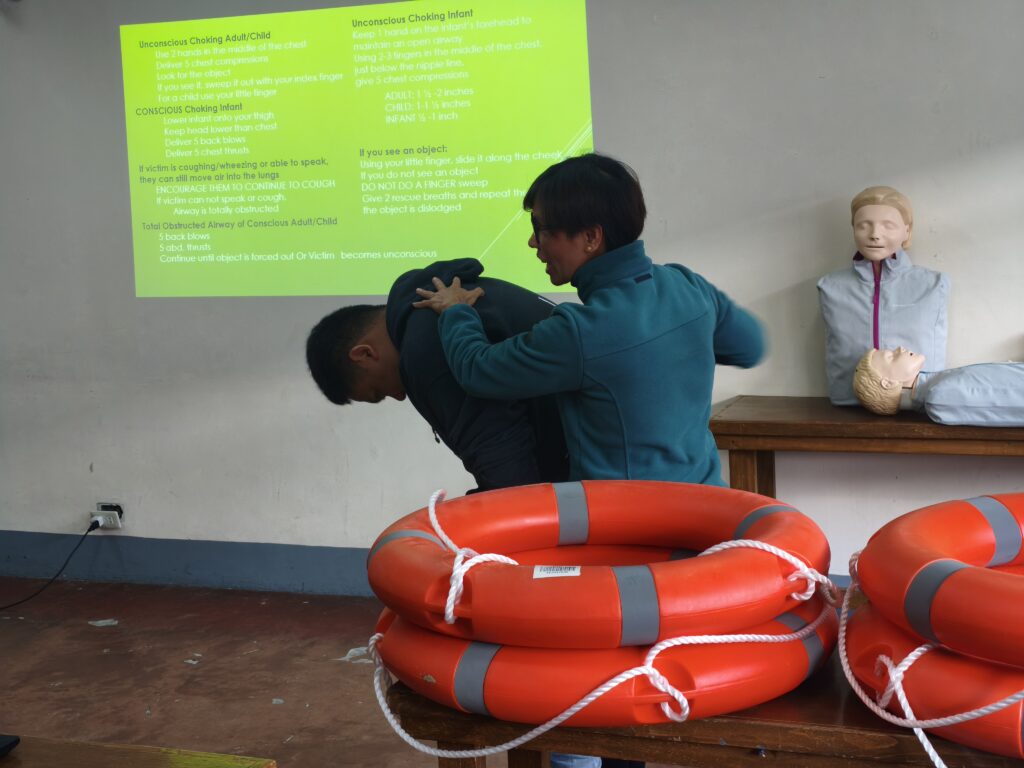
The seminar commenced with a foundational lecture on First Aid and Safety, facilitated by Ms. Cora M. Dogui-is, a certified instructor in safety training. Ms. Dogui-is oriented the participants on the fundamental principles of first aid, including the importance of scene safety, the primary and secondary survey, and the legal responsibilities of first responders. Her lecture emphasized that effective first aid begins not with skill, but with presence of mind—the capacity to remain calm and assess a situation before acting.
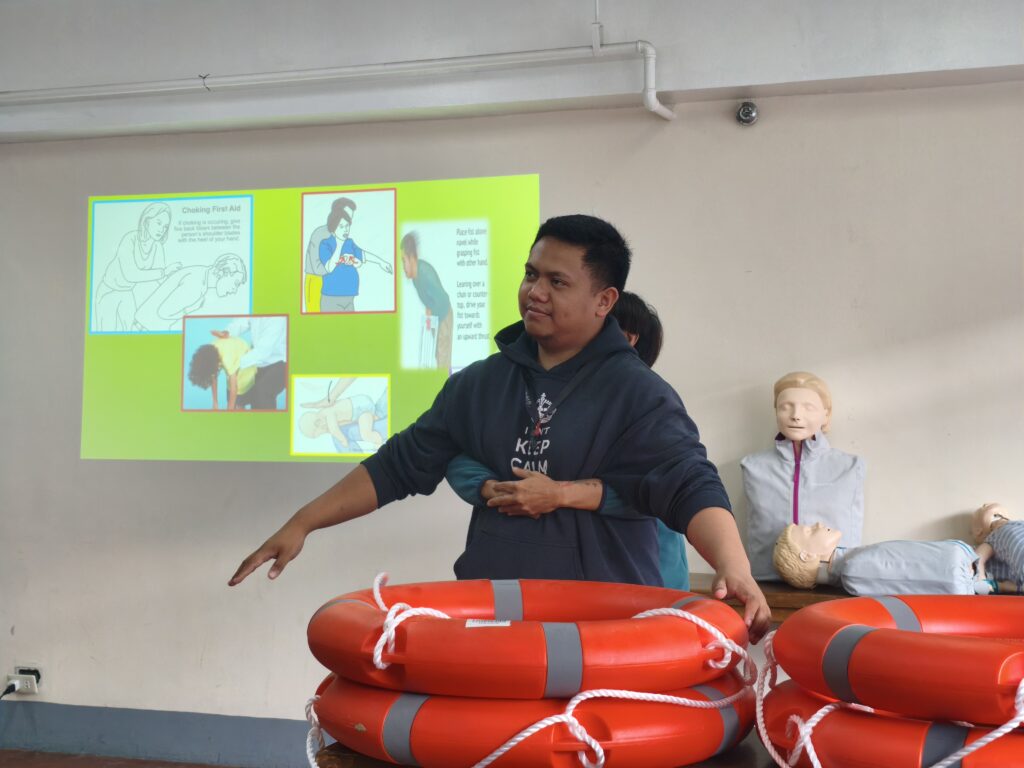
Participants were also introduced to common emergency scenarios relevant to educational settings, including fainting, choking, fractures, and heat-related illnesses. Ms. Dogui-is underscored the critical importance of immediate response in the minutes before professional medical assistance arrives, often referred to as the “golden period” in emergency care. Her well-crafted slide presentation provided clear, visually accessible materials that enabled the faculty to follow along and take notes on key protocols.
Session 2: Bandaging Techniques Using the Triangular Bandage
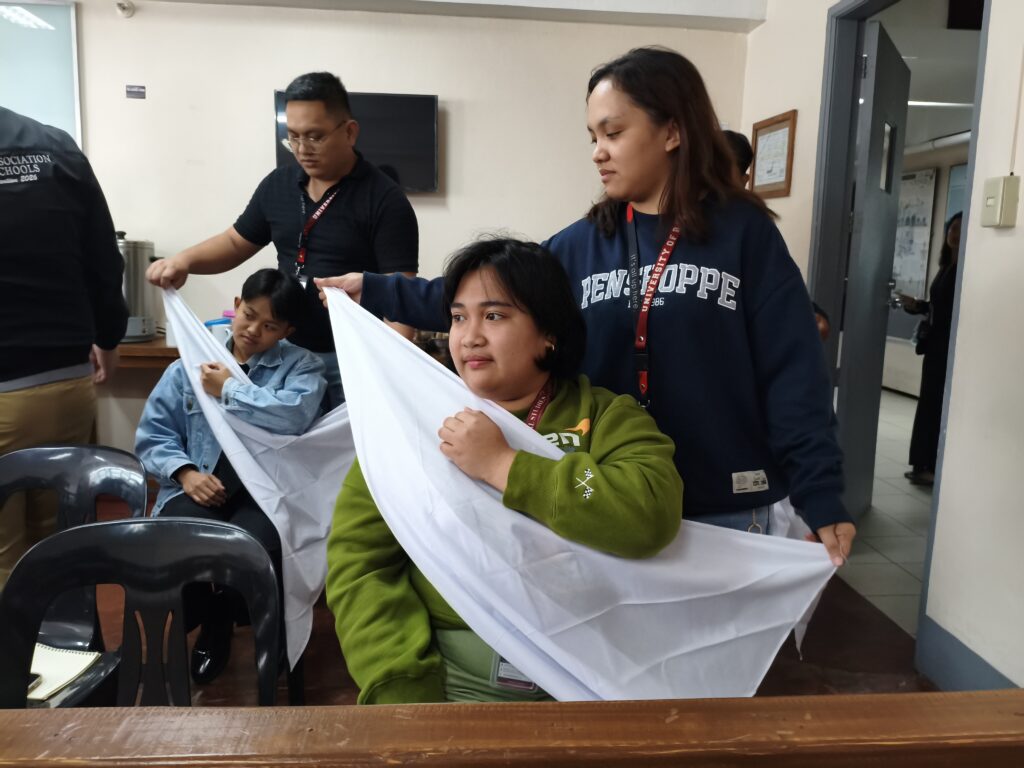
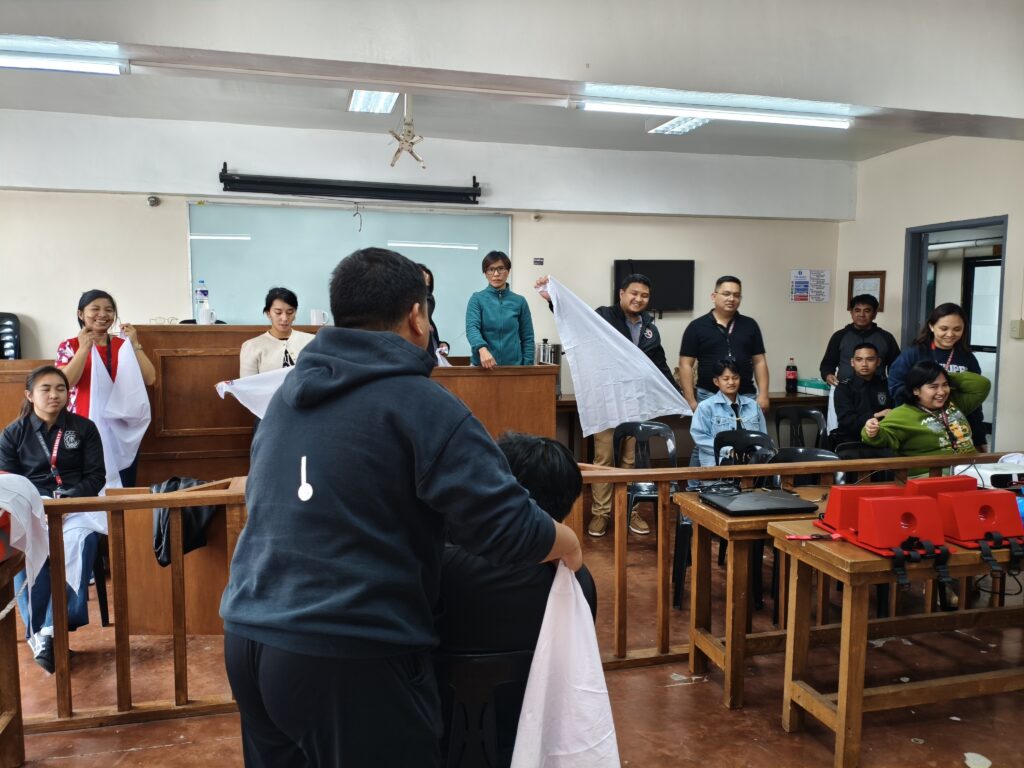
The second session shifted from theory to hands-on practice, with Mr. Jereign Francis A. Mejia leading a practical demonstration on bandaging techniques, with a specific focus on the use of the triangular bandage. Mr. Mejia, with extensive experience in physical training and injury management, guided participants through the proper folding, application, and securing of the triangular bandage across different body parts, including the head, arm, and knee.
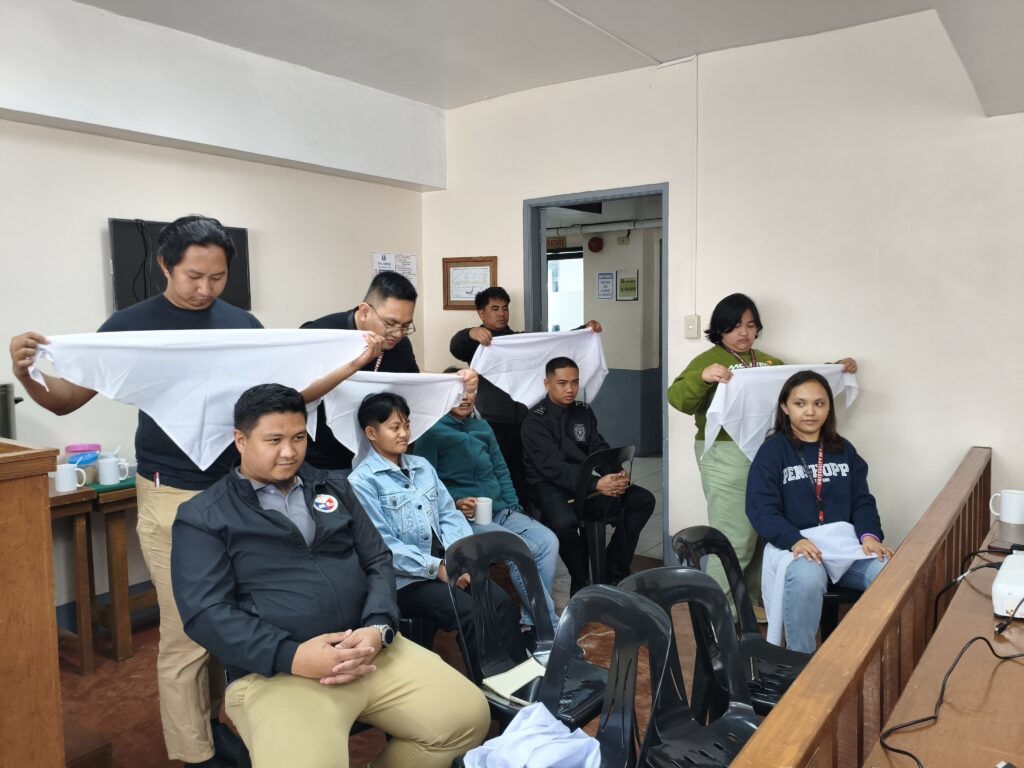
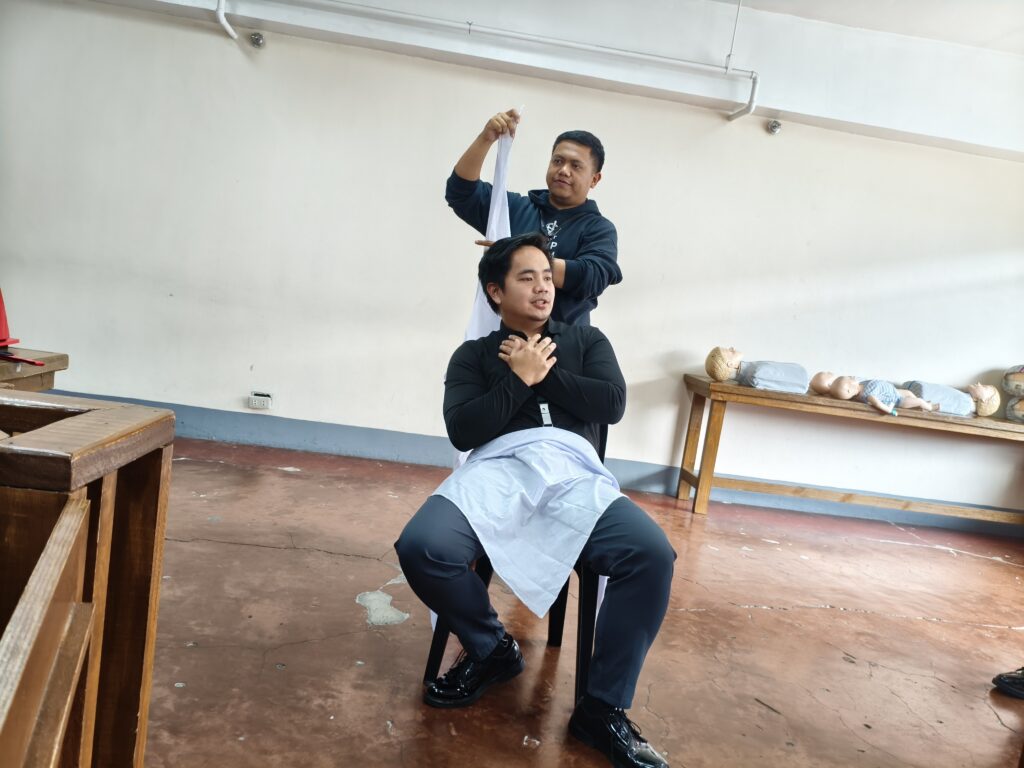
Faculty members paired up to practice on each other, reinforcing muscle memory and familiarizing themselves with common errors to avoid, such as bandages that are too loose to provide support or too tight to restrict circulation. His step-by-step approach ensured that participants of all experience levels could follow and replicate the techniques confidently.
Session 3: Basic Life Support
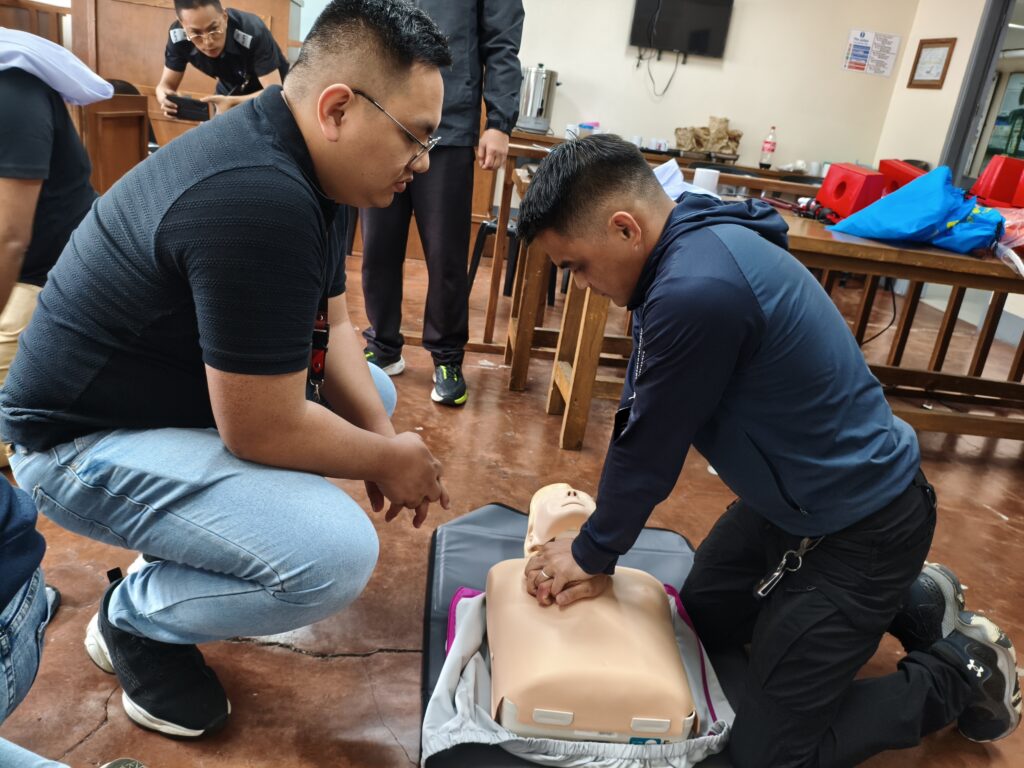
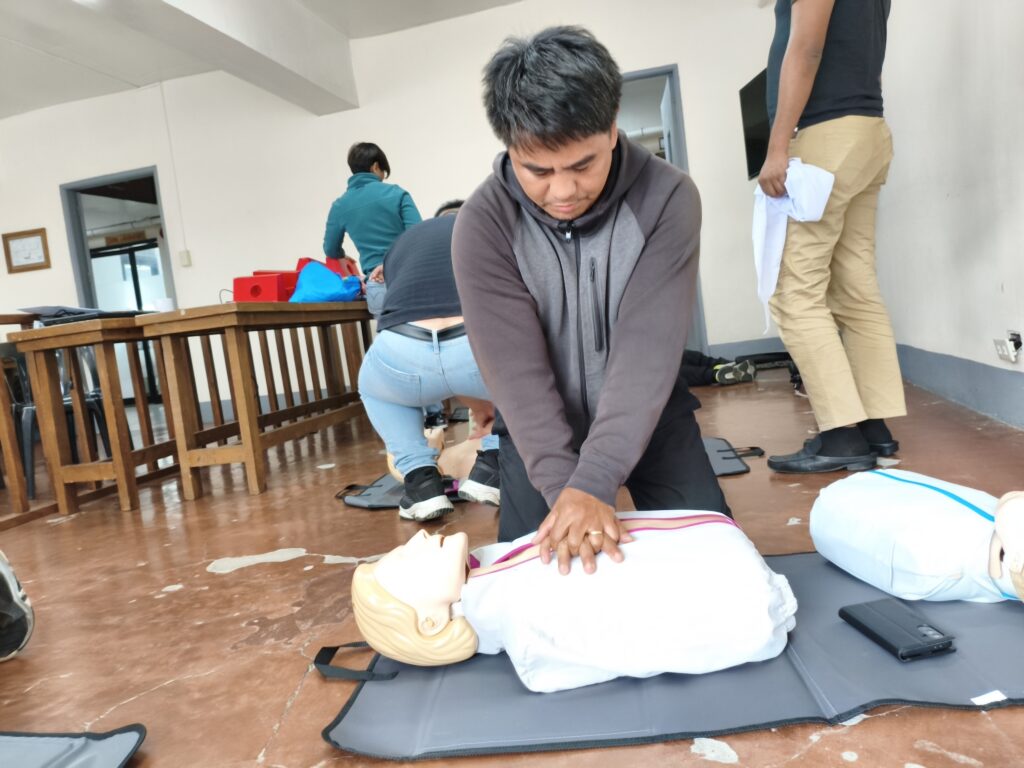
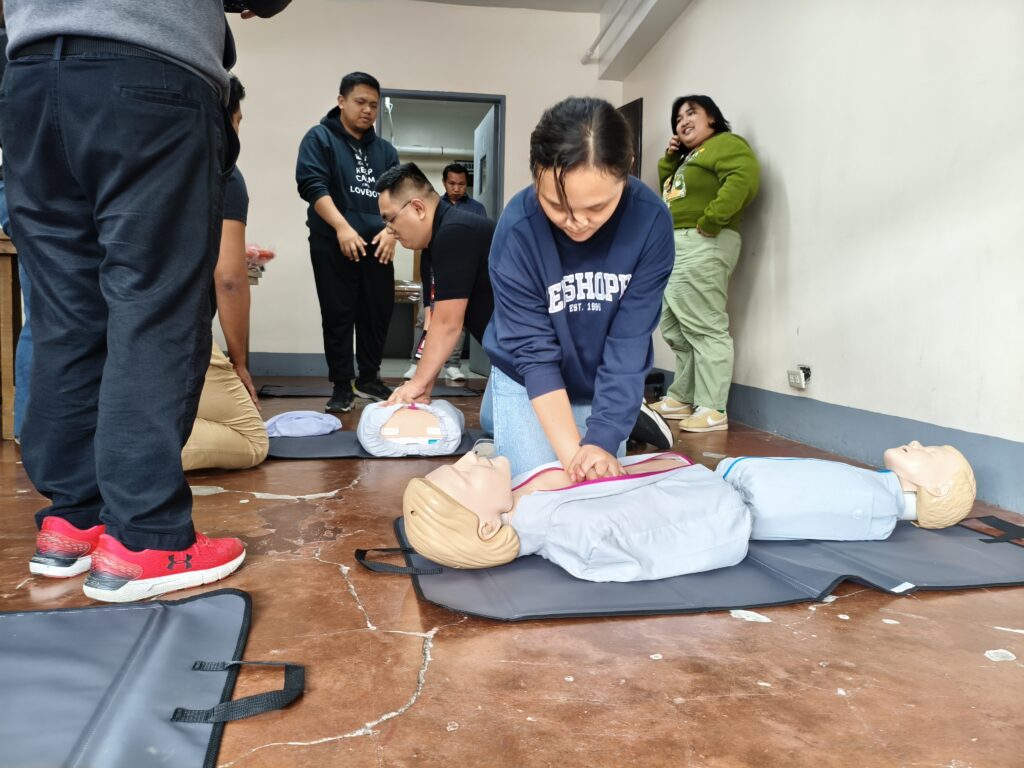
Session 3 of the seminar focused on Basic Life Support (BLS) and was led by Dr. Alain Delon D. Ringor, who delivered a comprehensive and practical discussion on the fundamentals of cardiopulmonary resuscitation (CPR). He explained how CPR works in sustaining blood circulation and oxygen flow to vital organs during cardiac emergencies. Emphasizing the importance of proper counting, rhythm, and body positioning, he carefully demonstrated the correct compression rate and depth, ensuring that participants understood the standard procedures required in real-life rescue situations.
To reinforce learning, Dr. Ringor conducted a live demonstration using a CPR training dummy provided for the session. He illustrated the proper hand placement, posture, and compression technique, highlighting how correct form directly affects the effectiveness of chest compressions. Through this hands-on demonstration, participants gained not only theoretical knowledge but also practical insight into performing CPR accurately and confidently, equipping them with essential life-saving skills.
Institutional Commitment and Program Impact
Through this Faculty Development Program, the SCJPS demonstrated its unwavering commitment to public safety, academic excellence, and the holistic development of its teaching force. By investing in emergency preparedness training, the school moves beyond traditional academic development and equips its educators with skills that extend the boundaries of the classroom—preparing them to respond effectively in moments that matter most.
The G.U.I.D.E.S. seminar further affirms SCJPS’s alignment with the United Nations Sustainable Development Goals (SDGs). The training advances SDG 3 (Good Health and Well-Being) by promoting health awareness and emergency preparedness among educators; SDG 4 (Quality Education) by strengthening instructor proficiency through continuous professional development; SDG 16 (Peace, Justice, and Strong Institutions) by preparing educators who contribute to safer institutions and communities; and SDG 17 (Partnerships for the Goals) through collaborative efforts in advancing public safety education.
As the University of Baguio continues to strengthen its role as a leading institution in Northern Luzon, the 3rd G.U.I.D.E.S. The seminar stands as a testament to its enduring commitment in producing competent graduates and cultivating educators who are equipped, empowered, and ready to serve their community when it matters most.