
Written by Kemp Sean Andres, Ronnie Bayaguen, Mela Chrizelle Timbol, Felipe Villanueva
Photos courtesy of Alseiah Haluber
The University of Baguio School of Criminal Justice and Public Safety formally announced the successful conclusion of its Annual Academic Mobility Program at Huachiew Chalermprakiet University in Thailand on April 15, 2026, marking a significant milestone in its continued pursuit of international academic collaboration and professional development. The month-long opportunity offered to SCJPS Interns delivers an immersive and dynamic learning experience, featuring hands-on laboratory training and multidisciplinary lectures in Cybercrime, Occupational Safety and Health, and Food and Water Safety, alongside practical exposure to forensic science disciplines such as DNA analysis, forensic anthropology, medico-legal investigation, entomology, disaster and fire management, and essential life-saving skills like CPR—ultimately designed to enhance the interns’ technical competence, critical thinking, and preparedness for real-world criminal justice and public safety operations.
The Forensic and Criminology interns of the University of Baguio, embarked on an academic journey to the kingdom of Thailand, which served as an opportunity to enhance their studies and have hands-on experience with the different disciplines of Forensic Science Laboratory studies and Disaster Risk Reduction management.This initiative aimed to enhance students’ technical competencies and expose them to global standards in forensic science and public safety. Through immersive activities and practical exercises, the interns bridged theories with real-world applications.
The international program was designed to train students in the different Forensic laboratory procedures and broaden their skillsets on emergency response. In partnership with Huachiew Charlemprakiet University, providing them an opportunity to gain exposure in a different environment and challenge themselves in a foreign setting, to learn the ways of the local service agencies, and to prepare students for professional practice on the global stage.
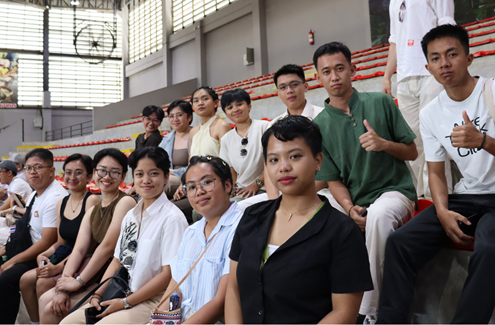
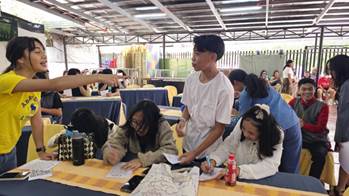
The laboratory training effectively supplemented the interns’ theoretical knowledge by providing hands-on experience through the use of actual cadaveric specimens, specialized laboratory equipment, and structured simulations of emergency medical services. Furthermore, the interns were afforded the opportunity to engage with the host country’s culture through their participation in local festivities and meaningful interactions with students and faculty members. These experiences enabled the interns to gain broader perspectives beyond their own cultural context, fostering greater cultural awareness, adaptability, and appreciation for diversity
As the academic mobility program was about to conclude, the interns carried with them more than the knowledge they had gained — they brought home new memories, meaningful experiences, and a strengthened sense of camaraderie as a team. What once began as a group of individuals striving to navigate an unfamiliar program gradually evolved into a close-knit community, bound together by shared challenges, small victories, and the kind of moments that only emerge when people work through something difficult side by side.
Learning and adapting within a new environment proved to be as formative as any formal training. Working alongside peers they had come to know through late deadlines, collaborative projects, and shared discoveries, the interns found that the experience extended far beyond professional development — it shaped them personally. The connections they forged and the memories they built together gave the program a depth that no curriculum alone could have provided.
The partnership between the University of Baguio and Huachiew Chalermprakiet University reflects its strong commitment to sustainability, environmental stewardship, and holistic education. This aligns to the United Nations Sustainable Development Goals:
SDG 4 – Quality Education – By giving the SCJPS interns access to internationally benchmarked, hands-on training in forensic science, cybercrime, and disaster management, bridging classroom theory with real-world practice and preparing them for global professional standard.
SDG 10 – Reduced Inequalities – Through access to international-level training helps close the gap between local and global educational opportunities, making quality professional development more inclusive and far-reaching
SDG 16 – Peace, Justice, and Strong Institutions – By providing training in forensic disciplines, the program builds technical competence needed to support credible and accountable criminal justice and public safety institutions in the country.
SDG 17 – Partnerships for the Goals – The University of Baguio’s collaboration with Huachiew Chalermprakiet University demonstrates how cross-border academic partnerships can pool expertise and resources to raise educational standards and develop globally competent professionals.