
Collaborative education is essential for a sustainable future. Education cannot function in isolation. It should evolve with the needs of the community and the demands of industries, ensuring that it remains flexible and future-proof so that it can continue to serve generations of learners down the line. Education built by partnerships is key to ensuring that academic institutions can continue on the path of excellence.
The University of Baguio recognizes this need for intersectionality within the academic sphere. Through its different schools and offices, it continues to forge meaningful partnerships across the different sectors of society, ensuring that it always has access to the necessary resources and collaborative venues for transformative learning that prime students to be lifelong learners and service-driven citizens.
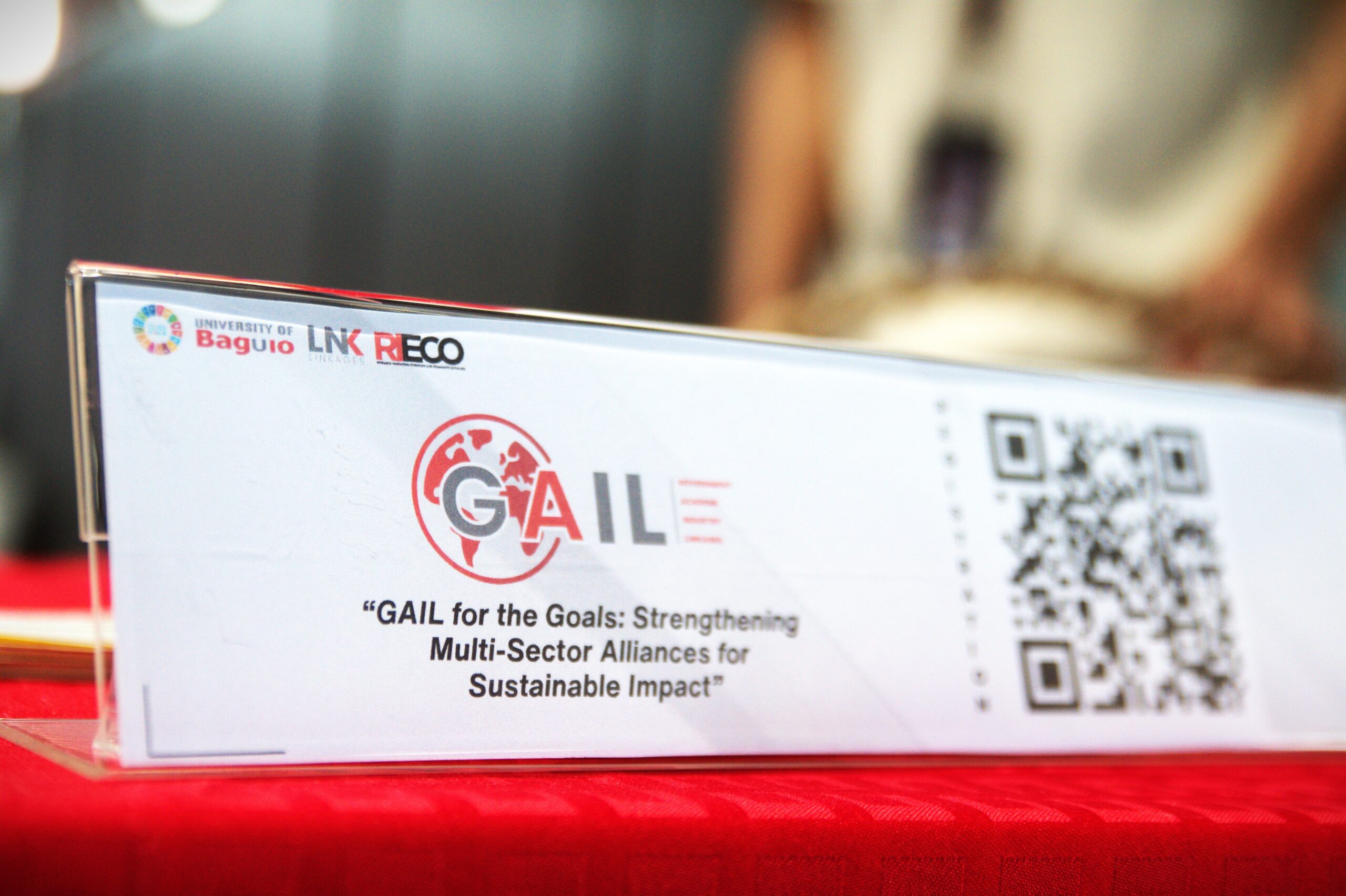
In honor of these invaluable ties, the UB once again held its annual GAIL: Government, Academe, Industry, Linkages, an event dedicated to commemorating the strong relationships that continue to support its commitment to balanced quality education.
The future of education in a sustainable community

On May 7, 2026, representatives from the university’s different partner organizations gathered at the UB Cardinals Gym for a pleasant morning of socialization before settling in for the program proper. Apart from serving as an awarding ceremony, GAIL is also an event where different industry professionals are called upon to give the community’s current progress on achieving the United Nations Sustainable Development Goals (UN SDGs).
The event was divided into three key sessions across eight speakers. Each session was capped with a question-and-answer session moderated by Dr. Donnavilla Marie Panday-Herbster (Director, RIECO), Ms. Leny Estacio (Director, CCSD), and Ms. Melanie Rulla-Saro (Director, Linkages Office) respectively.
The first session was led by Arch. Donna Rillera Tabangin, the Head of the City Planning, Development, and Sustainability Office of Baguio. Her talk was a crucial look into the current developmental trajectory of the city, presenting the different aspects of Baguio that are already succeeding in moving towards sustainability and those that are still lacking.
The next speaker for the first session was Stephanie Orlinon, the Assistant Vice President of PLDT and the SMART Public Engagement Group. Her discussion centered around technological integration and digital transformation across industries, lending valuable insight into how the community can benefit from rapidly evolving technology and digital skills.
The next session focused on healthcare and gender equality, with Zarlyn Banaña (RMT), Chief Medical Technologist at the Baguio General Hospital and Medical Center (BGHMC), first taking the lead. Her discussion offered an enlightening glimpse into best practices within medical care, and how it is addressing the evolving needs of the community.
Following her was Dr. Jude Tayaben, who serves as a school secretary and associate professor at Benguet State University. He shared a presentation on gender-responsive policies in health education, highlighting the current persisting gender issues not just within the workforce, but within the community as a whole and how the education and health care sector can address them moving forward.
After a brief break for lunch, the third and final session was led by Valeree Nolasco, a consultant on Global Policy for the Nia Tero Foundation. Her focus was on indigenous peoples’ engagement in forming global policy, especially when it comes to matters of biodiversity and climate. It was an enlightening look at how native knowledge can shape a more sustainable future.
Taking the podium second to her was PLTCOL Judy Jasmin Palicos, who currently serves as chief of the City Police Strategy Management Unit of Baguio. She discussed the current programs being executed by local law enforcement in order to maintain order and provide aid to the different members of the community.
The final two speakers were UB’s own alumni: Jason Fernandez, the Learning and Development Manager of John Hay Hotels and LandCo, and Rachele Anne Montoya, the Business Development Manager of Camp John Hay Management. Their close ties to the university provided a tighter-knit look into how industry and academe work hand in hand, as they discussed the importance of constantly providing and improving student support through field internships and practical training.
Centering academic development on collaborative education
This event bolsters the University of Baguio’s efforts to support the United Nations Sustainable Development Goals, particularly Goal No. 4: Quality Education, through the continued development of excellent, accessible, and collaborative education, and Goal No. 17: Partnerships for the Goals, as it continues to build connections between the university and the different sectors of the community to address critical global issues.
As UB continues on its journey as an excellent higher education institution, it aims to continue on this trajectory of partnerships and collaborative education, ensuring that it can always keep up with the needs of the local, national, and global community. As a leading figure in an ever-evolving industry, it is the University of Baguio’s duty to build strong foundations within its learners from the ground up, ensuring that they have the necessary soft skills and professional experience to handle the demands of the workforce.