

Written by Ar. Sheryl E. Bautista and Ar. Kyle Babylyn Quinit
The University of Baguio (UB), through its commitment to community engagement, inclusive development, and sustainability, supportsinitiatives that promote livelihood opportunities and productive participation among members of the Visually Impaired Positive and Productive Dreamers ( VIPPD ) through a cloth-cutting machine initiative. This initiative is strengthened by the involvement of the School of Engineering and Architecture (SEA), with the technical expertise of the Bachelor of Engineering Technology majorin Mechatronics (BET-Mechatronics) faculty, highlighting the role of engineering and technology in developing practical solutionsthat respond to community needs. The project contributes to the United Nations Sustainable Development Goals (SDGs), particularly SDG 8: Decent Work and Economic Growth, which promotes inclusive employment and productive work; SDG 10: ReducedInequalities, which advocates for the social and economic inclusion of persons with disabilities; and SDG 12: ResponsibleConsumption and Production, which encourages efficient resource utilization and waste reduction. The project’s direct output is theprovision of a cloth-cutting machine, while its impact on livelihood opportunities, productivity, and textile waste reduction will requireoperational monitoring and measurement.
The initiative reflects the University’s continuing commitment to community service and inclusive development by supporting theaspirations of VIPPD to participate in productive and potentially income-generating activities. Through access to appropriate equipmentand the technical support of the School of Engineering and Architecture, the project seeks to strengthen livelihood capabilities, supporttextile-related production, and encourage greater economic participation among persons with visual impairments. The involvement ofthe BET-Mechatronics faculty highlights how specialized technical knowledge can complement community outreach by helping assessequipment functionality, identify appropriate safety measures, and explore ways to improve accessibility in its use.
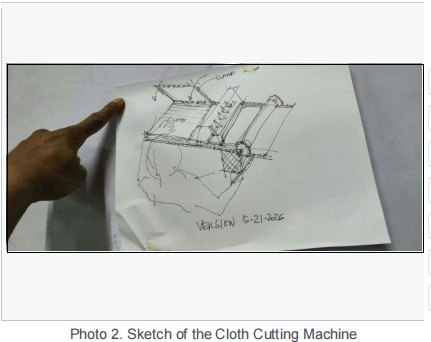
The cloth-cutting machine is intended to assist in preparing fabric for sewing and other textile-related activities. With the expertise ofthe BET-Mechatronics faculty, the initiative may also explore suitable operating procedures, safety features, and practical adaptationsthat respond to the needs of VIPPD members. When complemented by accessible instructions, appropriate training, and necessarysafety measures, the equipment may help improve the consistency and efficiency of fabric preparation. Since cloth-cutting machinesinvolve sharp blades and moving components, proper safeguards, hands-on instruction, and suitable assistance must be provided topromote safe and accessible operation.


Beyond providing equipment, the initiative highlights the importance of inclusive livelihood development through practical technology,engineering expertise, and skills enhancement. It recognizes the capabilities and aspirations of persons with visual impairments andthe value of providing opportunities for them to participate in productive work. Through collaboration between the University of Baguio,the School of Engineering and Architecture, the BET-Mechatronics faculty, and VIPPD, the project demonstrates how technical knowledge can be applied to community-based initiatives. This collaborative approach may help create opportunities for developingpractical competencies, improving equipment utilization, and supporting textile-related livelihood activities.
The initiative also promotes responsible resource utilization in textile-related activities. Accurate fabric cutting, when combined withcareful pattern planning and proper fabric management, can help maximize material use and reduce unnecessary offcuts. Throughappropriate production practices and technical guidance, the project encourages greater awareness of resource efficiency andsustainable material management while supporting the development of practical vocational skills.
The cloth-cutting machine initiative represents a practical step toward combining inclusive livelihood support with appropriatetechnology and engineering expertise. More than an equipment-related intervention, it reflects a shared commitment to accessibility,equal opportunity, technical collaboration, and sustainable development. Through the involvement of the School of Engineering andArchitecture and the expertise of its BET-Mechatronics faculty, the University of Baguio continues to demonstrate how institutional knowledge, appropriate technology, and community partnerships can help empower the Visually Impaired Positive and ProductiveDreamers and contribute to a more inclusive and sustainable society.