

Written by Filibert Patrick F. Tad-awan, PhD
UB academic leaders advance curriculum innovation, digital resilience, and cross-disciplinary cybersecurity education
The University of Baguio (UB) strengthened its commitment to future-ready higher education through its participation in the Cybersecurity Training, conducted by the Department of Information and Communications Technology (DICT) – Cybersecurity Bureau, in partnership with the Japan International Cooperation Agency (JICA), from July 10-17, 2026.
Representing the University were Dr. Filibert Patrick F. Tad-awan, Program Chair of the Bachelor of Forensic Science; Dr. Ellen Hallover, Dean of the School of Information Technology; and Ms. Lorie Narag, Faculty Member. Their participation brought together perspectives from forensic science, information technology, cybersecurity, and higher education—disciplines that are becoming increasingly interconnected as digital technologies transform professional practice, public safety, governance, and society.
The three-day capacity-building program gathered officials from the Commission on Higher Education (CHED) and academic representatives from universities, colleges, and schools across the country through both onsite and online participation. The initiative focused on strengthening cybersecurity education, establishing common curriculum baselines, and collaboratively aligning specialized cybersecurity learning modules with the evolving competency requirements of the digital workforce.
Building Future-Ready and Cyber-Resilient Academic Programs
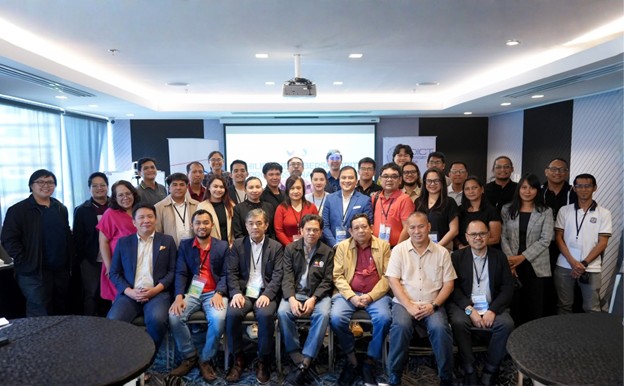
For the University of Baguio, participation in the training supports the continuing enhancement of academic programs in response to emerging technologies, cybersecurity risks, and changing professional environments.
Cybersecurity is no longer confined to information technology alone. Digital evidence, cybercrime, data privacy, information assurance, artificial intelligence, and technology-enabled investigations increasingly require interdisciplinary knowledge and competencies. The participation of representatives from both Forensic Science and Information Technology therefore provides an important avenue for strengthening cross-disciplinary curriculum development and identifying opportunities for integrating cybersecurity competencies into relevant academic programs.
For the Bachelor of Forensic Science, the training is particularly relevant to the expanding fields of digital forensics, cybercrime investigation, digital evidence identification and preservation, cybersecurity awareness, and the lawful and ethical handling of electronically stored information. These emerging areas complement traditional forensic science competencies and prepare students for increasingly technology-driven investigative environments.
For information technology education, the initiative reinforces the need to develop graduates who can understand vulnerabilities, manage cybersecurity risks, protect digital infrastructures, and contribute to organizational and national cyber resilience.
Participation in the program also supports the University’s culture of continuous quality improvement (CQI). Knowledge and curriculum benchmarks gained through external capacity-building activities can inform curriculum review, faculty development, instructional enhancement, competency mapping, and the continuing assessment of program relevance.
Government, International Cooperation, and Academe in Partnership
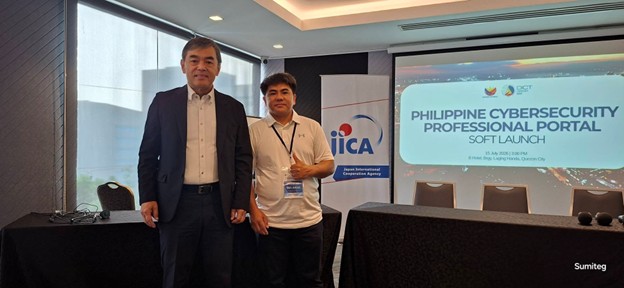
A significant feature of the training was the collaboration among DICT, JICA, CHED, and Philippine educational institutions.
Such partnerships are increasingly important in higher education because cybersecurity challenges transcend institutional and national boundaries. Government provides policy and national cybersecurity direction; international partners contribute technical expertise and global perspectives; regulatory and educational agencies support academic standards; while higher education institutions translate these developments into teaching, research, innovation, and workforce preparation.
The active participation of representatives from more than 15 universities, colleges, and schools provided opportunities for academic leaders and educators to exchange perspectives on curriculum development and explore approaches to strengthening the country’s cybersecurity education ecosystem.
The initiative demonstrates how government–academe–international partnerships can help bridge the gap between rapidly developing technologies and the competencies being developed within higher education.
PCP Portal: Strengthening the Cybersecurity Professional Community
The final day of the training also marked the soft launch of the PCP Portal, a strategic platform intended to support the registration of cybersecurity professionals and strengthen connections within the cybersecurity community.
The initiative represents an important step toward building a more coordinated professional ecosystem where expertise, competency development, and professional networks can contribute to strengthening cybersecurity capacity.
For higher education institutions, initiatives of this nature provide an important connection between academic preparation and professional practice, helping universities better understand emerging workforce expectations and areas for continuing curriculum enhancement.
Advancing the Sustainable Development Goals

The University’s participation contributes to the broader objectives of the United Nations Sustainable Development Goals (SDGs), particularly SDG 4 – Quality Education, by supporting faculty capacity development and the continuing enhancement of relevant, responsive, and future-oriented curricula. These efforts help strengthen the competencies needed by learners to participate responsibly in an increasingly digital society.
The initiative also aligns with SDG 9 – Industry, Innovation and Infrastructure, particularly through its emphasis on cybersecurity competencies, technological capability, and the protection and resilience of digital systems. Strengthening cybersecurity education contributes to the development of human capabilities needed to support secure and sustainable digital transformation.
The training likewise relates to SDG 16 – Peace, Justice and Strong Institutions. As public and private institutions increasingly depend on digital information systems, cybersecurity competencies, responsible information management, and secure digital environments are important elements of institutional resilience, accountability, and effective service delivery.
Equally significant is SDG 17 – Partnerships for the Goals. The collaboration among DICT, JICA, CHED, higher education institutions, and other educational stakeholders illustrates the value of national and international partnerships in strengthening capacity, facilitating knowledge exchange, and responding collectively to complex technological challenges.
Taken together, these areas demonstrate that cybersecurity education is not solely a technical concern. It is also connected to quality education, innovation, institutional resilience, and collaborative action—all of which are essential to sustainable development in an increasingly digital society.
From Capacity Building to Institutional Impact
Beyond participation in a national training program, the initiative provides an opportunity for the University of Baguio to translate external learning into institutional and academic improvement.
The knowledge gained by Dr. Tad-awan, Dr. Hallover, and Ms. Narag can contribute to continuing discussions on curriculum enhancement, interdisciplinary collaboration, faculty development, cybersecurity awareness, and the integration of emerging digital competencies into teaching and learning.
The participation becomes particularly meaningful when capacity-building translates into measurable improvements in curriculum, instruction, faculty competencies, student learning outcomes, research, and stakeholder engagement. It therefore provides an important input to the University’s continuing processes of curriculum review, outcomes-based education, quality assurance, and continuous improvement.
As cyber threats continue to evolve alongside advances in artificial intelligence, cloud computing, digital forensics, interconnected systems, and other emerging technologies, higher education has a critical responsibility to prepare graduates not only to participate in digital transformation but also to secure, govern, and sustain it responsibly.
Through its participation in the DICT–JICA Cybersecurity Curriculum Training, the University of Baguio affirms its commitment to relevant and responsive education, interdisciplinary innovation, lifelong professional development, and the preparation of graduates capable of contributing to a safer and more resilient digital Philippines.
Strengthening curricula. Building competencies. Securing the digital future.