
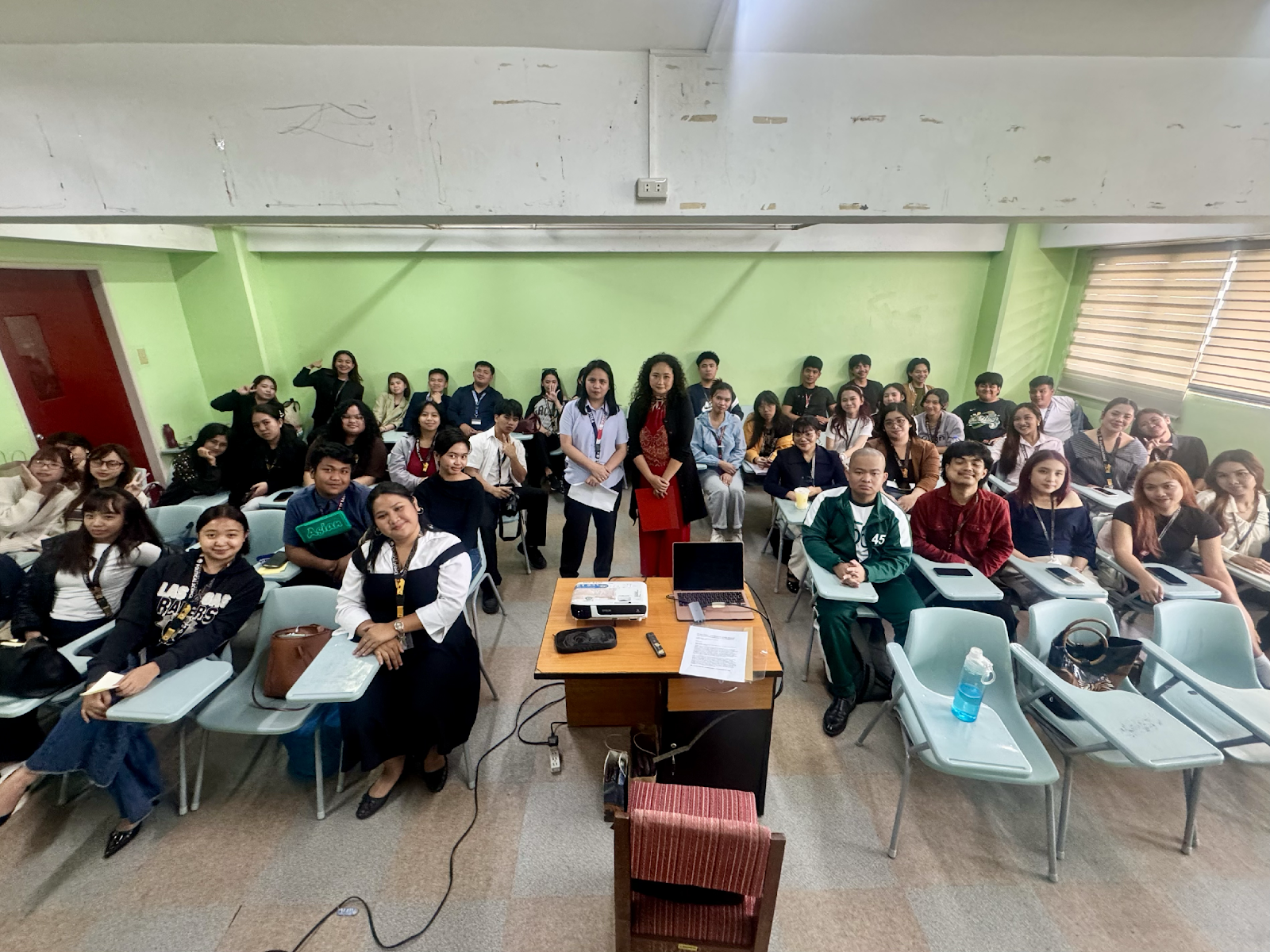
Author, poster design and photos: Jenny Marsha Agtani
The First-Year Political Science students enrolled in the Art Appreciation course at the University of Baguio organized a lecture-discussion on April 14, 2026, that examined the role of art as a transformative social and political force. The event featured Ms. Ceres Canilao, former curator of the National Museum of the Philippines and current Sectoral Representative for Visual Arts of the Baguio Creative City. The session promoted an interdisciplinary engagement with art, politics, and cultural identity.
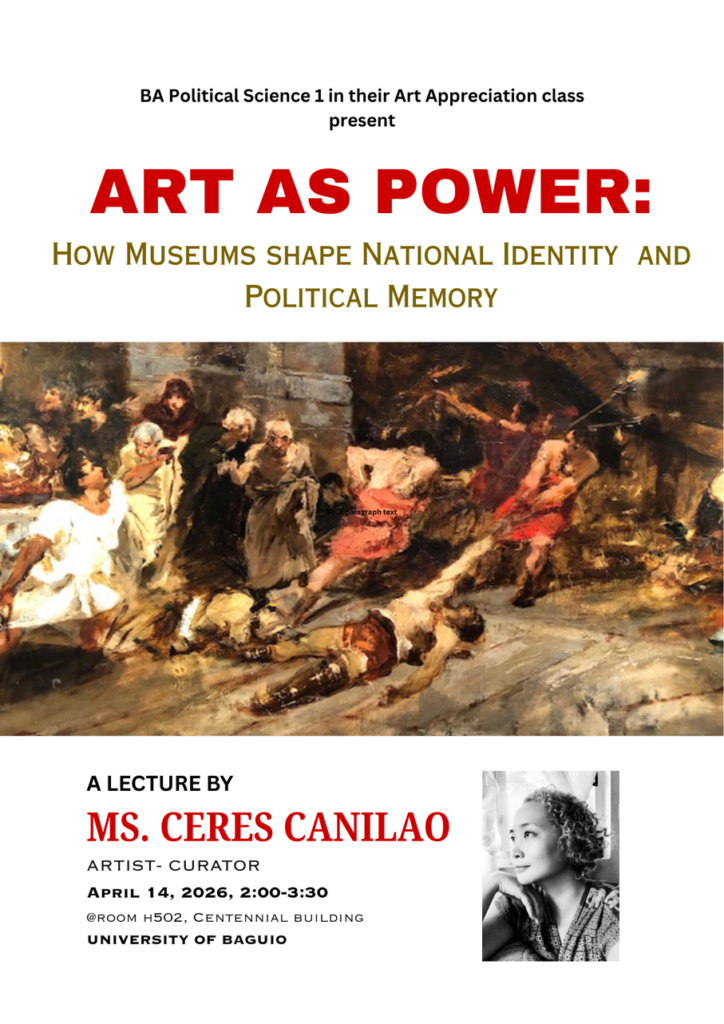
In her lecture, Ms. Canilao foregrounded museums as dynamic educational institutions that extend beyond preservation and display. She argued that museums function as critical sites for the construction of political identity and collective memory, shaping how societies narrate their histories and imagine their futures. By curating artifacts and narratives, these institutions actively participate in defining national consciousness and public discourse.
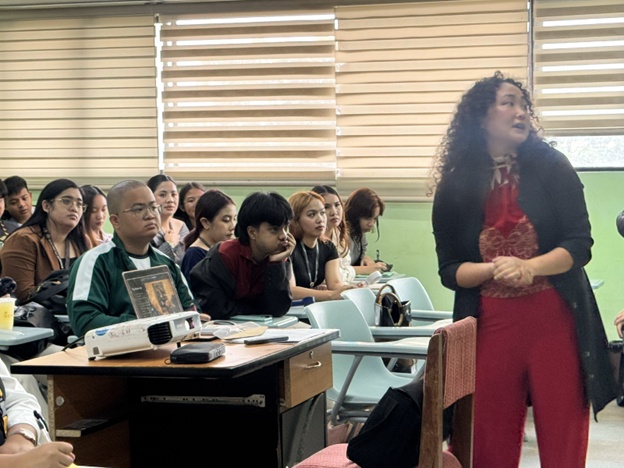
Central to the discussion was Benedict Anderson’s theoretical framework and his concept of “Imagined Communities”. Ms. Canilao emphasized that nations are socially constructed through shared narratives, symbols, and cultural practices. Art and museums, in this context, become instrumental in materializing these “imagined communities,” offering tangible representations of otherwise abstract national identities. Through exhibitions and visual storytelling, they cultivate a sense of belonging among individuals who may never directly encounter one another yet perceive themselves as part of a unified collective.
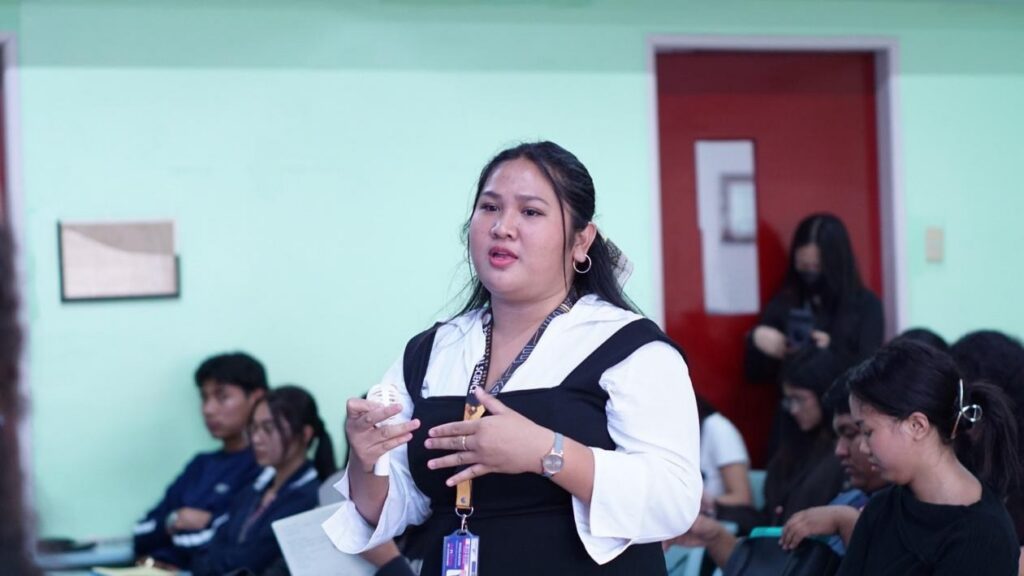
The lecture-discussion also aligned with key dimensions of the United Nations Sustainable Development Goals (SDGs), particularly Goal 4 (Quality Education), Goal 11 (Sustainable Cities and Communities), and Goal 17 (Partnerships for the Goals. By highlighting the pedagogical role of art institutions, the discussion underscored the importance of inclusive and equitable education that enhances critical thinking and cultural awareness. Moreover, the emphasis on heritage, identity, and creative expression resonates with efforts to build resilient communities that value cultural diversity and social cohesion.
Overall, the lecture-discussion demonstrated how art operates not merely as aesthetic expression but as a powerful medium for political engagement and societal development. By integrating theoretical insights from Anderson with contemporary cultural practice, Ms. Canilao illustrated how artistic and curatorial work contribute to both nation-building and the advancement of sustainable, inclusive communities.