
Article written by: Stacy Haynie B. Ayson | Photos taken by: Francis Culbengen, Jr.
The School of Teacher Education and Liberal Arts (STELA) successfully conducted a Professional Learning Community (PLC) session on April 23, 2025, centered on the theme “Teachers as Guides and Collaborators in Research Development,” culminating in the production of 27 research capsules by participating teachers.
The PLC session brought together faculty members in a dynamic and collegial environment designed to strengthen research engagement, foster collaboration, and enhance evidence-based teaching practices. Anchored on the principles of continuous professional development, the activity provided a platform for educators to share insights, explore innovative ideas, and translate classroom experiences into meaningful research outputs.
The morning session featured an inspiring keynote address by Dr. Bernardita C. Ayunon, former Dean of STELA, who underscored the importance of teacher empowerment in today’s educational landscape. She emphasized that empowering educators fosters autonomy, boosts confidence, and enhances productivity—key elements in achieving excellence in both teaching and research.
In her address, Dr. Ayunon highlighted that one of the primary goals of empowering teachers through research is to develop more effective instructional strategies, improve academic performance, and achieve better learning outcomes. She described research as powerful, purposeful, and transformative, reframing it not as a burden but as a pathway to growth and discovery. “Research is not meant to intimidate; it is meant to illuminate,” she emphasized, encouraging teachers to embrace research as an essential and enriching part of their professional journey.
Drawing inspiration from the name STELA, symbolizing a star, Dr. Ayunon challenged the teachers to live up to this identity by delivering stellar performance in both teaching and research. Her message resonated deeply with participants, reinforcing the value of excellence, curiosity, and continuous improvement.
The talk also introduced the theme of Mentor-Mentee Synergy in Research, anchored on the idea that “Alone, we create pieces; together, we create possibilities.” Dr. Ayunon described mentoring as a professional activity grounded in trust, commitment, and shared purpose. She emphasized that mentorship is not merely an accessory to research but its lifeblood, transforming individual efforts into collaborative achievements.
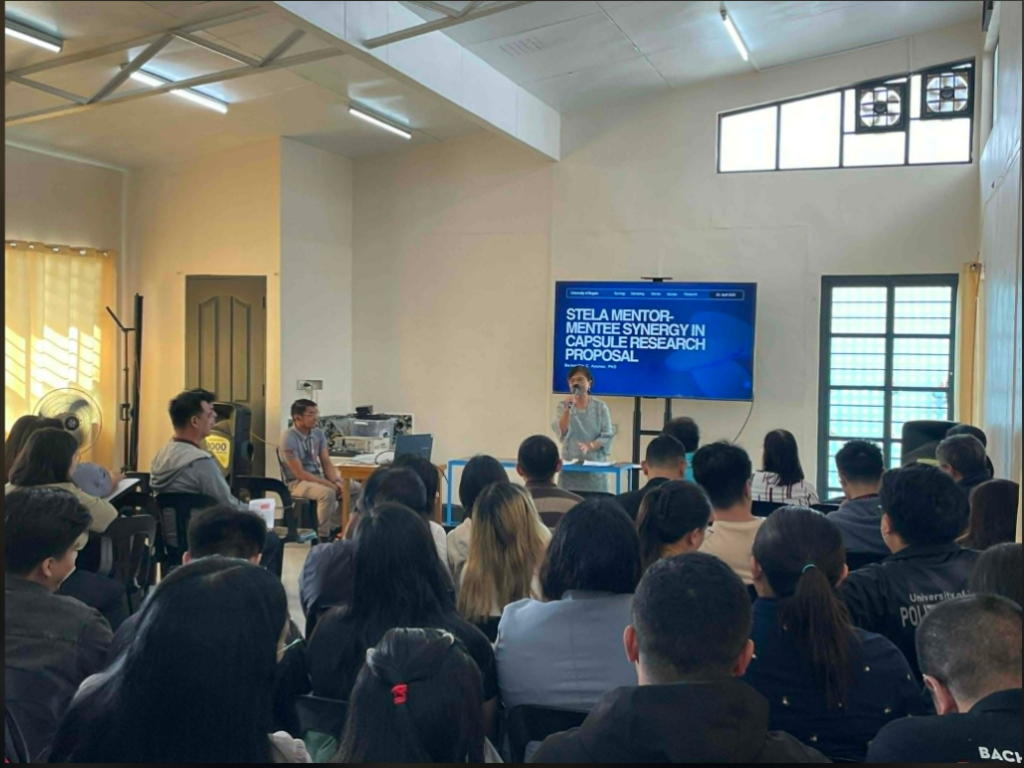
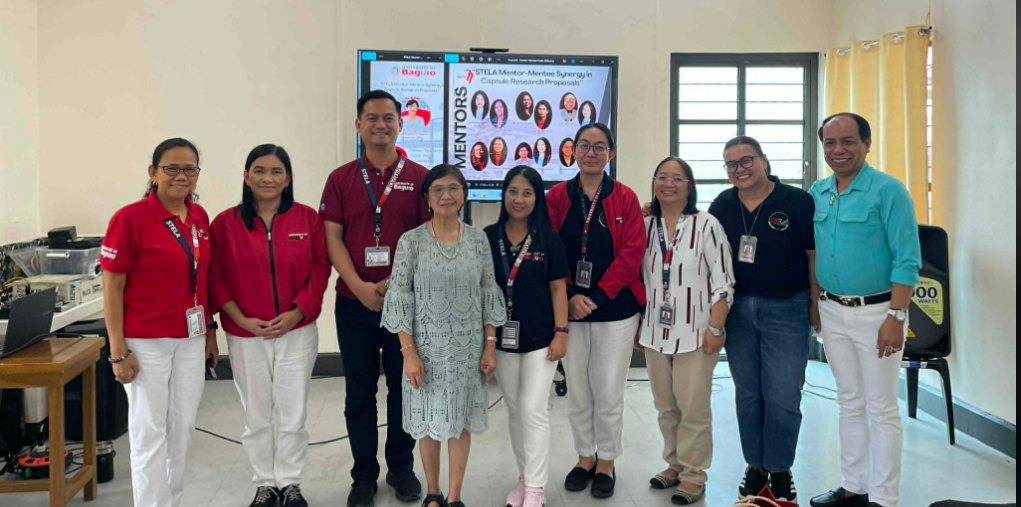
STELA faculty members actively engage in collaborative discussions during the Professional Learning Community session, fostering a culture of research, mentorship, and continuous professional development in support of quality education.
She further discussed the complementary roles of mentors and mentees across key dimensions such as role, focus, responsibility, decision-making, communication, approach, dependence, accountability, and goal setting. Through this framework, participants gained a clearer understanding of how effective mentorship can strengthen research productivity and foster a supportive academic environment.
The afternoon session transitioned into hands-on capsule writing workshops, where faculty members were grouped into clusters and guided by assigned mentors. These workshops provided participants with the opportunity to refine their research ideas, develop structured capsules, and receive immediate feedback in a collaborative setting.
This initiative was led by the School Research Anchorperson, Dr. Vilma W. Deponio, whose leadership ensured the smooth facilitation of both the plenary and workshop sessions. Through her guidance and the collective efforts of the mentors, the activity successfully nurtured a culture of inquiry and collaboration within STELA.
The success of this PLC session marks a significant step forward in empowering educators as reflective practitioners and active contributors to the academic community. With the 27 research capsules serving as a foundation, STELA looks forward to supporting the progression of these studies into full research projects that can inform policy, practice, and innovation in education.
This initiative strongly supports SDG 4: Quality Education by advancing teacher professional development, research capacity, and evidence-based instruction. Through mentor-mentee collaboration and the production of 27 research capsules, STELA strengthens a culture of inquiry where educators become reflective practitioners and knowledge creators. It also contributes to lifelong learning by equipping teachers with research skills that can inform better teaching practices, policy development, and educational innovation.
As STELA continues to champion professional learning and research excellence, initiatives such as this reaffirm its commitment to developing educators who are not only effective teachers but also critical thinkers and knowledge creators.